The Online Coaching vs Offline Coaching Debate: What Actually Works for Indian Students?
Your child sits in a packed coaching centre for three hours. Fifty other kids. One teacher. Noise. Chaos. Zero personalisation. Meanwhile, your neighbour’s daughter logs in from home, asks questions in the chat, and gets instant feedback. Same syllabus. Completely different outcomes. This is the online coaching vs offline coaching reality that Indian parents face today, and the answer isn’t what you think.
Let’s be honest: this isn’t a simple choice between “old” and “new.” Online coaching vs offline coaching isn’t about technology winning. It’s about what your child actually needs, where they learn best, and what you can realistically afford and manage. Most people don’t realise that the best solution often sits somewhere in between.
Why Offline Coaching Still Dominates (But Shouldn’t Forever)
Walk into any Indian city. Coaching centres are everywhere. Aakash. Allen. Local tuition hubs. Why? Because offline coaching works for certain students, and parents trust what they can see.
- Structure and discipline: Your child has to show up. No logging in from bed at 11 AM. Fixed timings mean fixed routines.
- Peer pressure (the good kind): Fifty other kids studying creates competitive energy. Some students thrive on this.
- Face-to-face interaction: A teacher can read body language. If a student is lost, they know immediately.
- Proven track record: Offline coaching has been around for decades. Results exist. Parents have seen their neighbours’ kids crack JEE.
But here’s what nobody talks about: offline coaching also means your child sits through content they already know because the teacher can’t slow down for one student without slowing down for fifty.
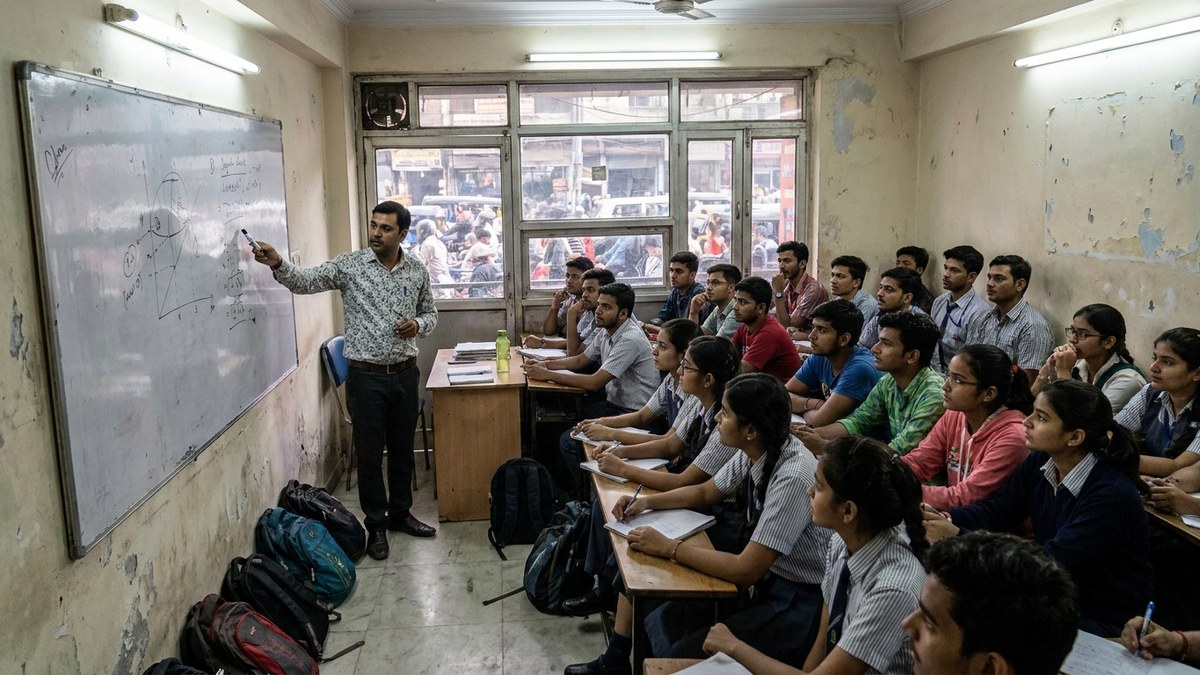
The dropout rates? Massive. Why? Long commutes. Inflexible schedules. One-size-fits-all teaching. Your child gets bored or falls behind, and there’s no catching up.
Online Coaching vs Offline Coaching: The Digital Advantage (If Done Right)
Online classes for Indian students have exploded since 2020, and for good reason. But not all online coaching is created equal.
- Flexibility that actually works: Your child can attend class at 6 AM or 9 PM. Perfect for students juggling school and coaching.
- Personalisation at scale: A good online platform tracks what each student struggles with and adapts. Offline can’t do this.
- No commute: Two hours saved every day. That’s 60 hours a month. Imagine what your child could do with that time.
- Affordability: No fancy infrastructure costs means lower fees. Online coaching typically costs 40-50% less than offline.
- Access to top teachers: Your child in a tier-2 city gets the same teacher as someone in Delhi. Geography doesn’t matter anymore.
Here’s the catch: online coaching requires discipline from the student. No teacher physically watching. No peer pressure. If your child lacks self-motivation, they’ll fall behind faster online than offline.
The Hybrid Model: The Real Winner for Indian Students
Here’s the truth: the future of coaching in India isn’t online OR offline. It’s both.
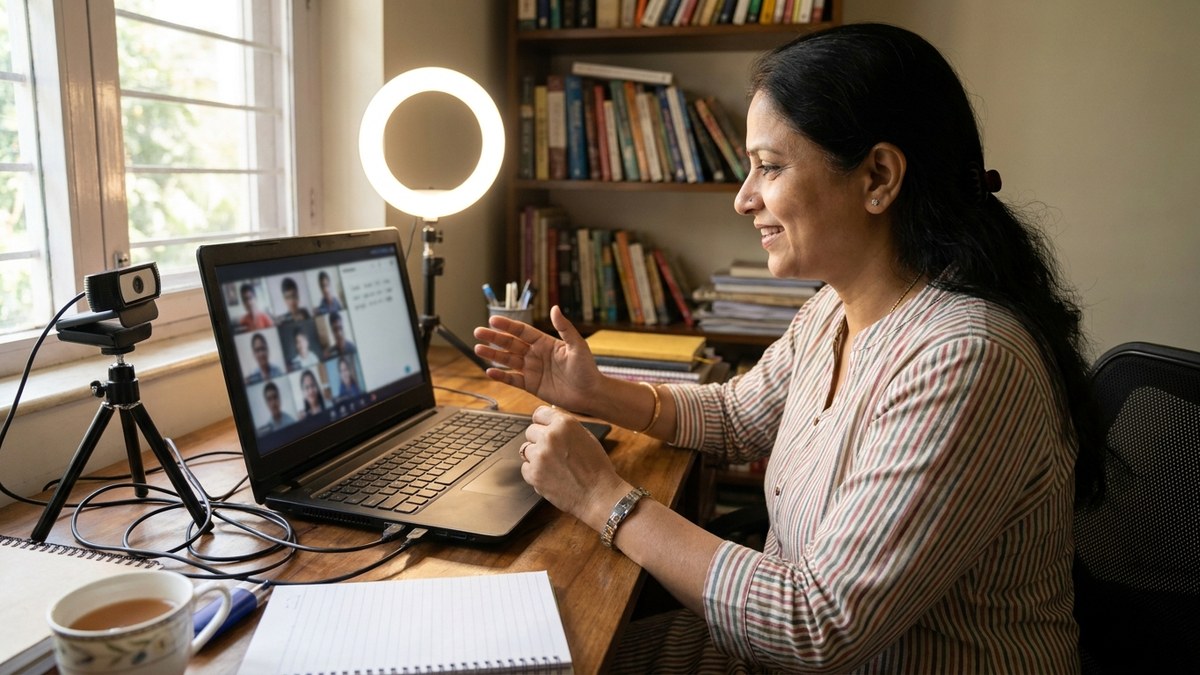
Many successful edupreneurs and trained educators are now running what we call a Point of Digital Learning (POD) from home or community centres. Think of it as a hybrid coaching model. Small group (5-10 students, not 50). Live online classes with recorded backup. In-person doubt sessions once a week. Personalised tracking. Lower overhead costs.
This model works because it combines the best of both worlds: the discipline and peer interaction of offline coaching with the flexibility and affordability of online classes for Indian students.
Which Format Suits Your Child? A Simple Checklist
- Choose offline coaching if: Your child thrives on structure, needs constant supervision, and you’re willing to pay premium fees for convenience.
- Choose online classes if: Your child is self-motivated, has a quiet study space at home, and you want to save money without compromising on teacher quality.
- Choose hybrid (POD model) if: You want the best of both. Personalisation. Affordability. Community. Structure without the chaos.
The Infrastructure Question: Why APNA PC Matters
Here’s what most people miss: online coaching vs offline coaching isn’t just about pedagogy. It’s about infrastructure. You can’t run online classes on a 5-year-old laptop with 2GB RAM and a crackling microphone.
If you’re a teacher or parent considering online coaching, you need a proper setup. Not expensive. Just reliable. APNA PC solves this for under Rs.30,000. A complete bundle: Mini PC (i3 7th Gen, 8GB RAM, 128GB SSD), monitor, keyboard, mouse, webcam, headset, installation, and 3-year warranty. Everything you need to teach or learn online without breaking the bank.
This is especially important if you’re thinking of starting your own POD or shifting to online coaching. Your setup reflects your professionalism. Students and parents notice.
The Broader Picture: Digital India and Inclusive Learning
The government’s Digital India initiative has made internet access more affordable across tier-2 and tier-3 cities. This shifts the balance toward online coaching. But access alone isn’t enough. You need proper devices, reliable connections, and trained educators who know how to teach online.
For students with learning disabilities or unique needs, online coaching paired with AI tools for inclusive education offers unprecedented personalisation. Something traditional offline coaching simply cannot match.
Research from UNESCO’s global education research shows that blended learning models (mixing online and offline) produce better outcomes than either format alone, especially in emerging markets like India.
The Real Cost: Beyond Fees
Offline coaching: Rs.15,000-50,000 per month. Plus commute time. Plus opportunity cost (your child could be doing something else). Plus mental fatigue from crowded spaces.
Online coaching: Rs.5,000-15,000 per month. Zero commute. Flexible timing. But requires self-discipline and a proper setup.
Hybrid POD model: Rs.8,000-20,000 per month. Small batches. Personalised attention. Community. This is what smart educators are building now.
What Should You Do Right Now?
If you’re a parent: Assess your child’s learning style. If they’re self-motivated and you have space at home, try online classes for one month. You’ll know within 30 days if it works.
If you’re a teacher or edupreneur: The opportunity is now. Students and parents are actively looking for alternatives to crowded coaching centres. You can start your own Point of Digital Learning from home with minimal investment. Invest in proper infrastructure (APNA PC is a smart starting point), build a small community of students, and run hybrid classes. Your margins will be better, your students more engaged, and your work more meaningful.
The online coaching vs offline coaching debate will continue. But the real winners in Indian education won’t be choosing sides. They’ll be building hybrid models that work for their community. That’s where the future is.
If you’re serious about this, start by getting your infrastructure right. Then focus on students, not just enrollment numbers. Once your first batch joins, help families in your area discover you with local SEO for tutors. That’s how you build something that lasts.