
Your Village Job Market is Changing. Are You Ready?
Here’s the truth: Rural India’s youth no longer need to migrate to cities for decent income. Remote work skills have flipped the script entirely. But most young people still don’t know which skills actually matter in 2026.
The job market isn’t waiting. Companies across India and globally are hiring remote workers from tier-2 and tier-3 towns right now. The barrier isn’t geography anymore. It’s skills. And that’s actually good news because skills can be learned.
This guide breaks down the exact remote work skills rural Indian youth need to build real income from home or a local learning center.
Key Takeaways
- Remote work skills for rural Indian youth matter now because companies are hiring from tier-2 and tier-3 towns directly, removing the old need to migrate to a city for decent income.
- The real barrier for most rural youth is skills, not geography, and skills can be learned systematically from home or a local learning centre.
- Digital communication and collaboration tools like Slack, Microsoft Teams, Google Meet and basic project management apps are a core, learnable starting point.
- Learning these tools early gives rural youth a real competitive advantage, since most have never used them before entering the remote job market.
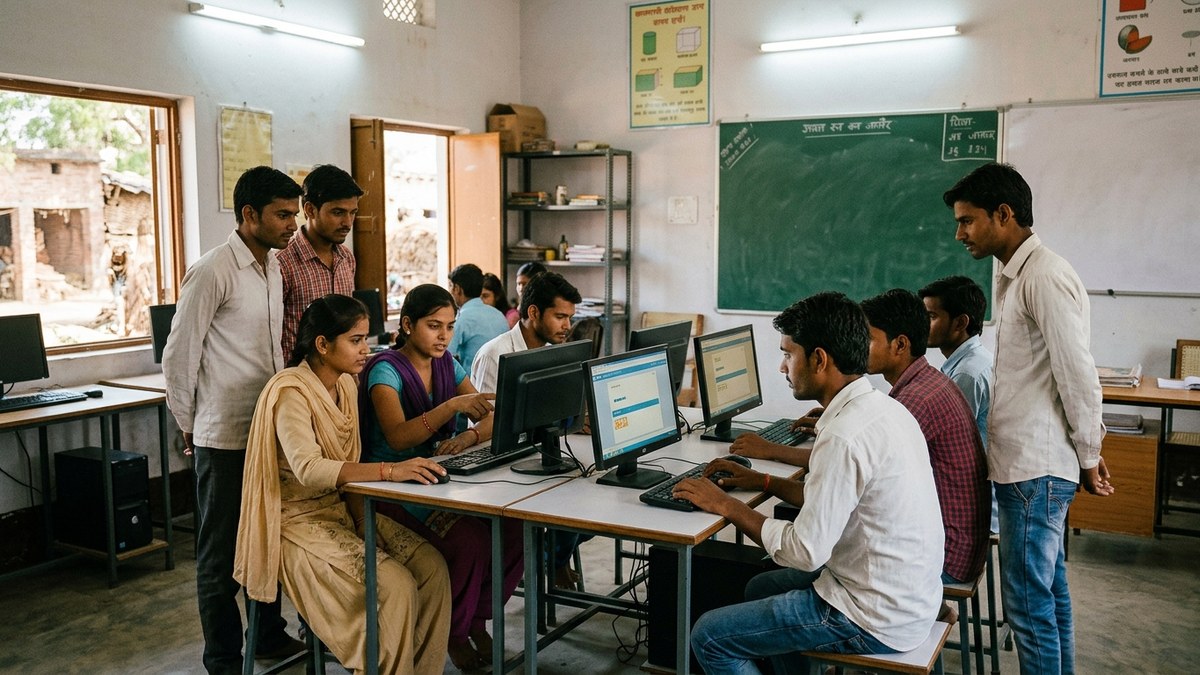
- A reliable computer and stable internet, often shared through a community Point of Digital Learning, are what make consistent remote-skill practice possible in areas with patchy infrastructure.
The Core Remote Work Skills You Can’t Skip
Let’s be honest: not every skill pays equally. Some remote work skills open doors. Others keep you stuck in low-wage freelancing forever.
1. Digital Communication and Collaboration Tools
You need to master Slack, Microsoft Teams, Google Meet, and project management platforms like Asana or Monday.com. Most rural youth have never used these. That’s your competitive advantage if you learn them first. Companies hiring remote workers expect you to communicate clearly without constant supervision. This skill alone separates ₹15,000/month workers from ₹50,000/month workers.
2. Data Entry and Basic Data Analysis
This sounds boring. It pays bills. Excel, Google Sheets, and basic data cleaning are gateway skills that lead to higher-paying roles. Once you master these, you can move into data analysis, which commands premium rates.
3. Content Writing and Digital Marketing
Indian companies desperately need writers who understand local markets but can write in English. Content writing, social media management, and basic SEO are skills you can learn in 2-3 months and start earning immediately. Rates start at ₹200-500 per article and scale quickly.
4. Basic Graphic Design and Video Editing
Tools like Canva, Adobe Creative Suite basics, and CapCut are now essential. Every business needs visual content. You don’t need to be an artist. You need to understand design principles and tool workflows.
5. Customer Service and Tech Support
International companies hire remote customer support agents from India at ₹20,000-35,000/month base salary. You need clear English communication, patience, and product knowledge. This is steady income with benefits.
6. Programming and Web Development Basics
If you can code even basic HTML, CSS, and JavaScript, you’re in demand. Full-stack developers from rural areas command ₹60,000-150,000/month. The barrier to entry is high, but the payoff is massive. Start with free resources like FreeCodeCamp or paid courses on Udemy.
Why Your Setup Matters More Than You Think
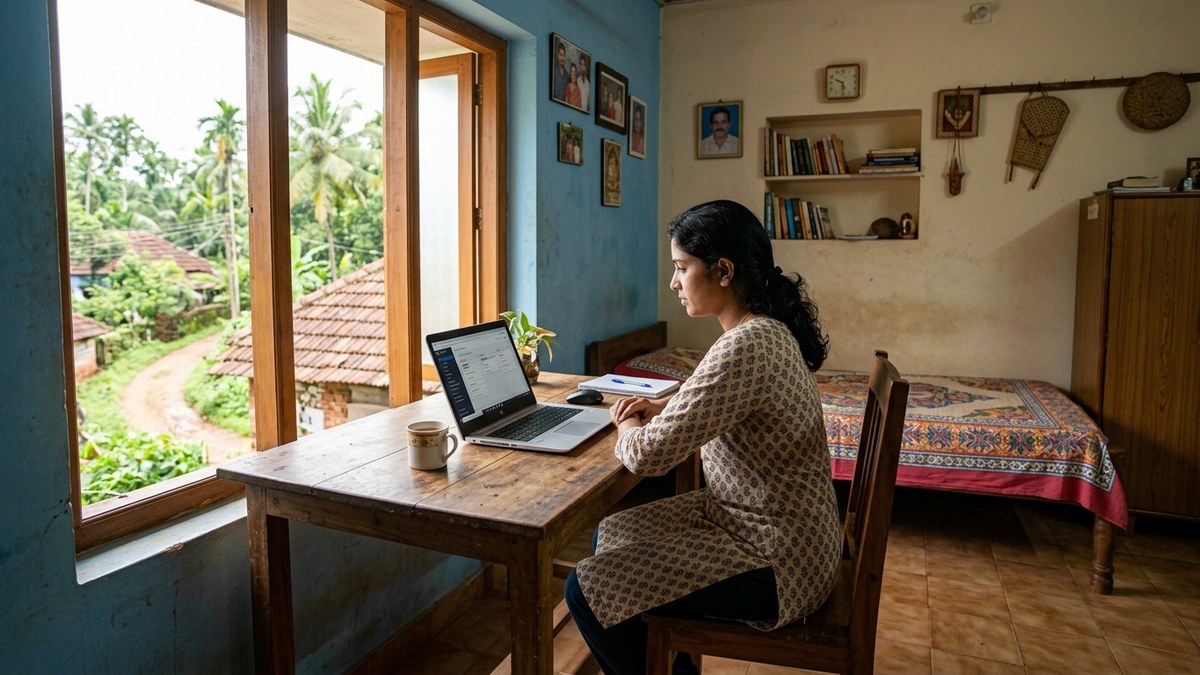
Most people don’t realise that remote work skills alone aren’t enough. You need reliable infrastructure. A laptop that crashes during client calls costs you money and reputation.
This is where APNA PC changes the game. At ₹30,000, you get a complete bundle: Mini PC with i3 7th Gen processor, 8GB RAM, 128GB SSD, monitor, keyboard, mouse, webcam, and headset. That’s everything you need to start working remotely today. Add the 3-year warranty and professional installation, and you have zero excuses.
Why APNA PC specifically? Because rural areas have unreliable power and internet. A mini PC uses less power than a laptop. It’s stable. It won’t overheat. It won’t fail when you’re in the middle of a client meeting.
Pair your setup with a POD (Point of Digital Learning) in your village. These are community learning centers run by trained educators where you can attend workshops, get mentorship, and network with other remote workers. Your local POD becomes your co-working space without the city rent.
The Freelancing Path vs. Full-Time Remote Jobs
You have two routes. Freelancing pays faster initially but is unstable. Full-time remote jobs pay less upfront but provide steady income and benefits.
Start with freelancing on platforms like Upwork, Fiverr, and Freelancer.in to build your portfolio. Aim for 3-5 solid projects and client reviews. Then transition to full-time remote positions with Indian or international companies. Companies like Flipkart, Amazon, Infosys, and Wipro now hire remote workers from tier-2 towns.
The Skills Development Act and MeitY Digital India initiatives have made formal training more accessible. Use these programs. They’re designed for you.
Closing the Digital Skills Gap in Rural India
The digital skills gap between rural and urban youth is real. But it’s not permanent. You can close it in 6-12 months with focused learning.
Start today. Pick one remote work skill. Learn it properly. Build a project portfolio. Get your APNA PC setup. Join a local POD. Within a year, you’ll be earning more than your friends who moved to the city.
Ready to build your remote work career? Your first step is setting up proper infrastructure and finding structured learning. Start a Teach to Earn Learning POD in your community and become the person who trains others. Or join an existing POD near you.
Learn how rural school computer labs are changing the game. The opportunity is real. The time is now. Your village needs you to succeed at remote work. Because when you do, others will follow.
Frequently Asked Questions About Remote work skills for rural Indian youth
What remote work skills should rural Indian youth learn first?
Start with digital communication and collaboration tools such as Slack, Microsoft Teams and Google Meet, since almost every remote job assumes comfort with these. Add basic project management tools and clear written communication. These fundamentals apply across nearly every remote role, whatever the specific job ends up being.
Can rural youth really get remote jobs without moving to a city?
Yes. Companies across India and globally are actively hiring remote workers from tier-2 and tier-3 towns, since the work itself does not require physical presence. The main requirement is demonstrated skill and reliable internet access, not a city address.
What is the biggest obstacle for rural youth trying to work remotely?
Inconsistent access to a reliable computer and stable internet is usually the bigger obstacle, more than lack of ability. A shared community computer or a local Point of Digital Learning can solve this by giving regular practice time without each family needing to buy a device.
Do I need a laptop to start building remote work skills, or can a phone work?
A phone can introduce basic concepts, but practising real remote work tasks like video calls with screen sharing, document collaboration and project management tools needs a full screen and keyboard. A shared computer at home or at a local centre is far more effective for building these skills properly.
How long does it take to become job-ready for remote work from a village?
With consistent daily practice on digital communication and basic productivity tools, many young people reach a usable skill level within a few months. Progress depends on regular access to a computer and, ideally, a mentor or structured course rather than learning entirely alone from scattered videos.
India’s Digital India programme, run by the Ministry of Electronics and IT, is explicitly aimed at extending digital access and skills to rural areas to close exactly this kind of opportunity gap.