
The Microschool Opportunity Nobody’s Talking About
Your colony needs a microschool. Your bank account needs Rs 50,000 monthly. These two facts are not a coincidence.
Let’s be honest: traditional tuition centres are dying. Parents are exhausted. Teachers are burnt out. And the education system keeps failing kids who don’t fit the mould. But here’s what most people don’t realise – there’s a massive gap between what schools offer and what families actually need. That gap is where you build a microschool business in India and earn serious money doing it.
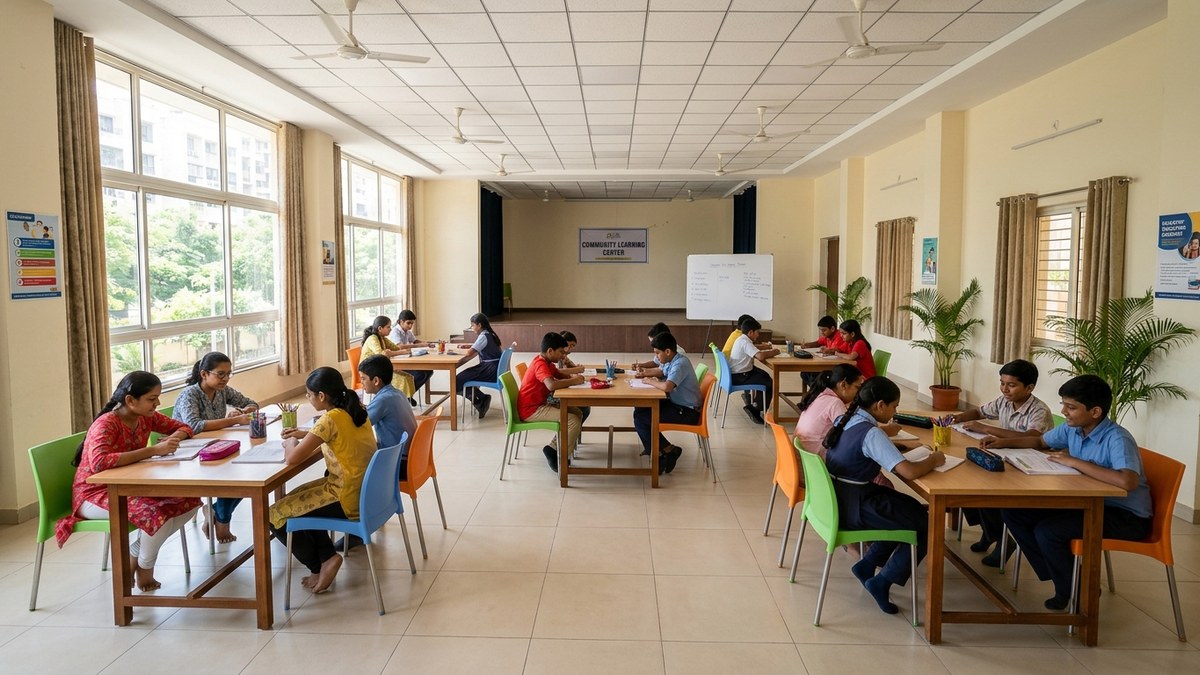
A microschool isn’t a tuition centre. It’s not a coaching class. It’s a small, community-based learning hub where 15-25 students work with a trained educator in a structured but flexible environment. Think of it as the sweet spot between homeschooling and formal school. And the demand? It’s exploding across Indian colonies, residential societies, and neighbourhoods.
Here’s the truth: you don’t need fancy credentials or a massive investment to start a microschool. You need clarity, the right tools, and a genuine desire to help kids learn better. That’s it.
Key Takeaways
- You can start a microschool in your colony without fancy credentials or a large investment; you need clarity, the right systems and a genuine wish to help children learn.
- A microschool is a small community learning hub of roughly fifteen to twenty-five students working with a trained educator in a structured but flexible way, sitting between homeschooling and formal school.
- Local demand is real because families already spend heavily on scattered tutors and franchise centres, and a neighbourhood microschool keeps that money and attention local.
- The setup steps are choosing a home or community space, getting reliable technology and records software, designing a blended curriculum, keeping costs honest, and marketing locally starting small.
- One reliable computer with education software covers attendance, assignments, progress tracking and parent communication instead of juggling WhatsApp and spreadsheets.
Why Microschools Work (And Why You Should Start One)
The numbers don’t lie. Parents are spending Rs 5,000-15,000 per child monthly on tuition. A family with two kids? That’s Rs 10,000-30,000 going out every month. Now imagine 20 families in your colony doing the same thing. That’s Rs 2-6 lakhs floating around your neighbourhood every single month. Most of it goes to scattered tutors and franchise centres. None of it stays local.
A microschool captures that money. You run a proper learning space. You charge Rs 2,500-4,000 per child monthly (half what they’re already paying). With 20-25 students, you hit Rs 50,000-1,00,000 monthly revenue. Subtract your costs – rent, electricity, materials – and you’re looking at Rs 40,000-60,000 net profit. Every. Single. Month.
But it’s not just about money. Parents want:
- Small batches so their kids actually get attention
- Flexible hours that work with their schedules
- Real learning, not just exam coaching
- A safe, community space they can trust
A microschool delivers all four. You’re not competing with big coaching franchises. You’re solving a real problem your neighbours face every single day.
How to Start Your Microschool: The Step-by-Step Path
Step 1: Choose Your Learning Model
You can start a microschool from home or rent a small community space. Home-based means lower overhead. A community centre (church hall, society room, community garden space) means better credibility and more capacity. Most successful microschools start at home, then scale to a dedicated space within 6-12 months.
Step 2: Get Your Technology Right
Here’s where most people fail. They try to run a microschool with WhatsApp and Excel sheets. That’s chaos. You need proper education software to track attendance, assignments, progress, parent communication – everything. But you also need hardware that works reliably.
This is exactly why APNA PC exists. It’s a complete bundle – education software, a powerful Mini PC (i3 7th Gen, 8GB RAM, 128GB SSD), monitor, keyboard, mouse, webcam, headset, plus 3-year warranty and installation. Rs 30,000. One-time investment. Done. You’re set up to run a professional microschool from day one.
Step 3: Design Your Curriculum
Don’t copy school textbooks. Create a blend: core academics (math, language, science) plus critical thinking, problem-solving, and skills. This is what parents actually want. This is what kids actually need. Check out India Ministry of Education guidelines for structure, then build your own approach on top.
Step 4: You Can Set Up a Learning Space Under Rs 30,000
Furniture, basic materials, whiteboard, books – set up a learning space under Rs 30,000. Add the APNA PC bundle and you’re at Rs 60,000 total setup. That’s one month of revenue.
Step 5: Market Locally, Start Small
You don’t need fancy ads. Talk to parents in your colony. Host a free demo session. Show them the difference between your microschool and traditional tuition. Word spreads fast in residential areas. Start with 8-10 students. Build quality. Scale to 20-25 within 3-4 months.
Who Should Start a Microschool?
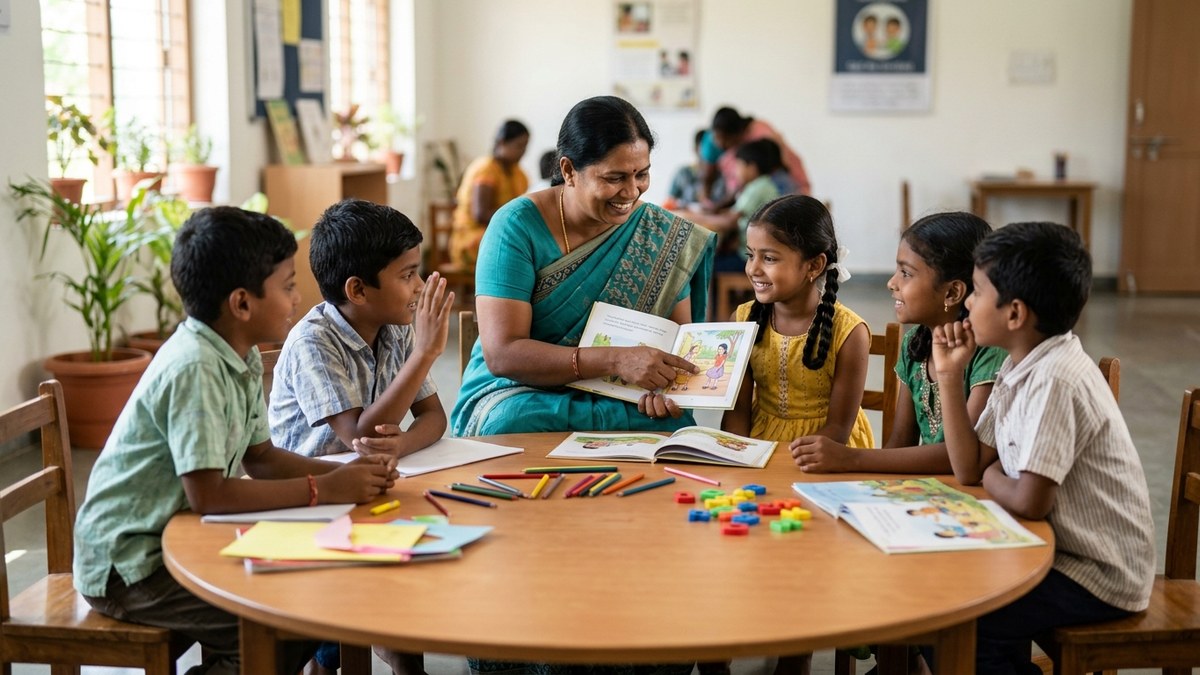
Homemakers looking to earn without leaving home. Senior citizens who want purpose and income. Retired teachers. Passionate tutors tired of the franchise model. Edupreneurs who want to build something real. If you understand kids and genuinely want to help them learn better, you can do this.
You don’t need an MBA. You don’t need 10 years of teaching experience. You need training, the right systems, and commitment. That’s why we built the TeachToEarn model.
The Microschool Business Model: Real Numbers
Let’s break down a typical microschool earning Rs 50,000 monthly:
- 20 students at Rs 2,500/month: Rs 50,000 revenue
- Rent (shared space or home): Rs 5,000
- Materials and supplies: Rs 3,000
- Electricity, internet, insurance: Rs 2,000
- Net profit: Rs 40,000
Scale to 25 students? You’re at Rs 60,000+ monthly profit. And this is sustainable. Not a side hustle. A real business.
Most people don’t realise that microschools have much lower churn than tuition centres. Parents stick around because they see real results. Kids are happier. Learning is better. Referrals happen naturally.
Your Next Move
The microschool revolution in India isn’t coming. It’s already here. Parents are done with the old system. Kids deserve better. And you have the opportunity to build something meaningful while earning serious income.
Ready to start? Learn how to build a proper Point of Digital Learning (POD) – a home or community learning centre run by a trained educator. This is the TeachToEarn model. It works. It’s proven. And it could be your path to Rs 50,000+ monthly income.
Start your microschool journey today. The families in your colony are waiting.
Frequently Asked Questions About Start a microschool in your colony
What is a microschool and how is it different from tuition?
A microschool is a small mixed-age learning group, usually fifteen to twenty-five children, that covers a broader programme than subject tuition and focuses on personal attention and real learning rather than only exam coaching. It runs from a home or a small community space with one trained educator. Think of it as the middle ground between homeschooling and a formal school.
How much can you earn running a microschool in your colony?
Educators typically charge each family less than they already pay scattered tutors, and with twenty to twenty-five students the monthly revenue can reach a solid figure. After rent, materials and utilities, a steady monthly profit is realistic. Microschools also tend to have lower dropout than tuition centres because parents see results.
What technology does a microschool need?
At minimum one reliable computer with internet and education software to track attendance, assignments, progress and parent communication. A display or TV for group lessons helps. Trying to run everything on WhatsApp and spreadsheets quickly becomes chaotic as student numbers grow.
Do I need to be a trained teacher to start a microschool?
Formal training helps but is not required. Clear subject knowledge, a good daily plan, patience with children and steady parent communication matter more in a small group. Many successful microschool educators are homemakers, retired teachers or tutors who learned the systems and committed to the work.
How do I get my first microschool students?
Talk to parents in your colony directly and host a free demo session that shows the difference from ordinary tuition. Start with eight to ten students, focus on quality, and let referrals build the group to twenty or more over a few months. Word spreads fast in residential societies.
India’s National Education Policy 2020 supports flexible, community-based and multi-age learning models, which is the framework a neighbourhood microschool operates within.