
The Microschool Opportunity Nobody Is Talking About
Your small town doesn’t need another tuition centre. It needs a microschool.
Here is the truth: India’s traditional school system has failed millions of children in towns with populations under 50,000. Classes are overcrowded. Teachers are absent. Learning outcomes are abysmal. Parents are desperate. And you—whether you’re a homemaker, retired teacher, or tuition professional—have a genuine opportunity to build a sustainable education business by starting a microschool in a small Indian town.
This isn’t a charity project. This is a real business model that works. Microschools are small, locally-run learning centres that serve 15-30 students with personalized attention. They’re cheaper than private schools. Better than government schools. And they’re profitable from month one if you set them up right.
Let’s be honest: most people don’t realize that small towns are where the real education gap exists. Urban areas have options. Rural areas have government support (however inadequate). But small towns? They’re stuck in the middle. Parents there have money to spend on education but nowhere good to spend it. That’s your market.
Why Microschools Work in Small Towns
The traditional school system was designed for scale, not quality. Read about how the school system evolved, and you’ll see it prioritized buildings, bureaucracy, and batch processing of students. Microschools flip this model. They prioritize relationships, flexibility, and actual learning outcomes.
Here’s what makes a microschool viable in your small town:
- Low infrastructure costs. You don’t need a sprawling campus. A rented house or community centre works perfectly. Your startup investment stays under control.
- Personal attention. With 15-30 students instead of 60-80, every child gets noticed. Parents see results. They stay. They refer others.
- Flexible curriculum. You’re not bound by rigid board requirements (though you can align with them). You can teach what your community needs. Practical skills. Languages. Arts. Coding. Whatever fills the gap.
- Community trust. In small towns, word travels fast. One success story becomes ten enrolments. Your reputation becomes your marketing.
- Teacher retention. You can hire local talent at reasonable rates. Teachers who live in the community stay committed. No constant turnover.
Most people don’t realize that a microschool isn’t a scaled-down version of a big school. It’s a different animal entirely. It’s built on trust, not compliance. On outcomes, not attendance sheets.
The microschools future Indian education depends on educators like you who understand that small can be beautiful and profitable at the same time.
The Practical Steps to Launch Your Microschool
Step 1: Validate Your Market
Don’t guess. Talk to 30 parents in your town. Ask them what they want in a school. What frustrates them about current options. What they’d pay. You’ll find patterns. You’ll find your positioning. This takes two weeks, not two months.
Step 2: Choose Your Location and Setup
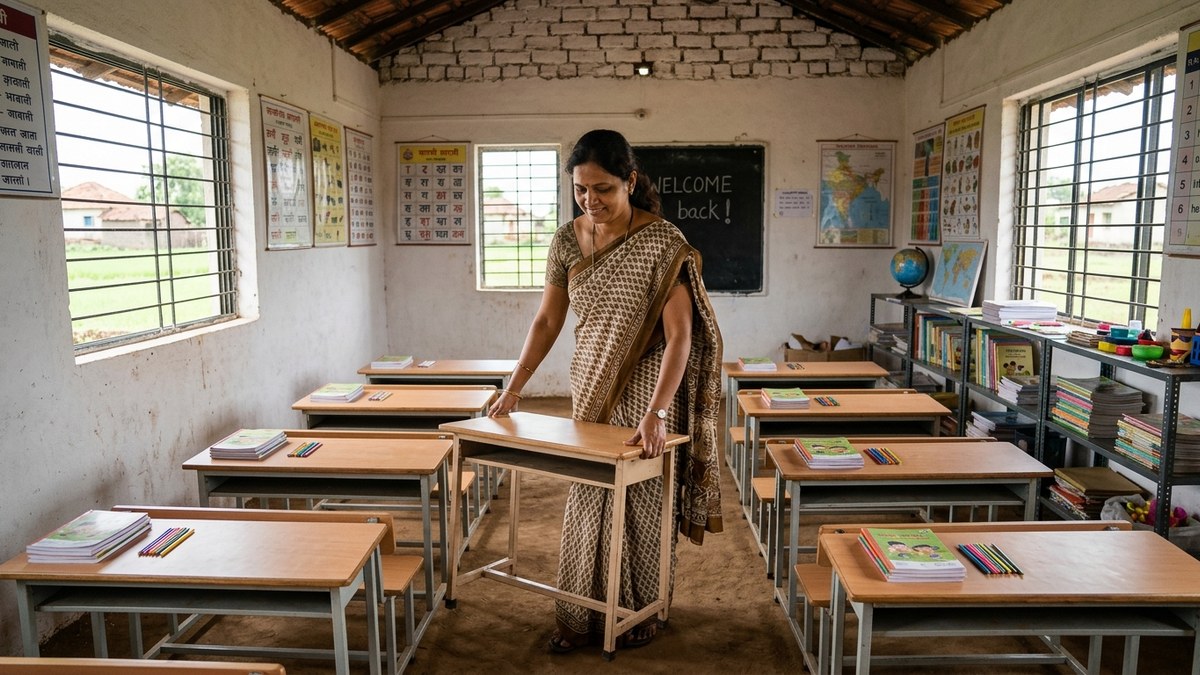
A rented house in a central location beats an expensive commercial space. You need 800-1200 square feet minimum. Good ventilation. Safe entry/exit. Internet connectivity. That’s it. No fancy architecture required. For guidance on budgeting this phase, check out our home learning pod setup budget resource.
Step 3: Get Your Technology Right
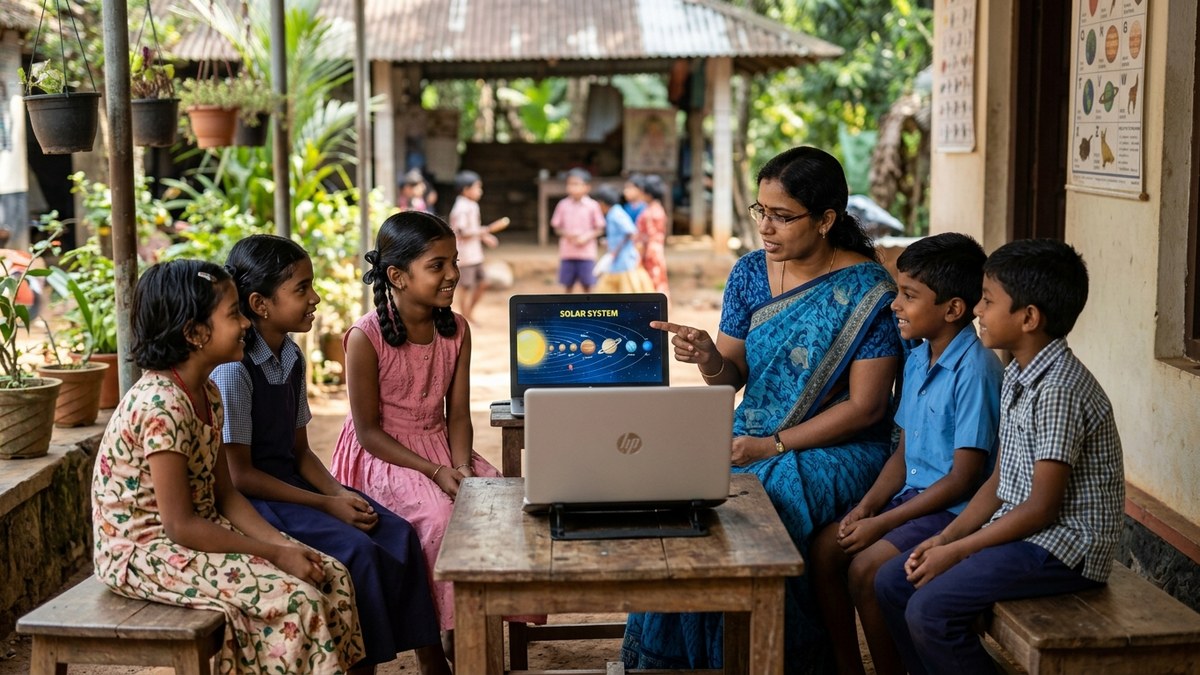
This is where most small-town educators fail. They either ignore technology or overspend on it. You need one thing: a reliable PC setup that lets you deliver hybrid learning, manage student records, and access digital resources. The APNA PC bundle is designed exactly for this. It’s Rs.30,000. Complete. Mini PC with i3 7th Gen processor, 8GB RAM, 128GB SSD, monitor, keyboard, mouse, webcam, headset, education software, 3-year warranty, and installation. No surprises. No hidden costs. You can run digital lessons, store student data, and connect to platforms like DIKSHA digital learning platform from day one.
Step 4: Hire and Train Your First Teacher
You don’t need a degree from Delhi University. You need someone passionate about kids and willing to learn. Train them in your curriculum. Your pedagogy. Your systems. A local graduate who understands your community is worth more than an outsider with fancy credentials.
Step 5: Launch with One Batch
Start with 15-20 students. Grades 1-3 or 4-6. Not all grades at once. Not 100 students. Focus on excellence with a small cohort. Build a waiting list. Then expand.
The Money Part (Because It Matters)
Here’s the financial reality of running a microschool in a small Indian town:
- Monthly fees: Rs.1,500-3,000 per student depending on your positioning and local income levels.
- With 20 students: Rs.30,000-60,000 monthly revenue.
- Monthly expenses: Rent (Rs.5,000-8,000), teacher salary (Rs.8,000-12,000), utilities (Rs.1,000-2,000), materials (Rs.1,000), contingency (Rs.2,000). Total: Rs.17,000-25,000.
- Net monthly profit: Rs.5,000-43,000 depending on your student count and fee structure.
- Breakeven: Month 2-3 if you get 15+ enrollments in month 1.
This isn’t a get-rich scheme. But it’s a legitimate, sustainable income. And it scales. Add a second teacher at 30 students. Margins improve. Add a third batch (different grades). Your revenue multiplies.
Your Next Move
You’ve read this far because something resonates. Maybe you’re tired of traditional employment. Maybe you see the gap in your town’s education system. Maybe you have the skills but lacked the framework. Now you have it.
The barrier isn’t capital. It’s clarity. You need to know exactly how to structure this, what systems to use, and how to avoid the mistakes that sink 90% of education startups in small towns.
Start here: Learn how to set up your first learning POD (Point of Digital Learning) with our step-by-step framework. It covers everything from legal registration to your first day with students.
Small towns are waiting for educators who understand that quality education is a business, not a burden. Be that person.