
Your Child’s Future Depends on Skills You Haven’t Learned Yet
Let’s be honest: most Indian parents worry their kids will fall behind. Not in math or English. In the skills that actually matter for jobs that don’t exist yet. Here is the truth: coding is no longer optional. It’s as fundamental as reading. And you don’t need to be a tech expert to teach coding to kids at home.
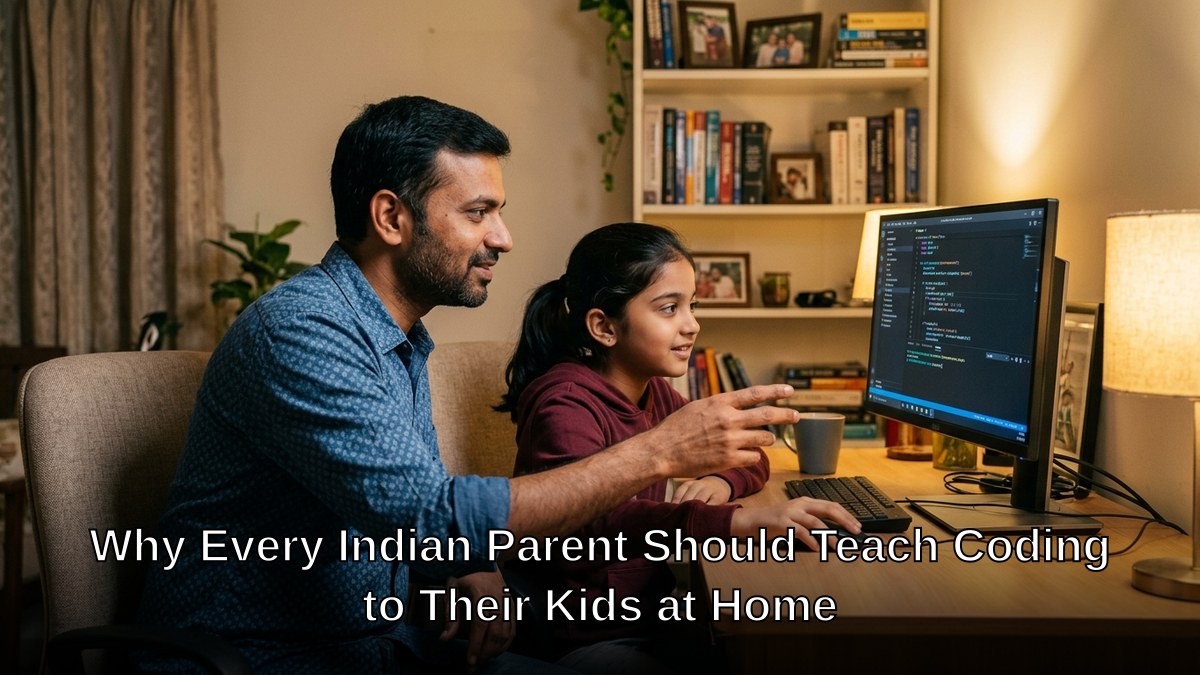
Your child’s school won’t do this for them. The government is trying through platforms like DIKSHA digital learning platform, but that’s not enough. Real learning happens at home. In your living room. At your kitchen table. Where a parent or trained educator can sit beside them and say: “Try this. See what happens. Now try something different.”
Most people don’t realise that coding teaches problem-solving in a way no textbook can. Your child learns to break down complex problems. To think logically. To fail, debug, and try again. These aren’t just coding skills. These are life skills.
Why Home Learning Works Better Than You Think
Forget the myth that you need a computer scientist to teach coding. You don’t. You need someone who cares enough to sit down and learn alongside the child. A parent. A tuition teacher. A community educator. Someone present.
When you teach coding to kids at home, several things happen that don’t happen in crowded classrooms:
- Your child learns at their own pace, not the class pace
- They ask questions without fear of looking stupid
- They see you learning too, which normalizes struggle
- They build confidence through small wins, celebrated immediately
- They understand that mistakes are part of the process, not failures
The barrier isn’t knowledge. It’s access. Access to the right tools. Access to guidance. Access to a proper setup at home.
This is where most parents get stuck. They think: “I don’t have a computer. I don’t know how to set it up. I don’t know where to start.” These are real problems. But they’re solvable problems.
The Practical Path: From Zero to Coding Hero
Here’s what you need to start teaching coding to kids at home:
- A working computer – not expensive, not fancy, just functional
- Basic software – most coding platforms are free or cheap
- Your time – 30 minutes a day beats 2 hours on weekends
- Curiosity – yours, not just theirs
If you’re starting from scratch, you need APNA PC. This is the complete bundle designed for Indian homes and learning centres. Rs.30,000 gets you a Mini PC (i3 7th Gen, 8GB RAM, 128GB SSD), monitor, keyboard, mouse, webcam, headset, education software, 3-year warranty, and installation. No hidden costs. No “you need to buy more later.”
With APNA PC, you’re not just buying hardware. You’re buying permission to start. Permission to set up a proper learning space. Permission to tell your child: “This is our coding corner.”
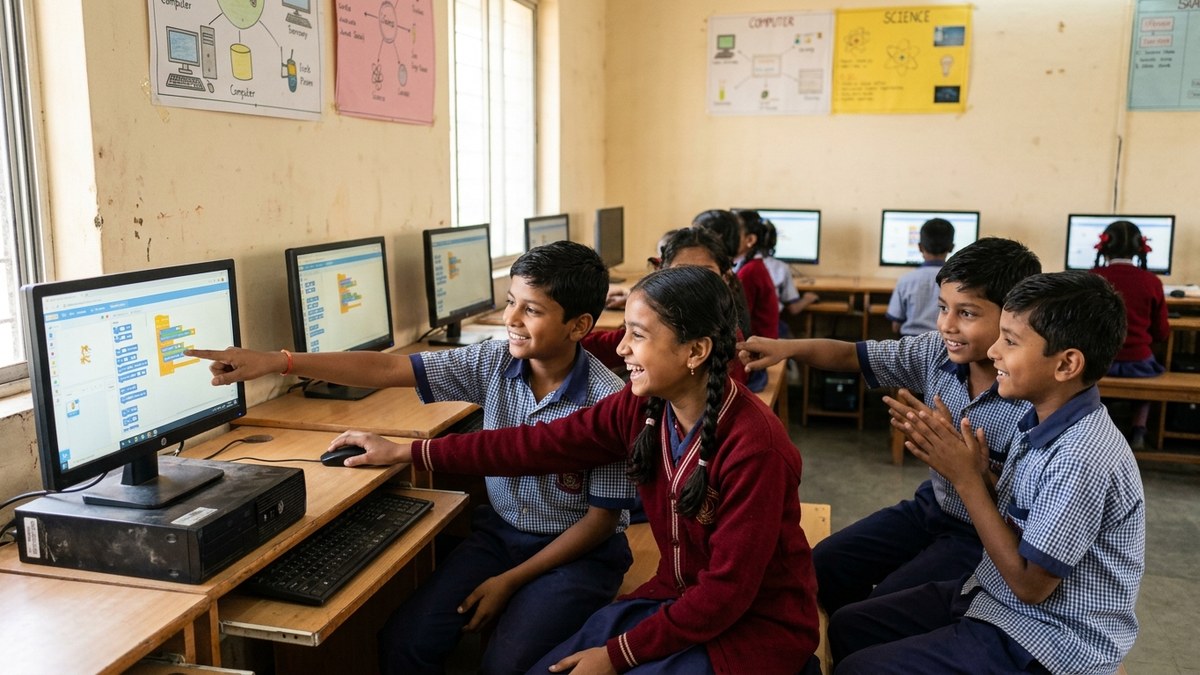
Start with best free coding apps like Scratch or Code.org. These teach computer programming fundamentals through visual blocks, not confusing syntax. Your child drags, drops, and watches their creation come alive. That’s the hook. That’s how they fall in love with coding.
The Tuition Teacher Angle: A New Income Stream
If you’re a tuition teacher reading this, pay attention. Coding classes are the fastest-growing demand from parents right now. They’re willing to pay premium fees. They see it as an investment, not an expense. And they want it nearby. In their neighbourhood. At a Point of Digital Learning (POD).
A POD is simple: a trained educator, a proper setup, and 4-6 kids learning coding together in a home or community centre. You can start a microschool from home focused entirely on coding. Or add coding to your existing tuition business.
The investment is minimal. The returns are immediate. Parents are desperate for this.
Why Now, Not Later
Your child’s peers are already learning. In metros, in tier-2 cities, in progressive families. By the time your child is 16, coding literacy will be expected, not impressive. Like English is now.
You don’t need to be a programmer. You don’t need to understand algorithms. You need to start. Today. This week.
Set up a learning space. Get the right tools. Commit 30 minutes daily. Watch what happens.
Your child will surprise you. And you’ll surprise yourself.
Ready to start? Begin your coding learning journey today and build the future your child deserves.