
A teaching career in physical education offers you the chance to shape young athletes and promote lifelong fitness habits across India. To become a PE teacher, you need a bachelor’s degree in physical education, teacher training certification (B.Ed or D.El.Ed), and state-level teacher eligibility certification. This guide walks you through the exact eligibility requirements, entrance routes, qualifications and career progression for PE teachers in India.
What is a physical education teacher?
A physical education teacher is an educator who designs and delivers fitness, sports and wellness programmes in schools. PE teachers teach students aged 6 to 18 across primary, upper primary and secondary classes, helping them build strength, coordination, teamwork and confidence through structured physical activity.
PE teachers also assess students’ physical fitness levels, organize inter-school sports events, coach school teams and integrate health education into their lessons. They work in government schools, private institutions, sports academies and community learning centres.
What are the eligibility requirements to become a PE teacher in India?
To teach physical education in Indian schools, you must meet these core eligibility criteria:
- Educational qualification: Bachelor’s degree (B.A., B.Sc. or B.Com.) with physical education as a main or subsidiary subject, or a specialized B.P.Ed (Bachelor of Physical Education) degree.
- Teacher training: B.Ed (Bachelor of Education) with physical education specialization, or D.El.Ed (Diploma in Elementary Education) for primary classes.
- Age: Between 18 and 35 years at the time of application (upper age limit varies by state; some states offer relaxation for reserved categories).
- Nationality: Indian citizen or Overseas Citizen of India (OCI).
- Teacher eligibility test: Pass the state-level TET (Teacher Eligibility Test) or CTET (Central Teacher Eligibility Test) as per your target school type.
- Physical fitness: Meet the prescribed height, weight and medical fitness standards set by your state education board.
Each state in India sets slightly different eligibility norms. Check your state’s education department or Directorate of Physical Education qualification and recruitment norms for the exact requirements in your region.
How do you become a PE teacher step by step?
Follow these steps to build your teaching career in physical education:
- Complete your bachelor’s degree: Earn a B.A., B.Sc., B.Com. or B.P.Ed with physical education as a subject. B.P.Ed is a 3-year specialized degree that combines sports science, coaching and pedagogy; a general bachelor’s with PE as a subsidiary takes 3 years.
- Enrol in a B.Ed or D.El.Ed programme: After your bachelor’s, join a 1-2 year B.Ed course with physical education specialization, or a 2-year D.El.Ed if you plan to teach primary classes. Both programmes include classroom theory, practical teaching and internship.
- Pass the teacher eligibility test: Prepare for and clear the CTET (for central schools and many private schools) or your state’s TET (for state schools). Both tests assess your subject knowledge, teaching aptitude and general awareness.
- Apply to schools: Once you have your B.Ed/D.El.Ed and TET/CTET certificate, apply to government schools through the state recruitment board or to private schools directly.
- Attend interviews and selection: Participate in written exams, interviews and sometimes practical demonstrations (e.g., leading a fitness session) as part of the school’s hiring process.
- Complete induction and ongoing training: After appointment, complete the mandatory induction programme and participate in continuous professional development programs for TGT Physical Education to stay updated on teaching methods and sports science.
Which entrance exams and certifications do PE teachers need?
Several entrance tests and certifications shape your path as a PE teacher:
- CTET (Central Teacher Eligibility Test): A national-level exam conducted twice a year by the National Council of Educational Research and Training (NCERT). Passing CTET qualifies you to teach in central schools (Kendriya Vidyalayas), many private schools and some state schools. Paper 1 is for Classes I, V; Paper 2 is for Classes VI, VIII.
- State TET: Each state conducts its own teacher eligibility test for recruitment to state schools. Passing your state TET is mandatory if you want to teach in government schools in that state.
- B.Ed entrance exams: Many universities and colleges conduct entrance tests for B.Ed admission. Examples include CUCET (Common University Entrance Test) and state-level B.Ed entrance exams.
- Coaching certifications: Optional but valuable, certifications in sports coaching (Level 1, 2, 3 from the National Institute of Sports or state sports authorities) boost your career prospects and allow you to coach school teams.
What is the career progression and salary for PE teachers in India?
Once you are hired as a PE teacher, your career typically progresses as follows:
- Trained Graduate Teacher (TGT) in Physical Education: Entry-level position for teachers in Classes VI, VIII. Starting salary in government schools varies by state and experience.
- Post Graduate Teacher (PGT) in Physical Education: For Classes IX, XII, requires a master’s degree (M.A. or M.P.Ed) in addition to B.Ed. Salary is typically higher than TGT positions.
- Senior Teacher or Head of Department: After several years of service, you can be promoted to senior roles with additional administrative responsibilities and higher pay.
- Sports Officer or State-Level Coach: Experienced PE teachers can move into sports administration, state sports councils or coaching roles at the district or state level.
Private school salaries vary widely based on the school’s reputation and location. Government school salaries are more standardized and include benefits such as provident fund, health insurance and pension. Check the official recruitment portal of your state’s education department for current salary scales.
What skills and qualities do successful PE teachers need?
Beyond qualifications, successful PE teachers in India possess these skills and attributes:
- Physical fitness and stamina: You must be fit enough to demonstrate exercises, lead activities and manage large groups of students.
- Communication and leadership: Clear instruction, motivational speaking and the ability to inspire students to participate actively.
- Subject knowledge: Deep understanding of sports rules, fitness science, anatomy, injury prevention and coaching techniques.
- Classroom management: Ability to organize large groups, maintain discipline and ensure safe practice environments.
- Inclusivity and adaptability: Skill in modifying activities for students with different abilities, body types and fitness levels so everyone can participate.
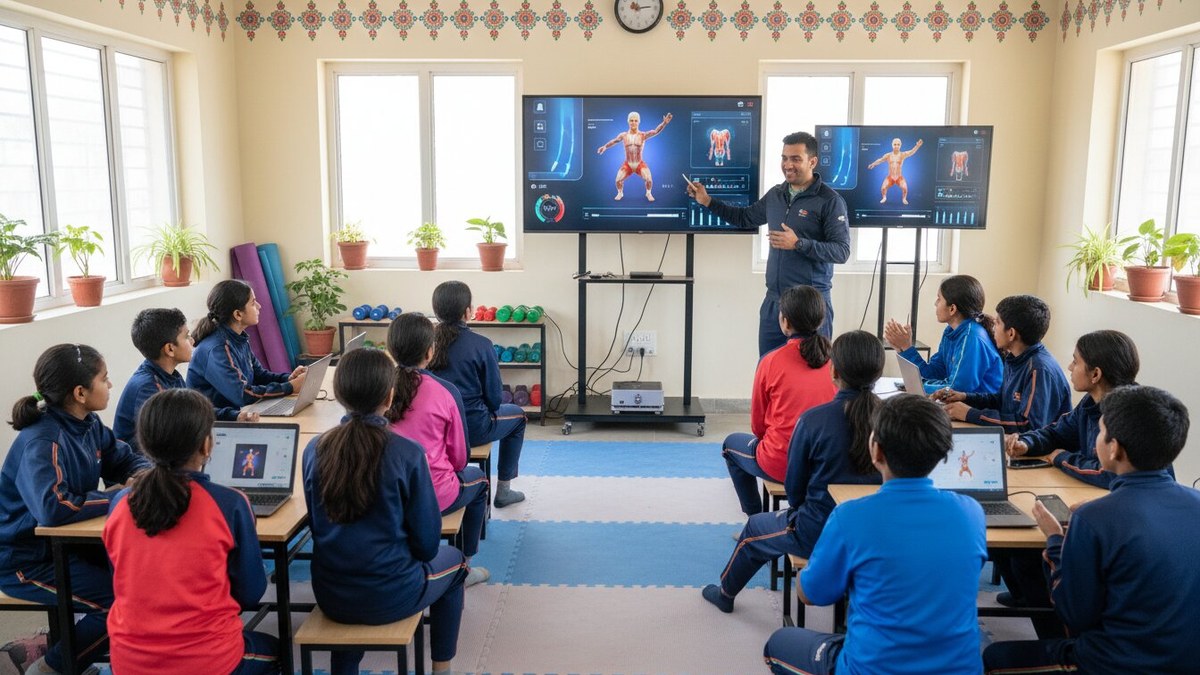
- Technology integration: Familiarity with fitness tracking apps, video analysis tools and online learning platforms, especially important as 21st-century skills reshape education.
Can you start a PE learning centre instead of working in a school?
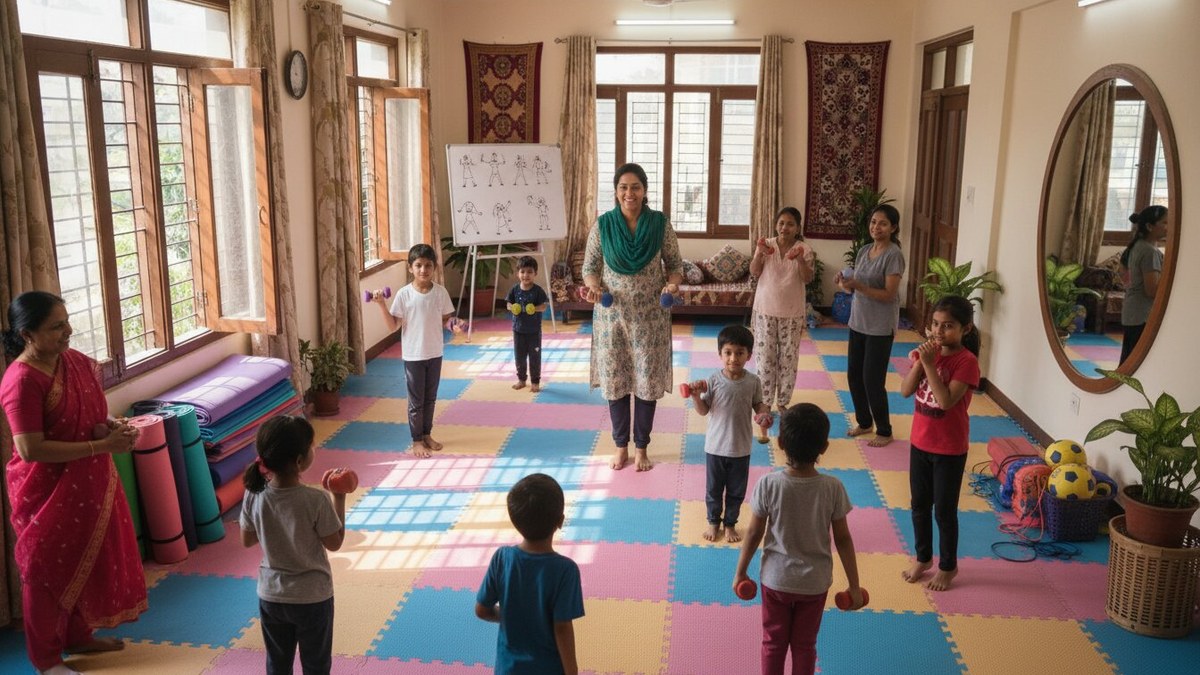
If you hold a B.P.Ed or B.Ed in physical education but prefer not to work in a formal school, you can start a home-based or community fitness and sports centre. Many non-traditional educators, including homemakers, senior citizens and aspiring edupreneurs, are launching community learning centres that offer sports coaching, fitness classes and wellness programmes.
A Point of Digital Learning (POD) is a low-cost community centre where you can teach fitness, sports skills and health education using affordable technology. You can integrate digital tools to track student progress, create fitness assessments and offer portfolio-based assessments that showcase each student’s improvement over time. You can also use project-based learning ideas adapted for sports and fitness topics. This model allows you to earn income while building a local community of learners.
Frequently Asked Questions
Do I need a B.P.Ed degree to become a PE teacher?
No. You can become a PE teacher with a bachelor’s degree (B.A., B.Sc. or B.Com.) that includes physical education as a main or subsidiary subject, followed by a B.Ed with PE specialization. However, a B.P.Ed (3-year specialized degree) is preferred by many schools and gives you a stronger foundation in sports science and coaching.
What is the difference between CTET and state TET for PE teachers?
CTET is a national exam that qualifies you to teach in central schools and many private institutions across India. State TET is conducted by individual states and is mandatory for government school positions within that state. You may need to pass both if you want flexibility in where you teach.
How long does it take to become a PE teacher in India?
Typically 5 to 6 years: 3 years for your bachelor’s degree, 1 to 2 years for B.Ed or D.El.Ed, and 6 to 12 months to prepare for and pass the TET/CTET. If you already hold a bachelor’s degree, you can complete B.Ed in 1 to 2 years and be exam-ready within 2 to 3 years.
What salary can a PE teacher expect in India?
Government school PE teachers (TGT) earn a salary that increases with experience and qualifications. PGT positions and senior roles pay more. Private school salaries vary widely depending on the school’s tier and location. Check your state’s education department website for current salary scales and allowances.
Can I teach PE online or start my own fitness centre?
Yes. Many PE-qualified educators run online fitness coaching, home-based sports classes or community learning centres. You can also start a POD to offer structured physical education and wellness programmes to local students while earning an income.
Your teaching career in physical education can take many forms, from traditional school roles to community-led learning centres. If you’re building a home-based or community learning space, equip it with affordable, reliable technology. Buy APNA PC for your learning centre and create a professional, tech-enabled environment where students can learn fitness assessment, sports analytics and health science alongside traditional PE skills.