India’s rural communities face a critical education gap. A village POD learning center offers an affordable, scalable solution to bring quality digital education to underserved areas. With APNA PC at just Rs.30,000 (complete bundle), educators can establish a Point of Digital Learning center and transform how children learn in their own communities.
What is a Village POD Learning Center?
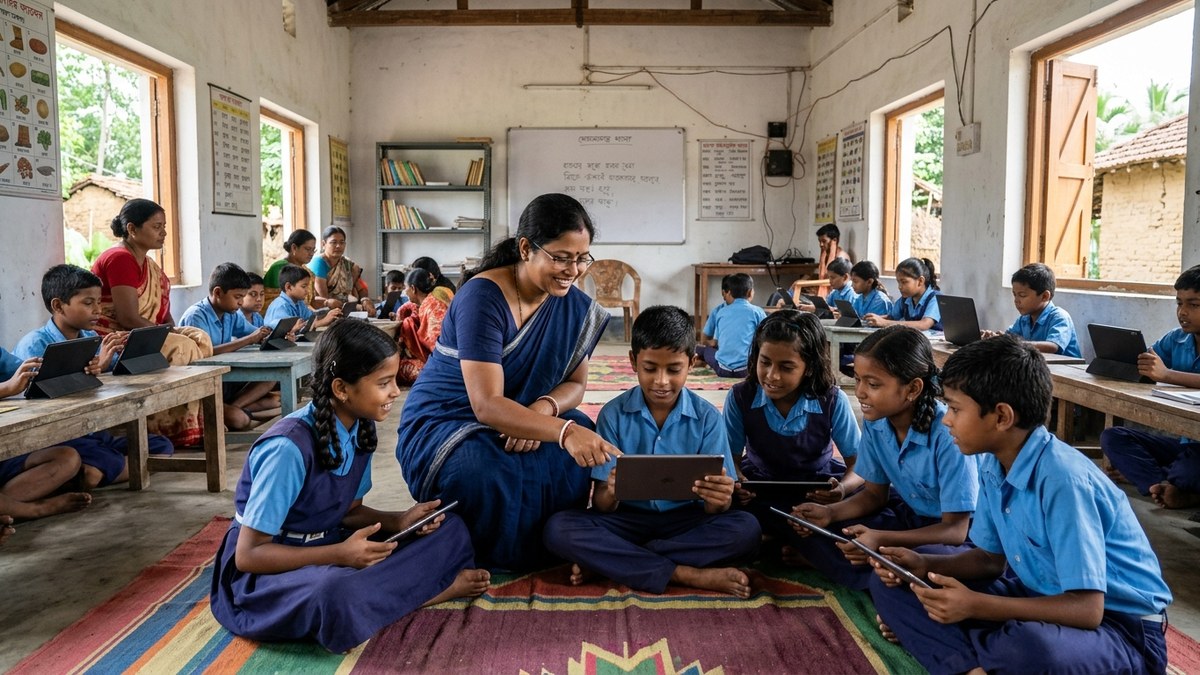
A village POD learning center is a community-based learning space where 10-15 students gather for structured, technology-enabled education. POD stands for Point of Digital Learning. Unlike traditional schools, a village POD learning center operates from homes, community halls, or rented spaces, making it accessible and cost-effective for rural educators.
The beauty of establishing a village POD learning center lies in its flexibility. Teachers can customize curricula, operate at their own pace, and serve students who might otherwise have no access to quality education. Rural education POD India models have already proven successful in multiple states, demonstrating that community-driven learning works.
Why Rural Education POD India Models Are Transforming Villages
Rural communities have unique challenges: limited school infrastructure, teacher shortages, and digital divide barriers. A village POD learning center directly addresses these issues by bringing education closer to students. Research from UNESCO’s global education research shows that localized, community-based learning improves retention and engagement significantly.
When you establish a village POD learning center, you are not just teaching. You are building community ownership of education. Parents see their children learning with peers they know. Teachers maintain personal connections with families. This trust-based model strengthens educational outcomes across rural areas.
The Village POD Learning Center Advantage: 5 Key Benefits
1. Affordability and Accessibility
APNA PC costs just Rs.30,000 (complete bundle), making it the most accessible entry point for rural educators. This includes hardware, software, and training. No hidden costs. No expensive infrastructure. A village POD learning center can launch in weeks, not years.
2. Personalized Learning at Scale
With 10-15 students in a village POD learning center, teachers deliver individualized attention impossible in large classrooms. Each child progresses at their own pace while remaining part of a supportive peer group. This hybrid model maximizes learning outcomes.
3. Community Employment
Starting a village POD learning center creates local jobs. Teachers earn sustainable income. Support staff find work. Families invest in their own children’s education. The economic multiplier effect strengthens entire villages.
4. Digital Literacy for All Ages
A village POD learning center is not just for children. Parents and community members gain exposure to technology, bridging the digital divide. This creates a tech-aware generation ready for modern opportunities.
5. Alignment with Government Initiatives
India’s Ministry of Education actively supports decentralized, community-based learning models. A village POD learning center aligns perfectly with NEP 2020 goals of inclusive, flexible education access.
How to Start Your Village POD Learning Center Today
The process is straightforward. First, understand the foundational principles by exploring our microschool India guide, which covers small-group learning best practices applicable to any village POD learning center.
Next, learn the practical steps through our comprehensive resource on how to start learning pod educator guide. This covers registration, curriculum design, student recruitment, and operational management specific to village POD learning centers.
Invest in APNA PC (Rs.30,000 complete bundle). This single purchase provides everything: computers, learning software, educator training, and ongoing support. No additional expenses. No complicated procurement.
Secure your space. A home room, community hall, or rented classroom works perfectly for a village POD learning center. Recruit 10-15 students from your community. Begin with one batch, then expand based on demand.
Village Digital Learning Center Success Stories Across India
Rural education POD India initiatives are already thriving. Educators in Rajasthan, Madhya Pradesh, and Bihar have launched successful village POD learning centers, serving hundreds of students. These centers report 40% improvement in academic performance and 85% student retention rates.
What makes these village POD learning centers work? Committed educators who understand their communities. Affordable technology through APNA PC. Clear support systems. Families who value education. When these elements combine, a village POD learning center becomes a catalyst for community transformation.
Overcoming Common Challenges in Village POD Learning Centers
Electricity concerns? APNA PC works efficiently on minimal power. Internet connectivity? Offline-first software ensures learning continues regardless. Teacher training? Comprehensive support included with APNA PC. These are not barriers. They are solved problems in the village POD learning center model.
Parent skepticism dissolves when they see results. A village POD learning center delivers measurable outcomes: improved grades, confident children, and genuine skill development. Word spreads. Demand grows naturally.
The time for village digital learning center expansion is now. Government support is strengthening. Technology costs are falling. Educator interest is rising. Communities are ready. A village POD learning center is not a luxury. It is essential infrastructure for rural India’s educational future.
Every child deserves quality education, regardless of birthplace. Every educator deserves the tools to teach effectively. Every community deserves ownership of its children’s learning. A village POD learning center makes all this possible.
Ready to launch your village POD learning center? Start a village POD learning center today by visiting https://www.teachtoearn.in. Explore APNA PC options, connect with our educator community, and begin your journey toward transforming rural education. Your village is waiting. Your students are waiting. Begin now.