
The Microschool Revolution is Already Here
Your child is sitting in a classroom with 60 other kids. The teacher can’t see half of them. Nobody’s learning much. This is the reality for millions of Indian families right now. But here’s the truth: a microschool India model is quietly changing everything. Small group learning India is not some distant future fantasy. It’s happening in living rooms, community centres, and dedicated learning spaces across the country right now.
Let’s be honest. The traditional school system was designed for the industrial age. It still runs like a factory. Line up the kids. Same pace for everyone. Same curriculum. Same results: mediocrity for most, excellence for a few. Most people don’t realise that the microschool model education is actually older than big schools. One-on-one and small group learning was how education worked for centuries. We’re not inventing something new. We’re going back to what actually works.
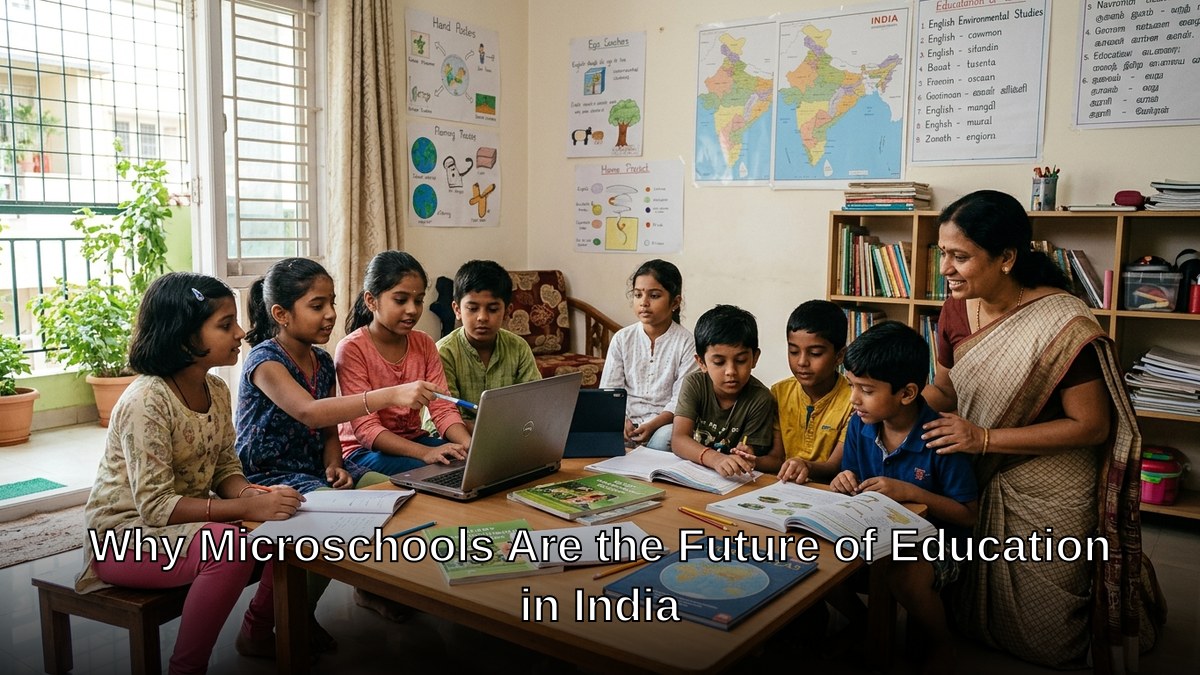
Why Microschools Work Better for Indian Learners
A microschool typically has 8 to 15 students per educator. That’s it. Not 40. Not 50. This changes everything about how learning happens.
First, the teacher actually knows each child. Their strengths. Their struggles. Their learning style. In a microschool India setting, you can’t hide behind the crowd. You also can’t fall through the cracks. Every student gets seen.
Second, the pace adjusts to real learners, not an imaginary average. A child struggling with fractions gets extra support. A child ready for advanced concepts moves ahead. Small group learning India means customisation without the fancy jargon.
Third, the cost is lower. No massive infrastructure. No bloated administration. Just educators, learners, and the right tools. This is why homemakers, senior citizens, and tuition teachers are building these spaces. The barrier to entry is real but manageable.
Here’s what most people miss: microschools aren’t just for rich families in metro cities. They work brilliantly in tier 2 and tier 3 towns. In communities. In neighbourhoods. An edupreneur with a passion for teaching and a small investment can start something that changes lives.
- Small group learning means individual attention
- Flexible pacing allows students to progress at their speed
- Lower overhead costs make education accessible
- Community-based learning builds stronger connections
- Teachers can actually innovate and experiment
The microschool model education is spreading because it solves real problems. Parents see their kids actually learning. Teachers see their students thriving. Edupreneurs see a viable business model.
The Technology That Makes Microschools Scalable
You don’t need fancy infrastructure to run a Point of Digital Learning, or POD. A POD is a home or community learning centre run by a trained educator. It’s the operational backbone of the microschool model in India.
But here’s what changes the game: the right hardware and software. This is where APNA PC comes in. The complete bundle at Rs.30,000 includes education software, 3-year warranty, installation, and a Mini PC with i3 7th Gen processor, 8GB RAM, 128GB SSD, monitor, keyboard, mouse, webcam, and headset. This isn’t luxury. This is the minimum viable setup to run a professional POD.
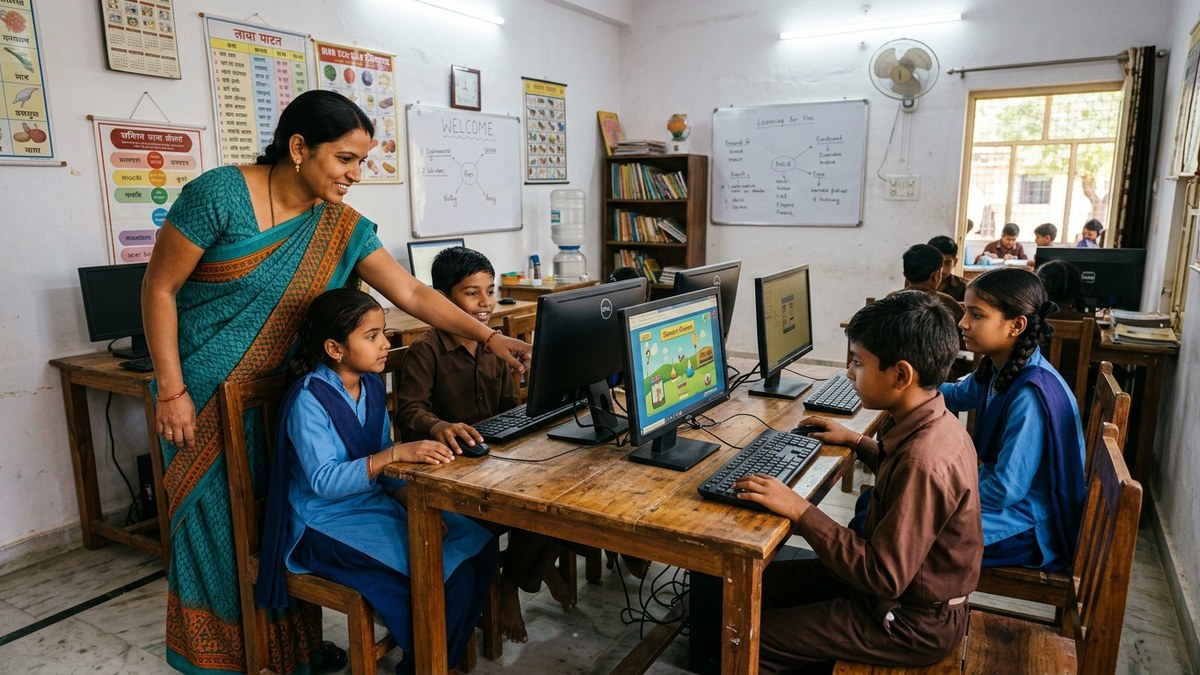
With APNA PC, you can access DIKSHA digital learning platform and other quality educational content. You can conduct online sessions. You can track student progress. You can operate like a real institution, not a kitchen table operation.
The investment is clear. The returns are real. Teachers report that having proper technology makes them more effective, not less. Students engage better with digital tools. Parents see measurable progress.
Who’s Building Microschools in India Right Now
Homemakers are starting microschools in their neighbourhoods because they understand community and they understand kids. Senior citizens are bringing decades of teaching experience to small group learning India. Tuition teachers are upgrading from one-on-one coaching to running structured PODs. Edupreneurs are building education businesses that actually make sense economically.
These aren’t people waiting for permission. They’re not waiting for the perfect curriculum or the perfect building. They’re starting with what they have. A room. A passion. A commitment to doing better than the factory model.
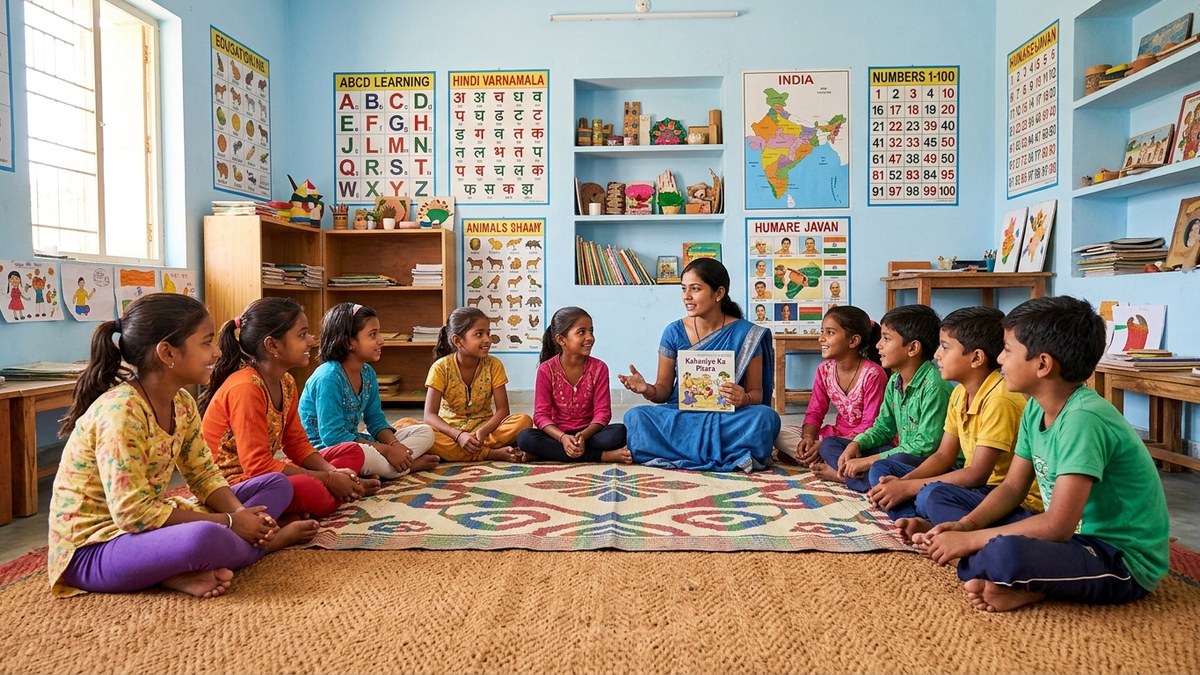
The hybrid learning pod model is proving that you can blend in-person instruction with digital tools. You can run a microschool India operation that’s both personal and scalable. You can serve your community and build a sustainable income.
According to learning methodologies on Wikipedia, small groups outperform large ones on almost every measure. Student engagement. Retention. Application. Confidence. The data is clear. The microschool model education works.
Starting Your Own Microschool: What You Actually Need
Most people think starting a microschool requires massive capital. Wrong. You need a space. Any space. A room in your home. A community centre. A rented shop. You need a basic setup: tables, chairs, a whiteboard, lighting.
You need APNA PC to run digital components. You need training on pedagogy and operations. You need commitment. That’s genuinely it.
The signs you’re ready to start a learning pod are simpler than you think. Do you care about learning? Do you have space? Can you commit 4 to 6 hours a day? Then you’re ready.
The microschool India movement is not about replacing schools. It’s about offering choice. It’s about creating alternatives for families who see that the current system isn’t working. It’s about giving educators agency to teach the way they believe is right.
This is happening now. Not in 10 years. Not after some perfect policy change. Right now, across India, people are building better learning spaces. The microschool model education is the future because it’s already the present for thousands of learners.
Ready to join them? Start your learning pod journey with Teach to Earn today.