
You Don’t Need a Fancy Institute to Teach. You Need a Computer.
Here’s the truth: thousands of Indian homemakers, retired professionals, and passionate educators are losing income because they believe tuition classes require a physical classroom, expensive infrastructure, and complicated technology. They’re wrong. Running tuition classes from home using a computer is not just possible. It’s the fastest way to build a legitimate income stream without leaving your house.
Let’s be honest. The education sector in India is desperate for qualified teachers. Whether you’re a homemaker looking to earn, a senior citizen with decades of expertise, or an established tuition teacher wanting to scale, tuition classes from home computer setups are now the backbone of India’s learning ecosystem. You don’t need to rent a space. You don’t need to hire staff. You need the right equipment and a clear plan.
Most people don’t realise that the barrier to entry isn’t knowledge or teaching ability. It’s access to reliable technology. That’s where APNA PC changes everything.
Key Takeaways
- To run tuition classes from home you need one reliable computer, a stable internet connection, and education software that handles live video, screen sharing, assignments, attendance and payments.
- A computer replaces the classroom, whiteboard, attendance register and payment desk at once, and lets you teach students beyond your own locality.
- The setup steps are simple: pick a quiet, well-lit corner, install the computer, choose one subject and one or two grade levels, set your fee, and start with 10 to 15 students in a batch.
- Home tuition in India commonly runs Rs.300 to Rs.1500 per hour depending on subject, grade and experience, with online classes usually priced a little below in-person rates.
- A laptop that overheats or software that crashes during a live class costs you students, so a dedicated machine that runs for years is the safer choice.
Why a Computer is Your Most Powerful Teaching Asset
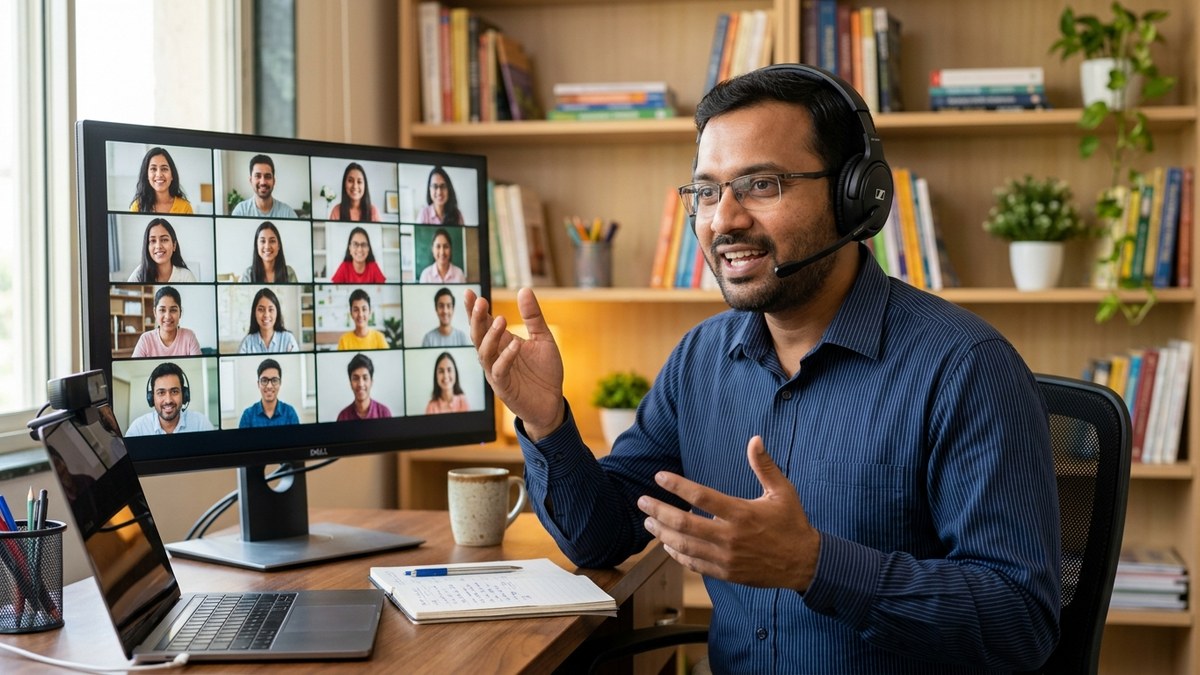
A computer isn’t optional anymore. It’s your classroom, your whiteboard, your attendance register, and your payment gateway all in one. When you run online tuition classes, you reach students across your city, your state, or beyond. You eliminate commute time. You work flexible hours. You serve multiple batches simultaneously through recorded content or live sessions.
But here’s what most tutors miss: you need a system that actually works. Not a laptop that heats up after 20 minutes. Not software that crashes during a live class. Not a setup that requires a tech support degree to maintain.
APNA PC is built specifically for educators. The complete bundle includes:
- Mini PC with i3 7th Generation processor, 8GB RAM, 128GB SSD (runs smoothly for years)
- Education software pre-loaded and ready to use
- Monitor, keyboard, mouse, webcam, and professional headset
- 3-year warranty and professional installation
- All for Rs.30,000
This isn’t a gaming laptop. This isn’t a status symbol. This is a tool designed for home tuition business India educators who need reliability, not flash.
Setting Up Your Point of Digital Learning (POD)
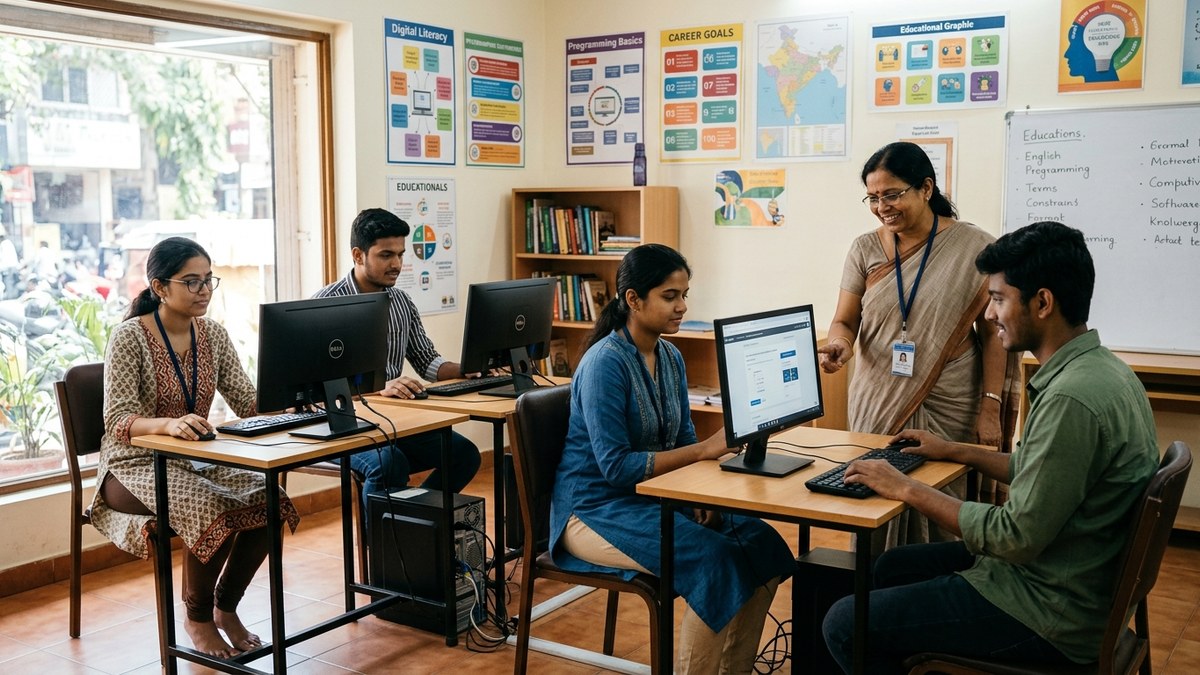
Before you start teaching, understand what you’re building. A POD (Point of Digital Learning) is either a home-based or community learning centre run by a trained educator like you. It’s not a franchise. It’s not a corporate chain. It’s your business, your rules, your students, your income.
Here’s how to set it up:
- Choose your space: A corner of your home works. A small community centre works better. You need a quiet room, good lighting, and stable internet.
- Install your computer: APNA PC comes with installation support. You’ll have everything running within hours.
- Select your subjects and grades: Don’t teach everything. Focus on what you know best. Mathematics for Class 8-10. English for competitive exams. Coding for high schoolers. Pick your niche.
- Set your fees: Home tuition in India ranges from Rs.300 to Rs.1,500 per hour depending on subject, grade, and your experience. Online classes typically charge 20-30% less than in-person sessions.
- Create a schedule: Start with 10-15 students. One batch in the morning, one in the evening. Build from there.
If you’re unsure about the process, read our guide on how to start a home tuition centre in India. It walks you through every step.
The Software and Tools You Actually Need
APNA PC comes with education software built in. But you’ll also want to explore best online teaching tools for Indian teachers. The combination matters.
Your software should handle:
- Live video classes (no lag, no buffering)
- Whiteboard and screen sharing
- Assignment submission and grading
- Attendance tracking
- Payment collection and invoicing
APNA PC’s bundle includes software that covers all of this. You’re not cobbling together five different apps. You’re not paying subscription fees that eat into your profit margins. Everything is integrated, everything is yours.
Income Reality: What You Can Actually Earn
Let’s talk numbers. Assume you charge Rs.500 per hour for online classes (reasonable for most subjects and grades).
- 10 students, 2 hours per week each = 20 hours of teaching = Rs.10,000 per week
- Per month = Rs.40,000 (before costs)
- Per year = Rs.4,80,000
Your costs: internet (Rs.500/month), electricity (minimal for a Mini PC), and software (included in APNA PC). Your net income after costs is over Rs.4 lakhs annually from just 10 students. Scale to 20-30 students, and you’re looking at Rs.8-12 lakhs per year.
This isn’t theoretical. Thousands of educators in India are doing this right now.
Why APNA PC is Different
You could buy a random laptop online. You could download free software and hope it works. You could figure it out yourself through YouTube videos.
Or you could invest Rs.30,000 in a system designed specifically for educators. APNA PC isn’t just hardware. It’s a complete solution. The i3 processor handles multiple video streams. The 8GB RAM runs your software smoothly. The SSD means fast boot times and no lag. The 3-year warranty means you’re protected. The installation support means you’re not fumbling with cables.
Most importantly: it’s affordable. Rs.30,000 is recovered within the first month of teaching if you have just 5 active students.
Getting Started Today
You don’t need permission. You don’t need a degree from a coaching institute. You don’t need venture capital or a business partner. You need a computer, an internet connection, and students who want to learn from you.
If you’re ready to turn your expertise into income, here’s what to do next: Set up your POD. Get your APNA PC. Start with 5-10 students. Grow from there.
The education sector in India is growing faster than schools can handle. Parents are looking for quality tutors. Students want flexible learning. Your home tuition business can meet that demand.
Ready to start? Learn how to launch your own learning POD and begin earning today.
For more context on the role of private tutoring in modern education, see this overview of private tutoring. And if you’re teaching board exams, align your curriculum with the Central Board of Secondary Education guidelines.
Frequently Asked Questions About Run tuition classes from home
What do I need to start tuition classes from home?
You need a quiet room with good light, a stable internet connection, and a reliable computer with a webcam and headset. Add education software for live classes, assignments, attendance and fee tracking. A clear plan for which subject and grades you will teach matters as much as the equipment.
Can I teach tuition from a laptop or phone?
A phone is not practical for regular teaching because you cannot share a screen or manage a class properly. A laptop can work but many older ones overheat or lag during long video sessions. A dedicated desktop or mini PC with enough RAM handles video, screen share and recording without freezing.
How much can I earn running tuition classes from home?
It depends on your subject, location and hours. At around Rs.500 per hour, ten students taking two hours a week each works out to roughly Rs.40,000 a month before small costs for internet and electricity. Adding a second batch can push that higher, but most tutors build up slowly from five students.
How many students should I start with?
Start with five to ten students in one batch. A small group lets you get strong results, which brings referrals through word of mouth. Once your schedule and materials are steady, add a second batch in a different time slot.
What fees should I charge for home tuition in India?
Rates vary widely: Rs.300 to Rs.500 per hour is common for maths and science in metros, less in smaller towns, and specialised subjects like coding or music can command more. Online classes usually sit a little below in-person rates. Start near the lower end and raise fees as your reputation grows.
The Central Board of Secondary Education publishes its syllabus, sample papers and marking schemes openly, so a home tutor can align lessons directly with the board’s requirements.