
Your child is already behind. Here is why.
Most Indian students think digital skills mean knowing how to use WhatsApp and Instagram. They are wrong. By 2026, the job market will not care about social media fluency. It will demand coding, data literacy, cybersecurity awareness, and cloud computing basics. If your child cannot do these things, they will compete for jobs that pay less and offer fewer opportunities.
Let me be honest: the education system is not preparing them fast enough. Schools are still teaching computers like it is 2010. Meanwhile, the world has moved on. Parents are confused about what to prioritize. Teachers lack proper training. And students? They are scrolling instead of learning.
This is where digital skills become non-negotiable. Not optional. Not “nice to have.” Essential.
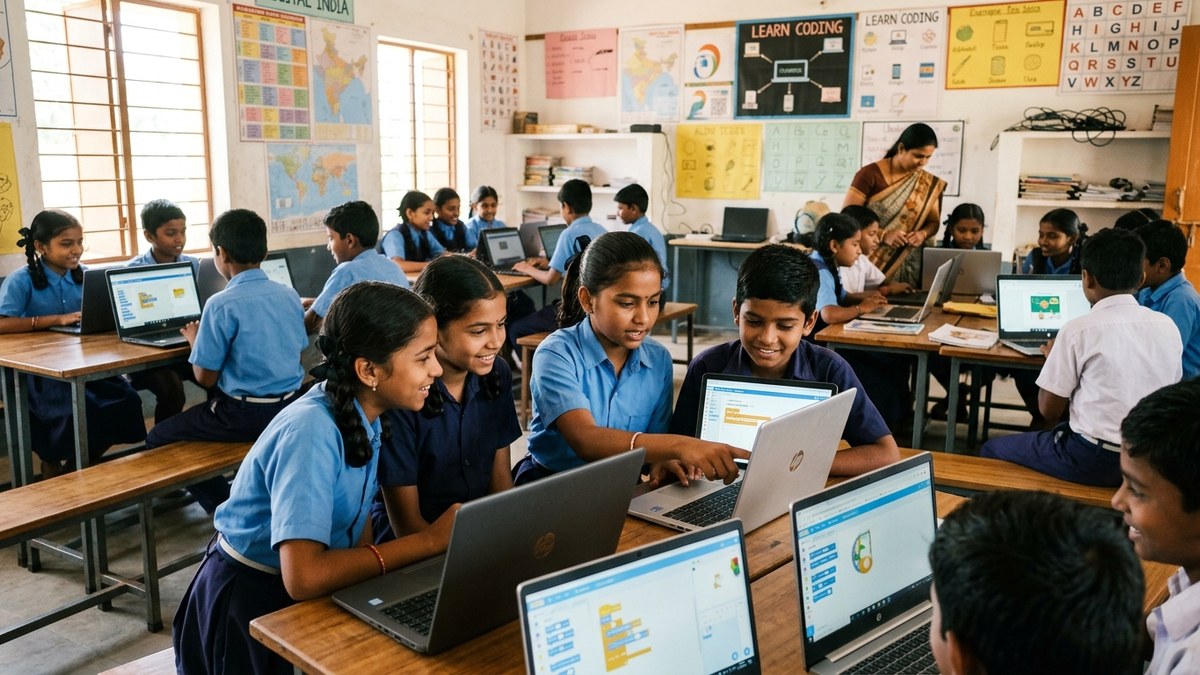
The Five Digital Skills Every Indian Student Needs Right Now
Here is the truth: employers are not hiring based on board exam scores anymore. They want proof of real skills. Here are the five that matter most in 2026.
- Coding and Programming Basics – Python, JavaScript, or even visual coding platforms. Your child does not need to become a software engineer. They need to understand how code works and solve problems with it.
- Data Analysis and Spreadsheet Mastery – Excel is not boring anymore. It is a superpower. Students who can clean data, create pivot tables, and visualize information will be hired first.
- Digital Security and Privacy Awareness – Cybercriminals target Indian students regularly. Your child needs to know how to create strong passwords, recognize phishing, and protect personal information online.
- Cloud Computing Basics – Google Drive, Microsoft 365, AWS fundamentals. Students who understand cloud platforms will work anywhere, anytime.
- Content Creation and Digital Communication – Not just making TikTok videos. Real skills: video editing, podcast production, professional writing, and presentation design.
Read our essential digital skills guide for a deeper breakdown of each skill and how to develop them.
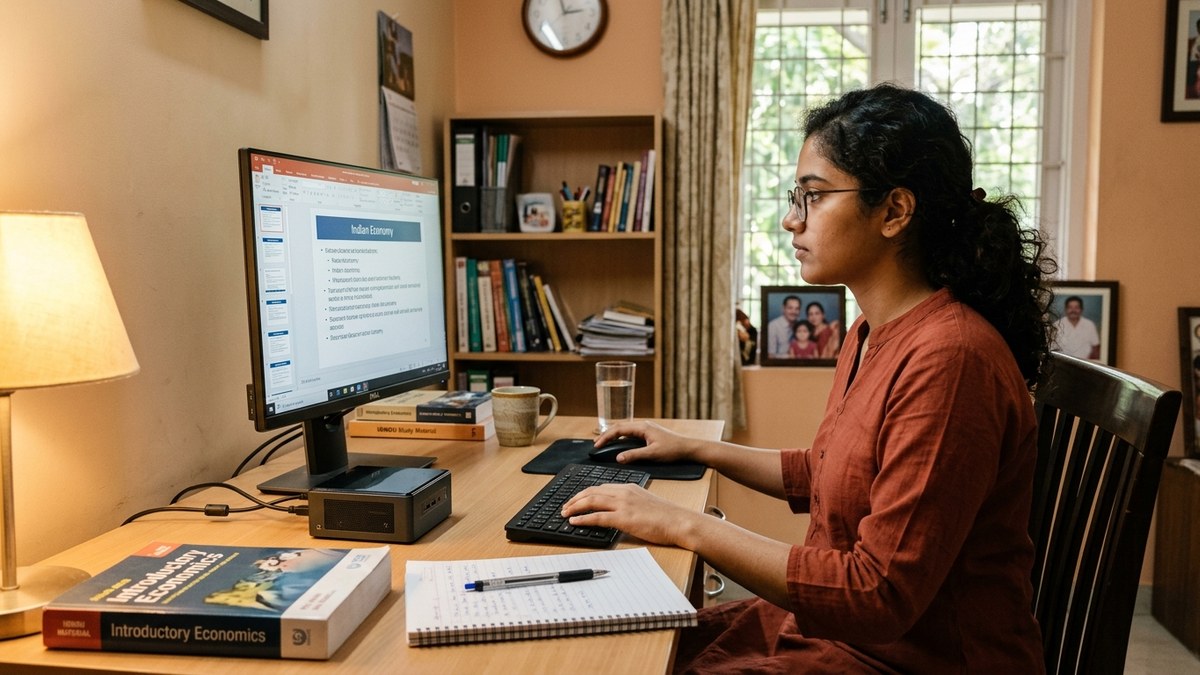
Why Most Indian Students Are Failing at Digital Skills
Three reasons. First, access. Not every student has a computer at home. Many families cannot afford one. Second, guidance. Even if they have a device, they do not know what to learn or how. Third, quality of instruction. Most online courses are generic. They do not match the Indian job market or education board requirements.
The Digital India initiative has made progress, but it is uneven. Urban students in metros have better access. Rural and semi-urban students are left behind. This gap will only grow unless we act now.
Check out our digital literacy for students resource to understand how to bridge this gap in your community.
The APNA PC Solution: Learning Without Barriers
Here is what you need to know: a complete learning setup does not have to cost Rs.100,000. The APNA PC bundle is Rs.30,000. It includes everything.
- Mini PC with i3 7th Gen processor, 8GB RAM, 128GB SSD
- Monitor, keyboard, mouse, webcam, headset
- Pre-loaded education software
- 3-year warranty and installation
This is not a toy. It is a professional learning machine. Your child can code on it. Analyze data. Create content. Learn cybersecurity. Prepare for competitive exams. All without lag, all without compromise.
The APNA PC works best when paired with structured learning at a Point of Digital Learning (POD). A POD is a home or community learning centre run by a trained educator. Students get hands-on guidance, peer learning, and accountability. They do not just buy a device and hope for the best. They learn with purpose.
Parents ask: “Is this enough?” Yes. Teachers ask: “Can I use this in my classroom?” Absolutely. Students ask: “Will this help me get a job?” If you actually use it to learn, yes.
What Parents and Teachers Should Do Today
Stop waiting for the government to solve this. Stop hoping schools will suddenly teach coding and cybersecurity next year. They will not. Your child’s future depends on action today.
Step one: Assess what your child already knows. Can they code? Do they understand data? Can they spot a phishing email? Be honest about the gaps.
Step two: Get them access to proper tools and training. This is where APNA PC and a trained educator matter. You cannot learn to code on a phone. You cannot practice cybersecurity on a tablet. You need a real computer and real instruction.
Step three: Create accountability. Whether it is weekly goals, project-based learning, or peer groups, make sure they are actually learning, not just clicking through tutorials.
The Digital India portal has resources too. Use everything available.
Your child will thank you in 2026 when they have skills that matter. They will thank you even more when they land a job that pays well.
Ready to start? Explore APNA PC and set up a Point of Digital Learning in your home or community today.