The Online Learning Boom Has Left Most Indian Students Behind
Here is the truth: having access to online learning platforms and actually learning something useful are two completely different things. Every Indian student today can download an app. But can they learn? Can they stay focused? Can they afford the equipment? Most people don’t realise that the real barrier isn’t the platform itself. It’s what happens before you even open the app.
The digital education landscape in India has exploded. We have platforms. We have content. We have competition. Yet thousands of students still struggle because they lack one critical thing: a proper setup and guidance. This blog cuts through the noise and shows you exactly which online learning platforms work best for Indian students in 2026, and more importantly, how to actually use them.
The Best Online Learning Platforms for Indian Students Right Now
Let’s be honest: not all platforms are created equal. Some focus on competitive exams. Some focus on skill-building. Some are free but limited. Some are paid but worth every rupee. Here are the platforms that actually deliver results for Indian learners in 2026.
- DIKSHA – This government platform offers free, quality content aligned with NCERT. It’s massive, it’s free, and DIKSHA platform reaches millions of students. Perfect for foundational learning and board exam prep.
- Unacademy – Focused on competitive exams like JEE, NEET, and UPSC. Teachers are experienced. Content is structured. Subscription plans fit different budgets.
- Vedantu – Live interactive classes with real teachers. Good for students who need personal attention. The doubt-solving sessions are particularly useful.
- Byju’s – Gamified learning with adaptive technology. Works well for younger students (Classes 1-8) who need engagement. Older students often find it less rigorous.
- Coursera and edX – For skill-building and career transitions. These platforms offer university-level courses. Ideal for students thinking beyond traditional exams.
- Khan Academy – Completely free. Concept-based. No distractions. Perfect for self-learners who want to understand how online learning works at a fundamental level.
But here’s what nobody tells you: the platform is only 30% of the equation. The other 70% depends on your environment, your equipment, and your access to guided learning.
Why Your Home Setup Matters More Than Your Platform Choice
Most people don’t realise that a poor internet connection, a cramped desk, no monitor, or a slow computer can completely sabotage even the best online learning platforms. You can have access to world-class content but if you’re squinting at a phone screen or dealing with constant buffering, you won’t learn effectively.
This is where the infrastructure gap becomes real. Many Indian students, especially in Tier 2 and Tier 3 cities, don’t have access to a proper computer setup. They rely on shared family devices or their phones. The result? Incomplete learning, frustration, and wasted potential.
Here’s what you actually need for effective e-learning in India:
- A dedicated device (not shared with the whole family)
- A monitor (larger screen = better focus and less eye strain)
- Stable internet (at least 5 Mbps)
- A proper desk and chair
- A webcam and headset (for interactive learning)
- Someone to guide you (a teacher, mentor, or trained educator)
Let’s be honest: most students don’t have all of these. And that’s exactly why the learning outcomes are so disappointing.
How Guided Learning Centers Transform Online Learning Platforms
Here’s something that’s often overlooked: the best online learning happens when it’s not completely online. Confused? Let me explain.
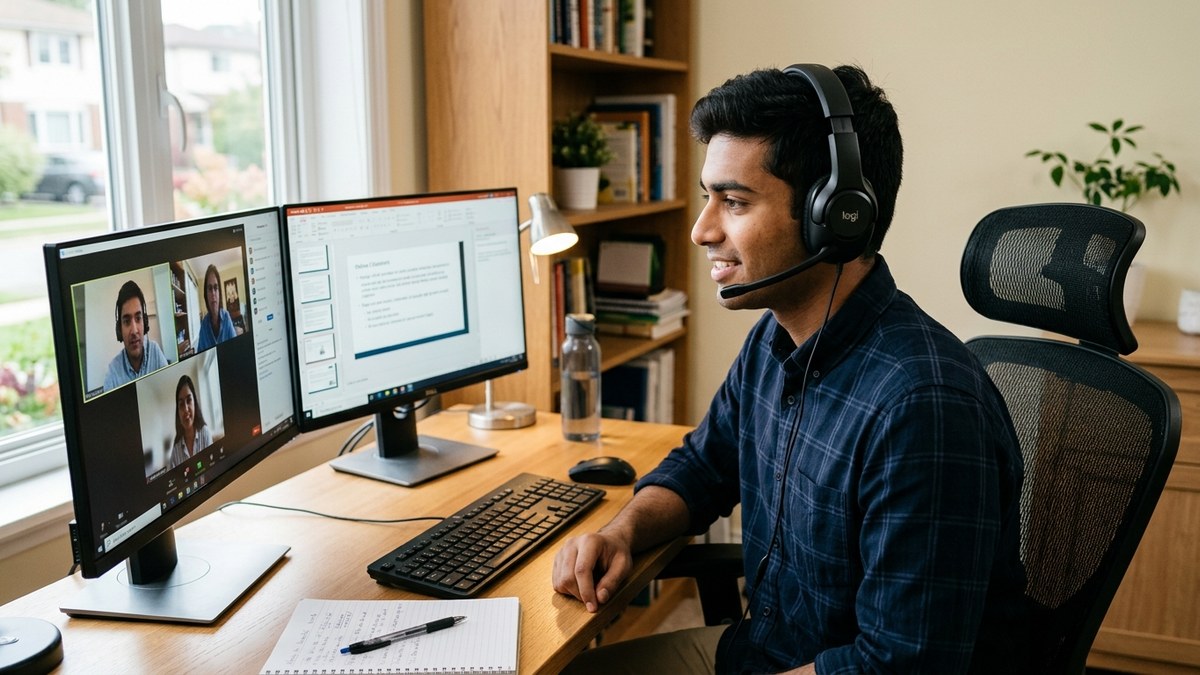
A Point of Digital Learning (POD) is a home or community learning centre run by a trained educator. Students come here to access online platforms, but they’re not alone. A teacher is present. Someone who understands the curriculum, who can answer questions, who can track progress, and who can adjust the pace based on individual needs.
This hybrid model solves multiple problems at once. Students get access to quality digital education. They get the equipment they need. They get personal guidance. Parents get peace of mind. And teachers get a sustainable business model through the home tuition business in India.
The POD model is growing because it works. It bridges the gap between completely self-directed online learning (which has high dropout rates) and traditional classroom learning (which isn’t accessible to everyone).
The Digital Skills Gap That Nobody Talks About
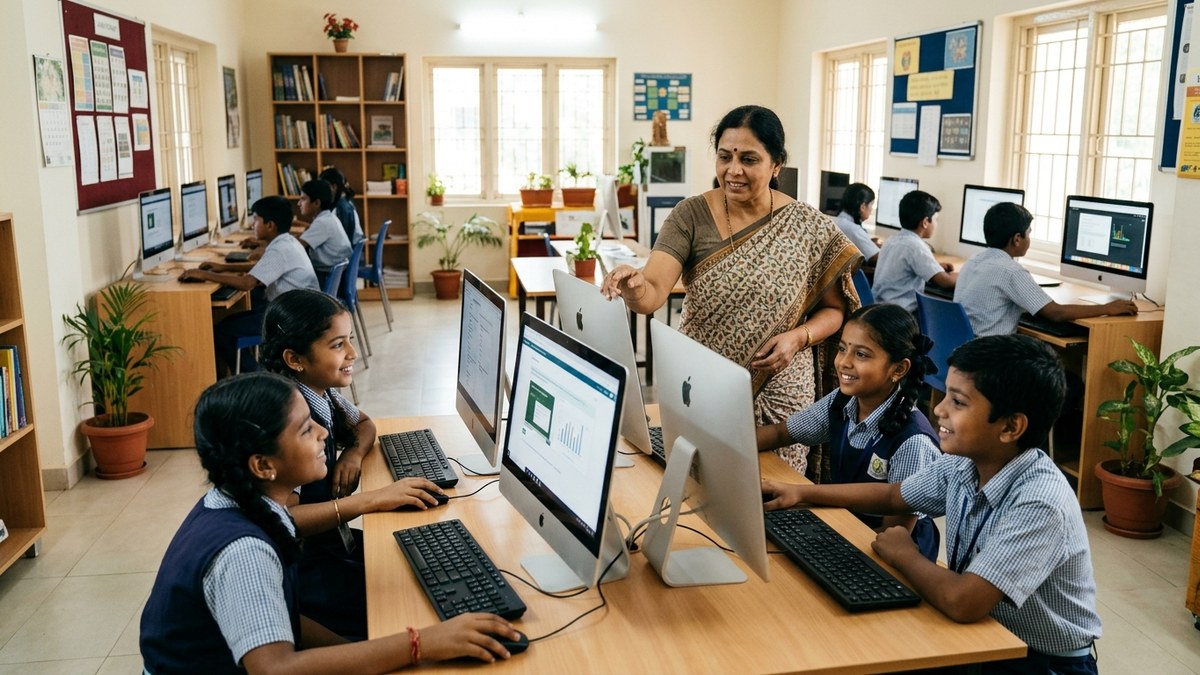
Most people don’t realise that having access to platforms isn’t enough. Students also need to know how to learn online. They need to understand time management, self-discipline, how to take effective notes, and how to troubleshoot technical issues.
These are the digital skills students need in 2026. And most students don’t have them. This is why guided learning environments are becoming essential. A trained educator doesn’t just teach the subject. They teach students how to learn in a digital environment.
Making Online Learning Affordable and Accessible
The biggest barrier to online learning in India isn’t the platforms. It’s the cost of equipment. A decent laptop costs Rs.40,000 to Rs.1,00,000. Not everyone can afford that. Yet without proper equipment, students can’t access most online platforms effectively.
This is where complete bundles make sense. APNA PC is a Rs.30,000 bundle that includes everything a student needs: a Mini PC with i3 7th Gen processor, 8GB RAM, 128GB SSD, a monitor, keyboard, mouse, webcam, headset, education software, 3-year warranty, and installation. For the price of a mid-range smartphone, a student gets a complete learning workstation.
Pair this with access to quality online learning platforms and guided support from a trained educator, and you’ve solved the accessibility problem. This is how digital education actually reaches students who need it most.
Your Next Step
Choosing the right online learning platform is just the first step. The real work is building an environment where learning actually happens. That means proper equipment, stable internet, and someone to guide the process.
If you’re a student looking to upgrade your learning setup, or a teacher looking to start a POD, explore how APNA PC can be your foundation. Visit our dedicated page to learn more about this complete solution.
Discover APNA PC and transform your digital learning journey
The platforms are ready. The content exists. The only question is: are you ready to take digital learning seriously?