
AI Won’t Kill Your Classroom. But Ignoring It Might.
Your students already use AI. ChatGPT, Google Gemini, image generators. They’re not waiting for permission. The question isn’t whether AI belongs in education anymore. It’s whether you’ll lead the conversation or get left behind.
Here’s the truth: AI tools for teachers aren’t about replacing you. They’re about giving you back time. Time to actually teach instead of drowning in admin work. Time to know your students better. Time to design lessons that stick.
Most people don’t realise that the best Indian educators are already using AI in their classrooms and coaching centres. Not to cut corners. To work smarter. This post shows you exactly how, without turning your classroom into a robot farm.
Key Takeaways
- AI tools for teachers in India work best when they remove repetitive admin work, not when they try to replace real teaching.
- Tasks like creating practice question variations, grading homework, and writing individual feedback are where AI saves the most time.
- The relationship between teacher and learner still drives real outcomes; AI only clears space for more of that interaction.
- A reliable computer setup, not just a phone, is what actually lets teachers use AI tools consistently in daily lesson planning.
What AI Tools Actually Do (And Don’t Do)
Let’s be honest: artificial intelligence education isn’t magic. It won’t teach your students for you. It won’t replace the relationship between teacher and learner that actually changes lives. What it will do is handle the repetitive stuff so you don’t have to.
Think about your week right now:
- Creating 50 variations of the same question for practice papers
- Grading 100 homework sheets by hand
- Writing individual feedback for every student
- Searching for that one diagram you saw three months ago
- Planning lessons from scratch every single year
AI handles all of this. In minutes. Not perfectly. But good enough that you can spend those hours on what actually matters: understanding why Priya isn’t grasping quadratic equations, or designing a project that makes history real for your class.
The AI classroom India is building right now isn’t one without teachers. It’s one where teachers do less busywork and more teaching.
Practical AI Tools Every Indian Teacher Should Know
You don’t need to be a tech expert. You need three things: a device, internet, and willingness to experiment. Start with what you already have access to. Check out our guide on free Google tools for Indian teachers to see what’s available without spending a rupee.
Here’s what’s actually useful in a classroom or coaching centre:
- Question generation: ChatGPT or Google Gemini creates practice questions in seconds. You edit one or two, then you have 50 variations ready. Your students get fresh material every batch.
- Grading assistance: Upload answer sheets to AI tools. Get instant feedback structure. You add the nuance and marks. Saves 60% of grading time.
- Lesson planning: Describe your topic and learning objectives. AI generates a full lesson outline with activities, resources, assessment ideas. You refine it to match your students.
- Student-specific help: Create a chatbot for your subject using free tools. Students get instant answers to common questions. You get peace from 50 repetitive “Sir/Ma’am, how do I solve this?” messages.
- Content creation: Need a video script, infographic layout, or summary? AI drafts it. You make it yours.
The Real Block: You Need the Right Setup
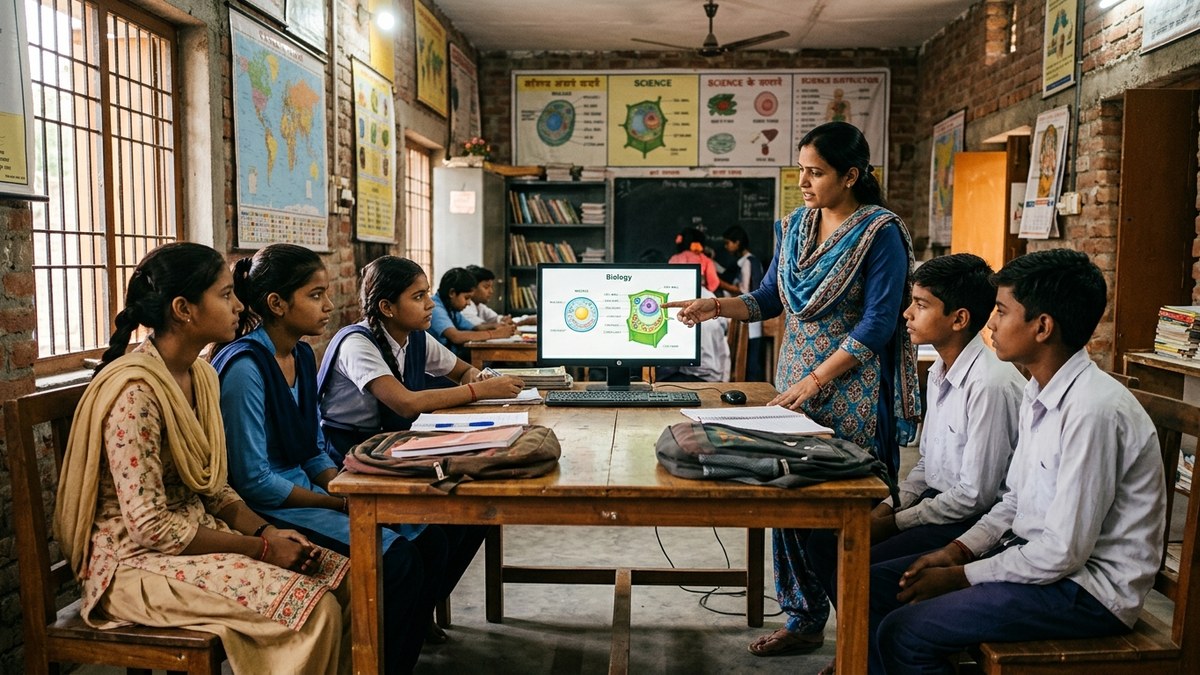
Here’s what stops most teachers in India from using AI tools: they don’t have a proper device to work with. A phone isn’t enough. Your old laptop overheats. You can’t run two browser tabs without it freezing.
This is exactly why APNA PC exists. For Rs.30,000, you get a complete bundle that actually works: Mini PC i3 7th Gen, 8GB RAM, 128GB SSD, monitor, keyboard, mouse, webcam, headset, education software, 3-year warranty, and installation. Not fancy. Built for Indian teachers and POD owners running learning centres from home.
You can start a coaching class with APNA PC tomorrow. Run your Point of Digital Learning. Use AI tools without lag. Record video lessons. Host online batches. Everything works.
According to UNESCO education research, the biggest barrier to tech adoption in Indian schools isn’t teacher resistance. It’s access to reliable hardware. You can’t use AI if your device crashes every 20 minutes.
How to Actually Integrate AI (Without It Feeling Forced)
Don’t try to use AI everywhere at once. That’s how you burn out and go back to pen and paper.
Start small:
- Pick one repetitive task this week. Use AI to automate it. See what you gain.
- Spend that gained time on something that matters to you. Better lesson design. One-on-one time with struggling students. Creating a new course.
- Next week, pick another task.
- Build from there.
Your students will notice. Not because you’re using fancy tech. Because you’re more present. Less stressed. More creative. That’s what AI actually does for teaching.
The Uncomfortable Truth About Digital Literacy
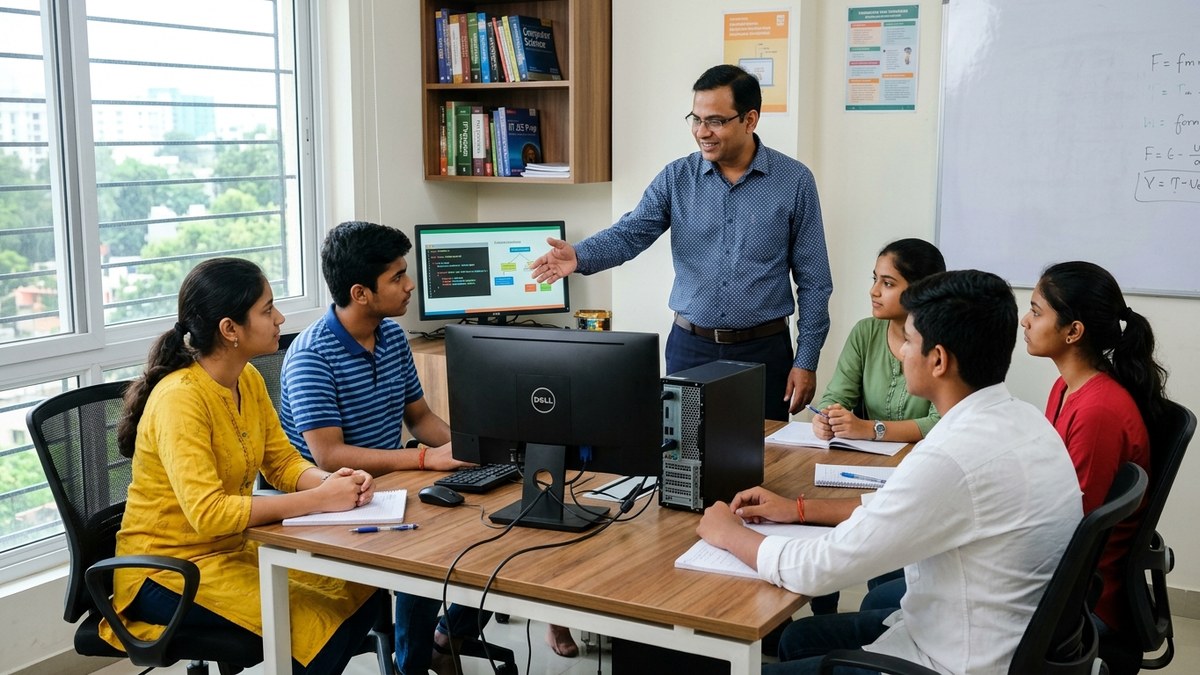
You don’t need to be a programmer. But you do need to understand how these tools work at a basic level. That’s digital literacy. It’s not optional anymore for educators.
The good news: it’s learnable. Spend 30 minutes this week playing with ChatGPT or Google Gemini. Ask it questions. Try different prompts. See what works. That’s it. You’re already learning.
Your students are already doing this. Don’t let them get ahead of you.
What This Means for Your Career
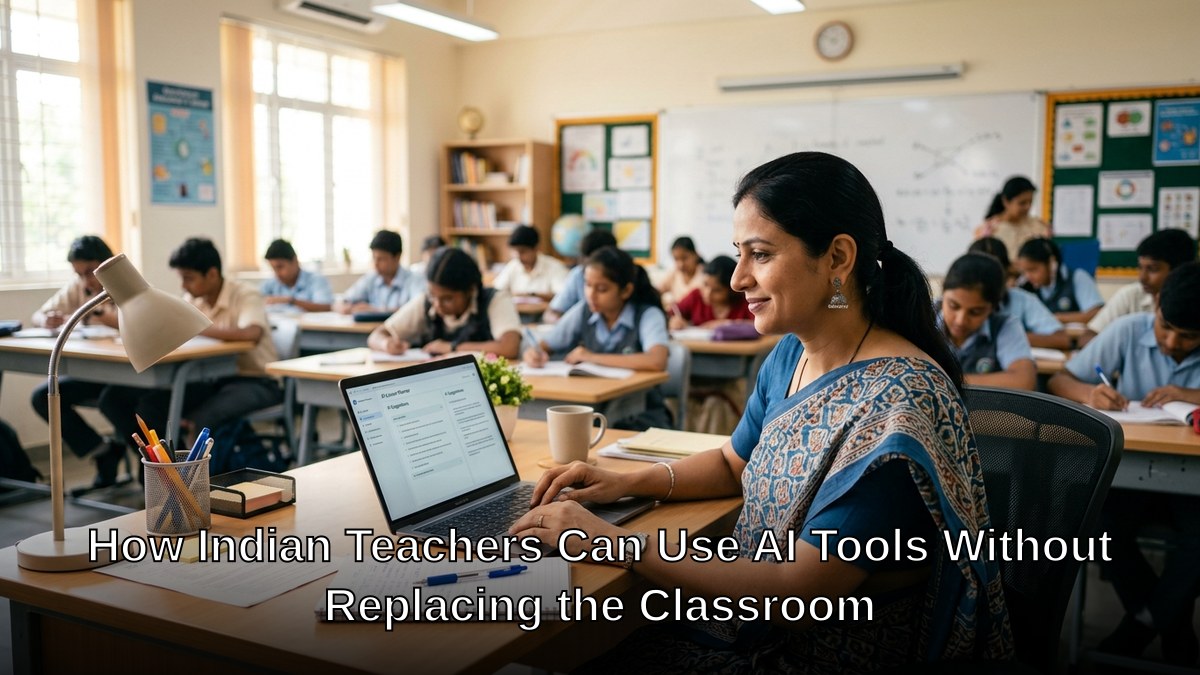
Teachers who use AI tools well will earn more. That’s not a prediction. That’s already happening. Coaching class owners with AI-powered systems charge more because they deliver better results faster. Online tutors with AI assistance handle more students without burning out. POD owners using AI create better learning experiences and scale faster.
This isn’t about replacing human teaching. It’s about becoming a better teacher. One who works smarter. One who has time to actually care about individual students. One who can run a profitable coaching centre without working 14-hour days.
The question is: will you be that teacher?
Start this week. Pick one AI tool. Try it. See what happens. If you need a device that actually runs these tools without freezing, we’ve got you covered with APNA PC. But the first step is just deciding to try.
Your classroom doesn’t need to be replaced. It needs to evolve. And you’re the only one who can make that happen.
Frequently Asked Questions About AI tools for teachers in India
Will AI tools replace teachers in Indian classrooms?
No, AI tools handle repetitive tasks like generating practice questions and grading, but they cannot replace the human relationship between teacher and student. The teachers who benefit most treat AI as an assistant for admin work, not a substitute for classroom judgment. Schools and coaching centres that have adopted AI still rely heavily on teacher-led instruction.
Which AI tasks save teachers the most time?
Generating multiple versions of practice questions, drafting first-pass feedback on homework, and summarising long reference material tend to save the most hours weekly. These are tasks that do not require deep pedagogical judgment, which makes them safe to hand off to AI. Lesson planning and actual teaching still benefit from a human touch.
Do I need technical skills to use AI tools as a teacher?
No, most classroom-friendly AI tools work through simple chat or web interfaces that need no coding knowledge. Basic computer literacy, typing comfort, and knowing how to phrase a clear request are enough to get started. A short trial period with low-stakes tasks like practice question generation is a good way to build confidence.
What equipment do I need to use AI tools for teaching?
A stable computer with internet access works far better than a phone for tasks like reviewing AI-generated content, editing question papers, and managing multiple student files. A shared centre or home computer is usually sufficient; no special hardware is required for most classroom AI tools. Reliable internet matters more than device power for these tasks.
Is it safe to rely on AI for grading or feedback?
AI can speed up first-pass grading and feedback drafts, but final review by the teacher is still necessary for accuracy and fairness. Treating AI output as a draft rather than a final answer avoids most mistakes. This approach keeps the teacher accountable while still saving significant time.
UNESCO’s guidance on AI in education stresses that AI should support teachers and preserve human oversight in classrooms, rather than replace teacher judgment.