The Uncomfortable Truth About Learning Disabilities in India
Millions of Indian students struggle silently in classrooms designed for “average” learners. Dyslexia, dyscalculia, ADHD, and autism spectrum conditions affect roughly 1 in 5 children. Yet most tuition centres and schools treat them as problems to fix rather than minds to understand. Here’s the truth: traditional teaching methods fail these students not because they lack ability, but because the system lacks flexibility.
AI for inclusive education is changing this equation. Not through magic. Through precision. Through personalisation at scale. Through tools that actually listen to how each child’s brain works.
Let’s be honest. You’ve probably taught a student who reads backwards, counts on fingers at age 12, or zones out within minutes. You’ve wondered why they’re “lazy” or “not trying hard enough.” Most people don’t realise these students often have higher IQs than their peers. They just process information differently.
How AI for Inclusive Education Tools Actually Work
AI isn’t about replacing you. It’s about giving you superpowers.
Consider what happens when a student with dyslexia reads. Their brain scrambles letter sequences. Traditional flashcards and repetition don’t fix this. But AI-powered reading software adapts in real-time. It slows down text. It highlights phonetic patterns. It learns which letter combinations confuse this specific child and adjusts difficulty accordingly. The student makes progress because the tool bends to their brain, not the other way around.
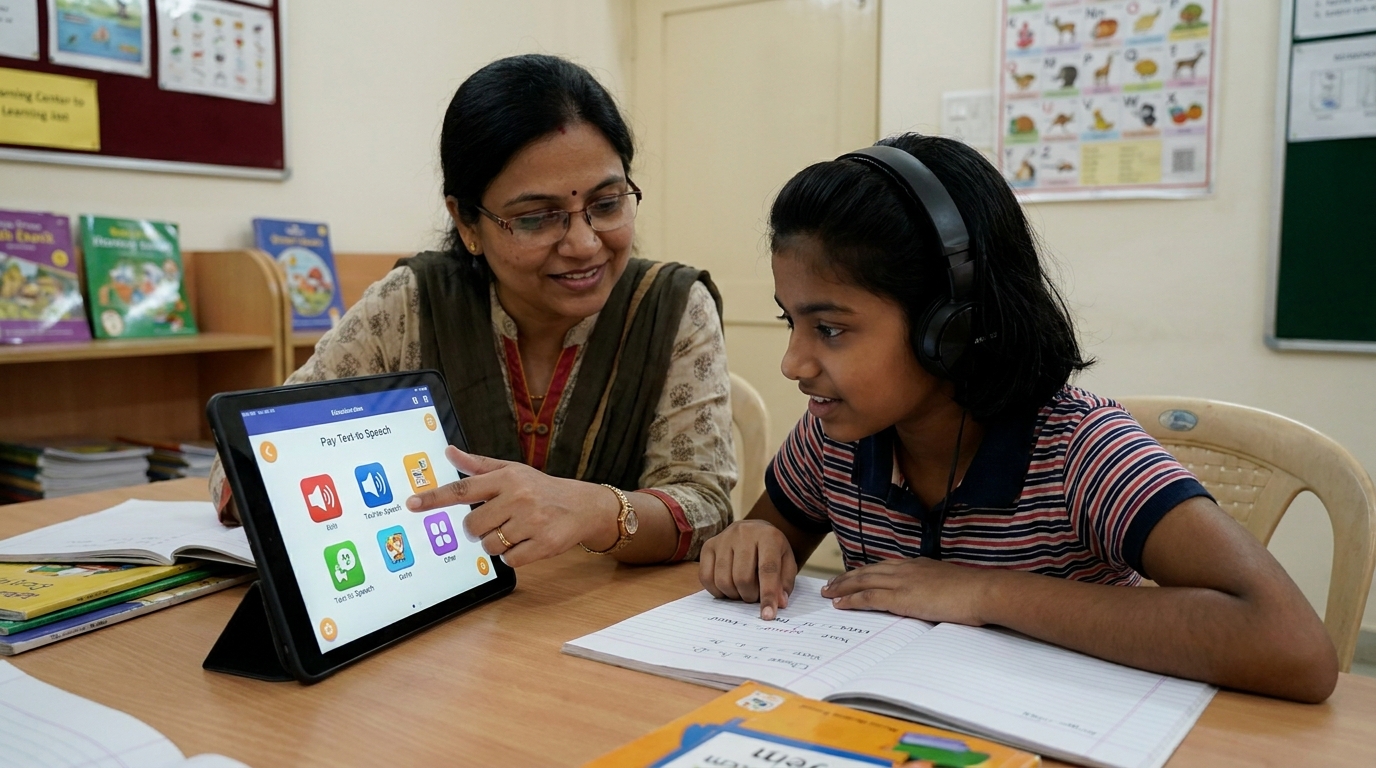
Special education technology in India is now making this accessible to PODs (Points of Digital Learning) and individual tutors. Here’s what changes:
- Speech-to-text tools eliminate writing barriers for students with dysgraphia
- Text-to-speech software helps dyslexic readers access content independently
- Interactive math visualisations turn abstract concepts concrete for dyscalculic learners
- Attention-tracking features alert students when focus drifts, building self-awareness
- Progress dashboards show growth that traditional tests miss entirely
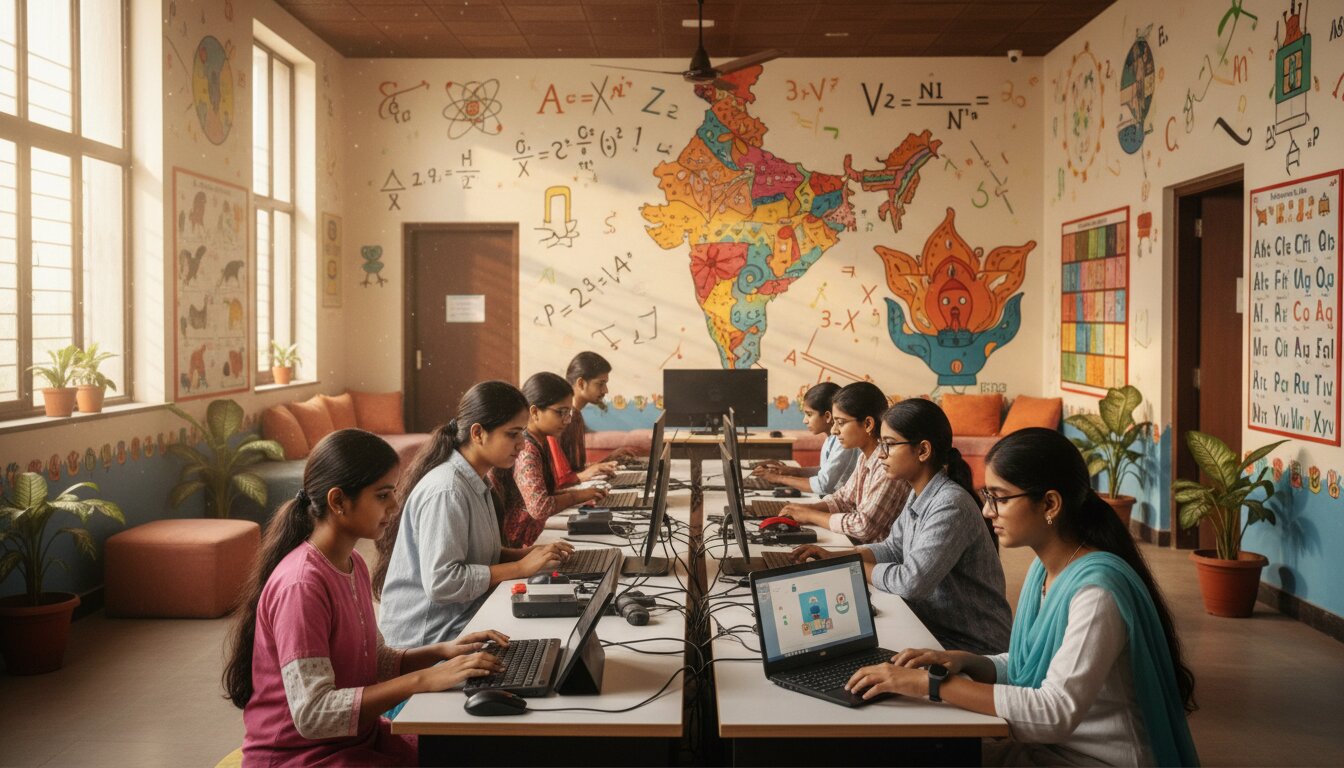
The platform APNA PC bundles all this capability into one affordable device. Rs.30,000 gets you a complete setup: Mini PC with i3 7th Gen processor, 8GB RAM, 128GB SSD, monitor, keyboard, mouse, webcam, headset, education software, 3-year warranty, and installation. That’s a fully functional learning centre for special education technology in India. Not a fantasy. Reality.
Run this from your home or community space. Serve students no mainstream school will accommodate. Charge premium fees because you’re solving a problem nobody else is solving.
Why Your POD Needs This Now
The market is waking up. Parents are desperate. Schools are overwhelmed. Government initiatives like the DIKSHA platform are pushing inclusive education, but implementation is patchy. You can fill that gap.
A tutor equipped with AI for inclusive education doesn’t just teach differently. You become a specialist. You attract students with learning disabilities. You charge 2-3x your normal rates. You build a waiting list.
The data backs this. Students using AI-assisted learning show 30-40% faster progress in reading comprehension and math fluency compared to traditional tutoring. Not because the AI is magic. Because it removes friction. Because it personalises at a level no human tutor can match, no matter how talented.
Most people don’t realise this is already happening in Delhi, Bangalore, and Mumbai. Progressive educators are already running PODs with special education technology. They’re already capturing this market. The question is: will you wait, or will you move?
Building Your Inclusive Education Business
Start small. One APNA PC. One learning space. One focus: students with documented learning disabilities.
Partner with schools. Offer assessment services. Identify students who are struggling and recommend your POD for specialised support. Schools will refer because you’re solving their liability problem. Parents will pay because you’re solving their desperation.
Document everything. Track progress. Build case studies. Share results on social media. Nothing sells like proof. A parent seeing their dyslexic child read fluently for the first time will tell 20 other parents.
Check the Apni Pathshala blog for practical strategies on scaling your POD. Review our guide to teaching students AI ethically to build trust with parents and schools.
Government support is real. The Ministry of Education has allocated funding for special education infrastructure. DIKSHA platform hosts free accessible content. UNESCO has published frameworks for inclusive education. The policy environment is moving in your direction.
The Real Opportunity with AI for Inclusive Education
Inclusive education isn’t charity. It’s a business built on solving real problems for families who have nowhere else to turn. AI for inclusive education gives you the tools to do it at scale and profit.
Your competition isn’t other tutors. It’s the mainstream system that fails these students. You’re not competing on price. You’re competing on results. And when a parent sees their child’s confidence bloom because they can finally learn, price becomes irrelevant.
The question isn’t whether AI will change special education. It already is. The question is whether you’ll be the educator leading that change in your community, or whether you’ll watch someone else capture that market.
Move now. The students are waiting.