
Employability Skills Class 9: The Silent Years That Matter Most
Your students are two years away from board exams. They are also two years away from making choices that will define their careers. Most schools treat class 9 and 10 as a sprint toward marks. They are actually the perfect runway for building employability skills class 9 students desperately need.
Here is the truth: A student with 95% in mathematics but zero communication skills will struggle in any job. A student who can solve complex problems but cannot work in a team will be passed over. Employability skills class 10 students develop now will matter far more than their board scores five years from now.
The National Education Policy 2020 acknowledges this. The Ministry of Education has pushed schools toward skill development. Yet most institutions still treat employability as an afterthought. A guest lecture here. A career day there. Nothing systematic. Nothing real.
Let us be honest: Your students need a roadmap. Not vague advice. Not inspirational posters. A concrete, practical plan they can follow from class 9 through class 10 and beyond.

The Five Pillars of Employability Skills for Class 9 and 10
Career readiness skills are not mysterious. They are learnable. They are teachable. Here are the five areas your school should focus on:
- Communication and Presentation: Can your students speak clearly? Can they write a professional email? Can they present an idea without reading from a slide? Start here. This is foundational.
- Digital Literacy: Not just using social media. Real digital skills. Data entry. Spreadsheets. Online collaboration tools. Video conferencing. These are no longer optional.
- Problem-Solving and Critical Thinking: Employers want students who think, not just follow instructions. Build projects where there is no single right answer.
- Teamwork and Leadership: Most work happens in teams. Class 9 and 10 students need practice collaborating, resolving conflicts, and occasionally leading.
- Adaptability and Resilience: The job market changes fast. Students who can learn quickly and bounce back from failure will always be hired.
Most people do not realise that employability skills class 9 students build directly transfer to class 10 and beyond. A student who learns to present confidently in class 9 will handle board exam viva with ease. A student who masters teamwork will excel in group projects and competitive exams.
Check our detailed employability skills guide for specific activities and assessment methods you can implement immediately.
Practical Implementation: Three Concrete Steps
Step 1: Integrate Employability Into Existing Subjects
You do not need new periods or new teachers. Embed career readiness skills into what you already teach. A science project becomes a lesson in presentation skills. A history assignment becomes practice in research and written communication. A mathematics problem becomes a chance to explain reasoning clearly. This is efficient. This is sustainable.
Step 2: Create a Digital Learning Hub
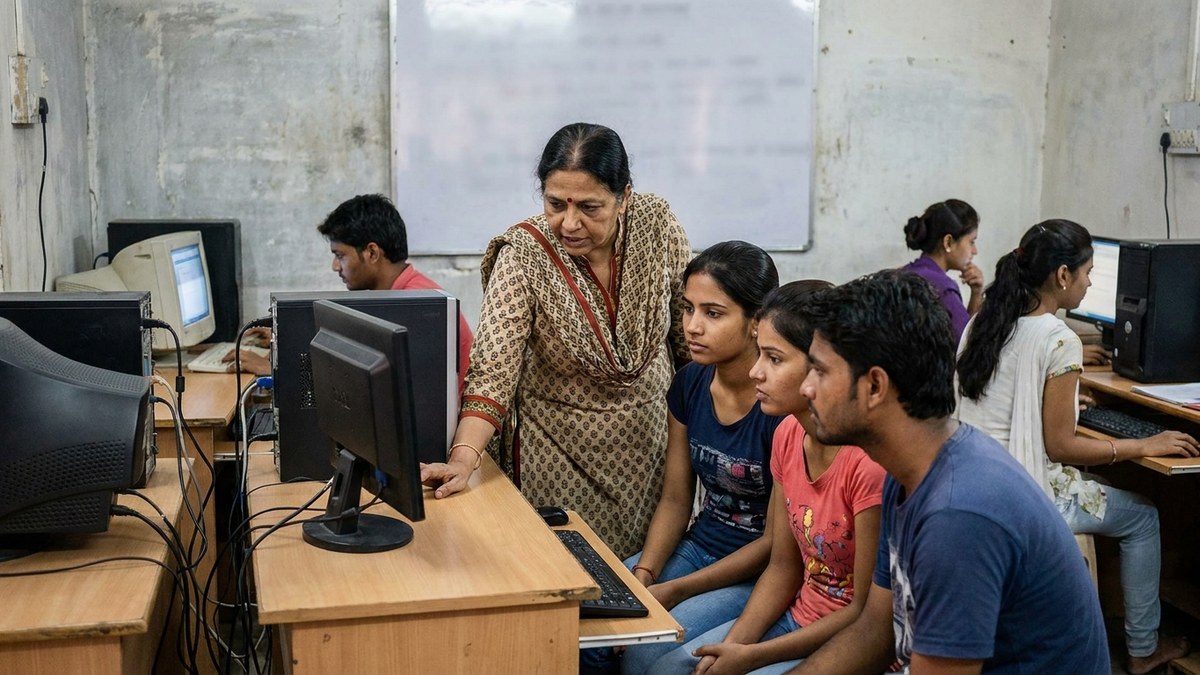
Your school needs a space where students can practice digital skills safely and regularly. Not every student has a computer at home. Not every family can afford coaching classes. A Point of Digital Learning (POD) in your school or community can change this. Students learn spreadsheets. They practice video calls. They build presentations. They get comfortable with technology before entering the job market.
The APNA PC bundle makes this affordable. For Rs.30,000, you get a complete system: education software, a Mini PC with i3 7th Gen processor, 8GB RAM, 128GB SSD, monitor, keyboard, mouse, webcam, headset, and three years of warranty plus installation. One machine can serve dozens of students. This is not a luxury. This is infrastructure.
Step 3: Measure and Track Progress
Do not leave employability to chance. Track what students learn. Keep portfolios. Record presentations. Document group projects. By the time they finish class 10, every student should have concrete evidence of their skills. This becomes their story when they apply for jobs or higher education. For more classroom-ready ideas, visit the Apni Pathshala education blog.
Why Employability Skills Class 9 Matters (And Why You Cannot Wait)
Class 11 and 12 students are focused on board exams and competitive entrance tests. They have limited bandwidth for skill development. Class 9 and 10 is different. The pressure is lower. The time is available. The habits formed now stick.
A student who learns to communicate well in class 9 will be a confident communicator in class 12. A student who gets comfortable with digital tools in class 10 will be a digital native by college. You are not just teaching subjects. You are building professionals.
The CBSE official website and UNESCO education programmes both emphasize skill development as core to modern education. Your school should too.
Here is what separates good schools from great ones: Great schools build employability skills class 9 and 10 students can carry forward for life. They do not wait for class 12. They start in class 9. They give students the tools. They give them practice. They give them feedback. By the time students leave school, they are not just educated. They are ready.
Start small if you must. One class. One project. One digital learning hub. But start now. Your students deserve better than a school that only prepares them for exams. They deserve a school that prepares them for life and work.