
Google Scholar research Indian students need to know about first
Most students waste hours searching for academic papers on the wrong platforms. They bounce between random websites, hit paywalls, and end up frustrated. Here’s the truth: it changes everything once you understand how to use it properly. If you’re an Indian student serious about quality research and academic writing, this tool is non-negotiable.
Google Scholar isn’t just another search engine. It’s a dedicated academic database that indexes peer-reviewed journals, theses, books, conference papers, and preprints from across the world. For Google Scholar research Indian students are conducting, whether for school projects, college assignments, or competitive exam preparation, it’s free and remarkably powerful. You don’t need expensive subscriptions or institutional access to get started.
Let’s be honest: most of your classmates don’t even know this tool exists. They’re copying from Wikipedia or relying on whatever their teacher provides. That’s why your research will stand out immediately once you start using Google Scholar properly.
Why this tool matters for Indian students right now
The quality of your sources directly determines the quality of your work. Bad sources lead to bad essays, weak arguments, and lower grades. It helps you find credible, published academic sources instead of random blog posts or outdated information.
Here’s what makes it essential for you:
- Access to global research: You get papers from universities worldwide, not just Indian institutions. This matters because good ideas come from everywhere.
- Completely free: No subscriptions, no hidden costs. Your college library might have limited access to premium journals, but Google Scholar bypasses that problem.
- Citation tracking: You can see how many times a paper has been cited by other researchers. More citations usually mean more credible research.
- Author profiles: Find everything a researcher has published. If someone’s work is relevant to your topic, you can explore their entire body of work.
- Filtering options: Search by year, subject area, and publication type.
When you’re doing serious research as an Indian student, you’re competing with peers who might be using better tools. Don’t be the one left behind with inferior sources.
The bigger picture matters too. UNESCO global education research consistently shows that digital research literacy is now a core skill for students everywhere. Indian students who master tools like Google Scholar are preparing for exactly that future.
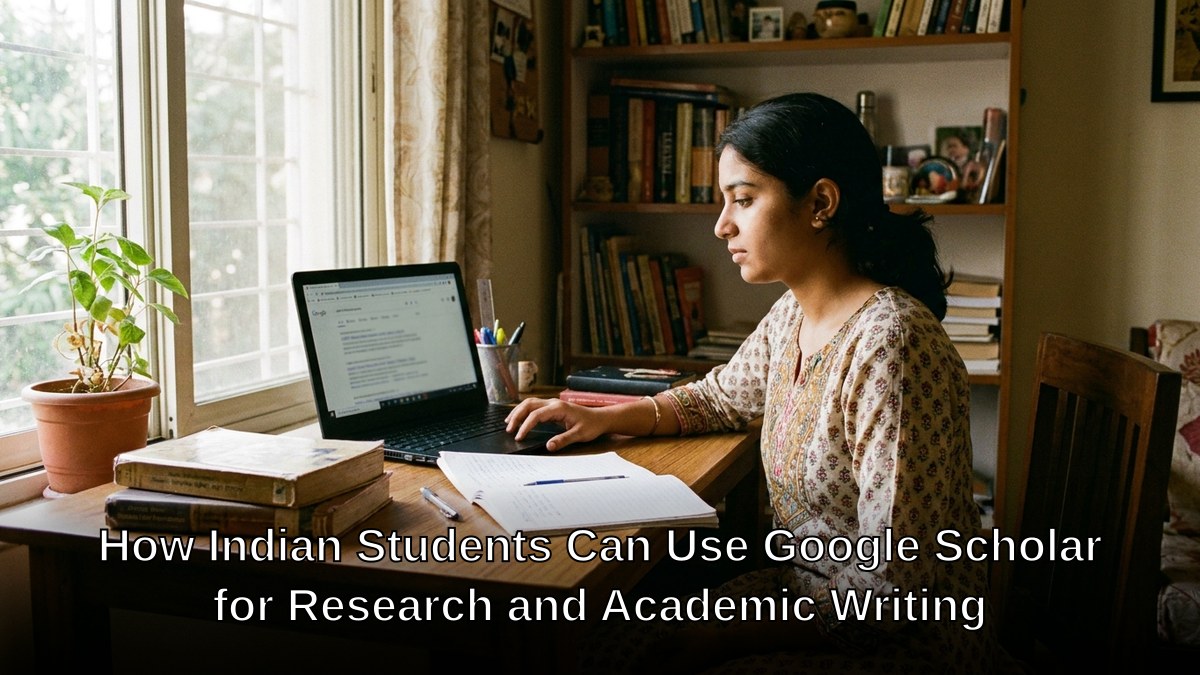
Step-by-step guide to finding research papers on Google Scholar
Start simple. Go to scholar.google.com and type your topic. But don’t stop there. Most students stop at the first page of results. That’s their mistake.
Use these filters immediately:
- Set a date range. If you need recent research, filter for papers from the last 3-5 years.
- Sort by relevance or by date depending on what you need.
- Look for papers with high citation counts. These are usually more influential and reliable.
- Check if your college library has free access to the full paper. Click the PDF link or library link if available.
When Google Scholar research isn’t giving you full papers directly, try this: email the author. Most researchers will send you their paper for free if you ask politely.
You can also check the Central Board of Secondary Education website for recommended reading lists and research guidelines specific to Indian curricula.
How to evaluate the sources you find
Not all papers are equal. Just because something appears in Google Scholar research results doesn’t mean it’s perfect for your work. You need to evaluate critically.
Ask these questions:
- Who wrote this? Is the author an expert in this field?
- Where was it published? Peer-reviewed journals are better than conference papers or preprints.
- When was it published? Is it recent enough for your topic?
- Does it have citations? How many other researchers reference this work?
- Does the methodology make sense? Can you understand how they reached their conclusions?
One more thing: read the abstract first. The abstract tells you if the paper is actually relevant to your research question. Don’t waste time reading full papers that don’t match your needs.
Combining solid research with proper academic writing
Finding good sources is only half the battle. You still need to write well. Check out active recall and spaced repetition study methods to understand how to retain what you read and incorporate it effectively into your writing.
When you write, follow these rules:
- Cite everything. Every idea that isn’t yours needs a citation. Google Scholar makes this easy because it generates citations in multiple formats.
- Understand before you write. If you don’t understand the paper, don’t use it. Your writing will show the gaps in your understanding.
- Paraphrase, don’t copy. Write the idea in your own words after reading the source. This forces you to actually learn.
- Use a consistent citation style. Your teacher will specify whether you need APA, MLA, or Chicago style. Stick to it throughout.
The Apni Pathshala blog has additional resources on academic writing techniques specific to Indian education standards.
Tools and setup for serious Google Scholar research Indian students should consider
You need a reliable device for this work. Your smartphone isn’t enough when you’re reading long academic papers and writing essays. A decent laptop or computer with good screen space, reliable internet, and enough processing power makes a difference.
If you’re setting up a study space, look for a device bundle that includes everything: computer, monitor, keyboard, mouse, and software. Something like APNA PC (a complete bundle with education software, 3-year warranty, and installation included) gives you a solid foundation without the complexity of piecing things together yourself. Your research deserves a stable platform.
You also need good internet. Most Google Scholar research requires consistent connectivity.
Going deeper: advanced search techniques
Once you’re comfortable with basics, try these advanced moves:
- Use quotation marks for exact phrases: “climate change India” will find papers with that exact phrase.
- Use Boolean operators: “artificial intelligence” AND “education” finds papers about both topics together.
- Exclude terms: “renewable energy” NOT “solar” removes solar energy papers if that’s not your focus.
- Search within specific fields: author:”Amartya Sen” finds all papers by this author.
These techniques save hours when you’re working on complex topics. Indian students tackling subjects like economics, social sciences, or technology benefit especially from these advanced searches.
Check the India Ministry of Education for national research priorities and guidelines that might help you choose relevant topics and sources.
Real talk: why this matters for your future
Learning to do proper research now isn’t just about getting good grades. It’s about developing a skill you’ll need for college, competitive exams, and your career. Companies hire people who can find information, evaluate it critically, and communicate clearly. Academic research is where that skill starts.
When you understand how to use academic databases, you stop being passive. You stop waiting for teachers to provide information. You become someone who can find answers independently. That’s the difference between average students and exceptional ones.
Start today. Pick a topic you’re curious about. Go to Google Scholar. Spend 30 minutes exploring. Your next assignment will be noticeably better because of it.