
Picture a 14-year-old girl in rural Rajasthan who scores top marks in her class but has never once touched a keyboard. Her school has a computer lab on paper. In reality, it’s a locked room with dusty monitors that haven’t been switched on in two years. This isn’t an edge case. It’s the everyday reality for millions of Indian children, and it’s exactly why affordable computers India needs right now are not a luxury. They’re a lifeline.
The Digital Divide Is Wider Than We Think
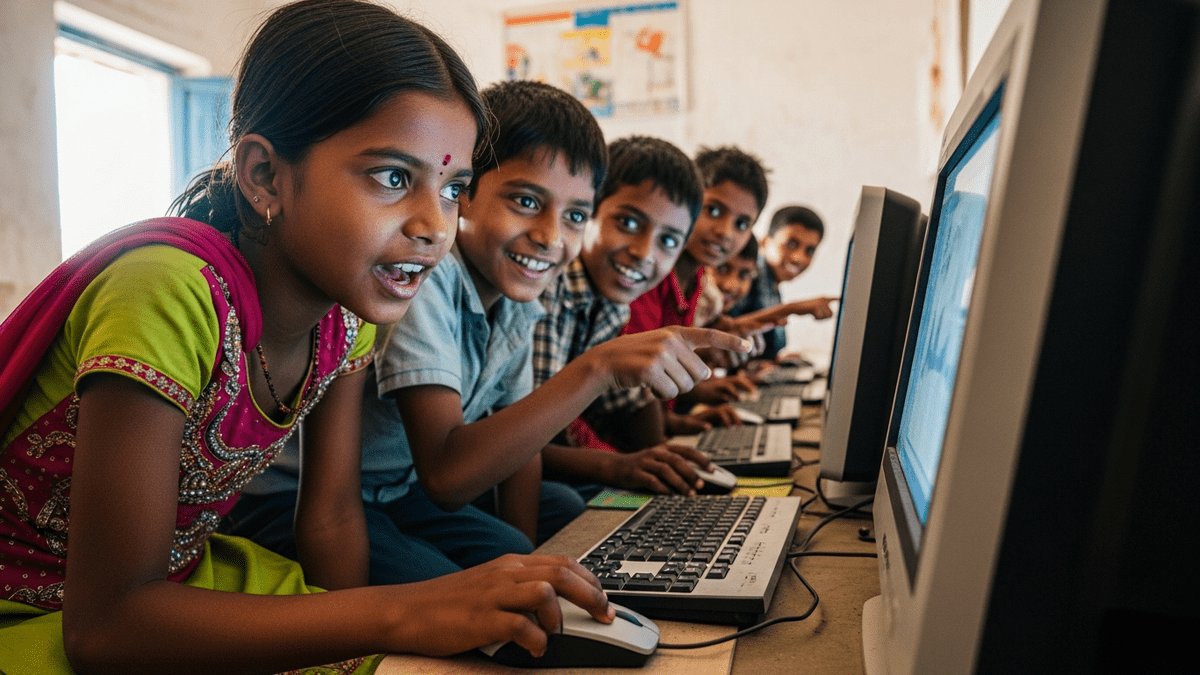
The digital divide India faces is staggering. Urban children log into classes, practice coding, and build digital portfolios. Rural children memorize textbooks and hope for the best. When both groups eventually compete for the same jobs, the outcome is predictable and deeply unfair.
It’s not just about internet access. Even when connectivity improves, the hardware gap remains. A family earning ₹15,000 a month simply can’t justify spending ₹60,000 or more on a laptop. So the child waits. The opportunity passes. The cycle continues.
The India Ministry of Education has made digital learning a national priority, but policy intent only goes so far without the physical tools to back it up. Parents and policymakers both need to understand that the device is where transformation begins.
The Opportunity Hidden in Plain Sight
Here’s what’s encouraging: India’s young population is its greatest asset. We have over 250 million school-going children. If even a fraction of them gain meaningful computer access rural communities currently lack, the economic ripple effect would be enormous.
Digital skills don’t just open doors to IT careers. They improve outcomes in agriculture, healthcare, small business, and civic participation. A farmer who can look up weather data, a shopkeeper who can manage digital payments, a young woman who can apply for government schemes online. These are the real dividends of computer access.
Platforms like DIKSHA — India’s national digital learning platform have already built rich libraries of curriculum-aligned content in multiple languages. The content is ready. What’s missing is the device to access it.
This is also a massive opportunity for community entrepreneurs. Learning centers, coaching institutes, and neighborhood education hubs can bridge the gap if they’re equipped with the right tools at the right price.
The Solution: Making Access Genuinely Possible
The India digital transformation story needs a hardware chapter, and that chapter has to be affordable. Not subsidized-and-hard-to-get affordable. Actually, practically, pick-it-up-and-use-it affordable.
That’s where APNA PC comes in. Designed specifically for the Indian education and skilling market, APNA PC is priced at just ₹30,000. That’s a number that community learning centers, small schools, and even motivated families can genuinely work toward. It’s built to handle the real demands of digital learning, from video lessons to typing practice to productivity software.
This isn’t about giving children a stripped-down experience. It’s about giving them a real one. A machine they can grow with. A tool that doesn’t embarrass them when they eventually enter a workplace or a college computer lab.
Steps Parents and Policymakers Can Take Right Now
If you’re a parent, start by asking your child’s school what their actual computer-to-student ratio is. Push for transparency. Advocate for community learning spaces in your neighborhood. Even pooling resources with three or four families to access a shared device can change outcomes for a group of children.
If you’re a policymaker, look at the community learning pod model. It’s proven, scalable, and cost-effective. You can learn exactly how it works by reading about TeachToEarn POD Economics, which breaks down costs, revenue, and break-even in simple terms that anyone can evaluate.
Local entrepreneurs and educators who want to create change in their communities should seriously explore how to Start a TeachToEarn Learning POD. It’s one of the most direct ways to put affordable computers into children’s hands while building a sustainable local business.
The gap won’t close by itself. But it also won’t take decades to fix if the right people take the right steps now.
Visit teachtoearn.in/apna-pc to explore APNA PC and see how it can power your community’s digital future. Take the first step today, because every child waiting behind a locked computer lab door can’t afford for us to wait any longer.