
Priya’s 10-year-old son won’t stop asking for a smartphone. His friends have one. His cousin has one. Every day, it’s the same request at dinner. But Priya’s hesitating. She knows something feels off about handing her child a device designed for quick scrolling and endless notifications. That’s when she started wondering: what if there’s a better first device? What if her child needs a computer before smartphone? The answer might surprise you, and it could change how your child learns, creates, and grows.
As Indian parents, we’re caught between tradition and technology. We want our kids to be tech-savvy, but we’re worried about screen addiction and wasted time. Here’s the truth: not all screens are equal. The right first device for child development isn’t always the one that fits in a pocket.
Why Smartphones Are the Default Choice (and Why That’s a Problem)
Smartphones are everywhere. They’re affordable, portable, and kids see adults using them constantly. So naturally, parents think: “Why not start with a phone?”
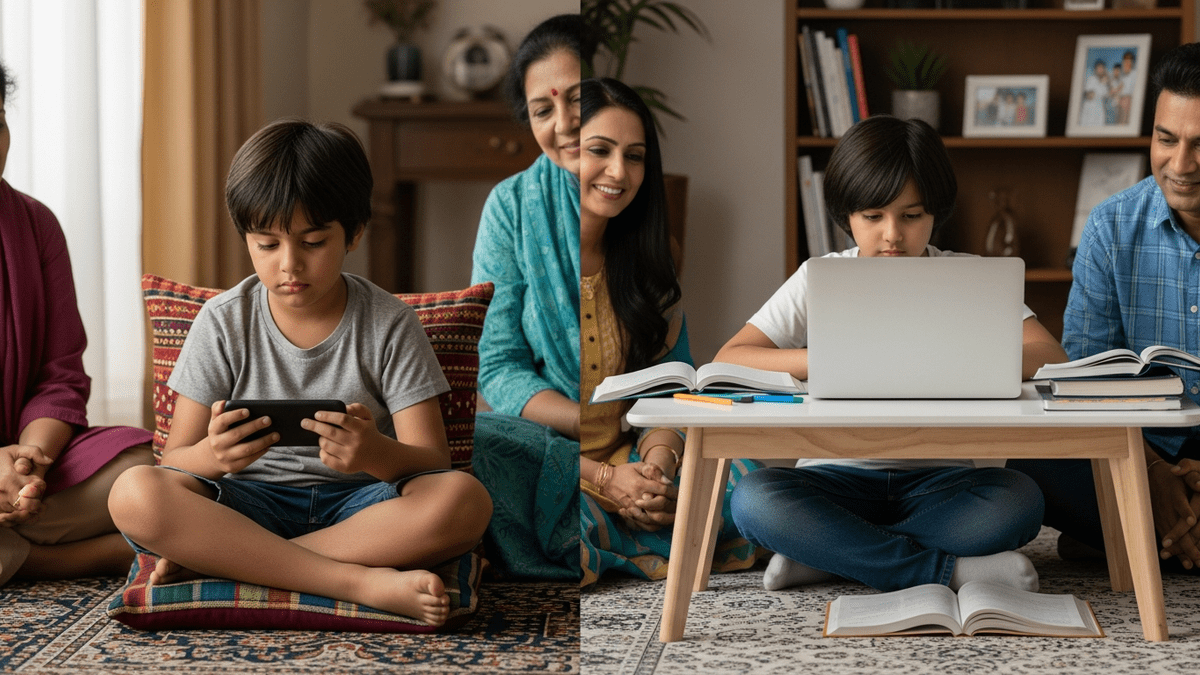
The problem is simple. Phones are built for consumption, not creation. Your child scrolls, watches, taps, and swipes. These are passive activities that train the brain to receive information, not produce it. Apps are designed to keep users engaged with notifications, rewards, and endless content streams.
Compare this to what happens with computer learning vs phone screen time. On a phone, your child might watch a coding tutorial. On a computer, they can actually write code, create projects, and see results. The difference is massive and changes everything about how they learn.
Phones also encourage poor physical habits. Kids hunch over tiny screens, straining their eyes and neck for hours. The constant notifications fragment their attention span. Studies show smartphone use before age 12 correlates with sleep problems, anxiety, and reduced academic performance.
Why a Computer Is the Better First Device for Your Child
A computer fundamentally changes what’s possible for young learners. The bigger screen means less eye strain and better posture. Your child can actually see what they’re working on without squinting or hunching forward.
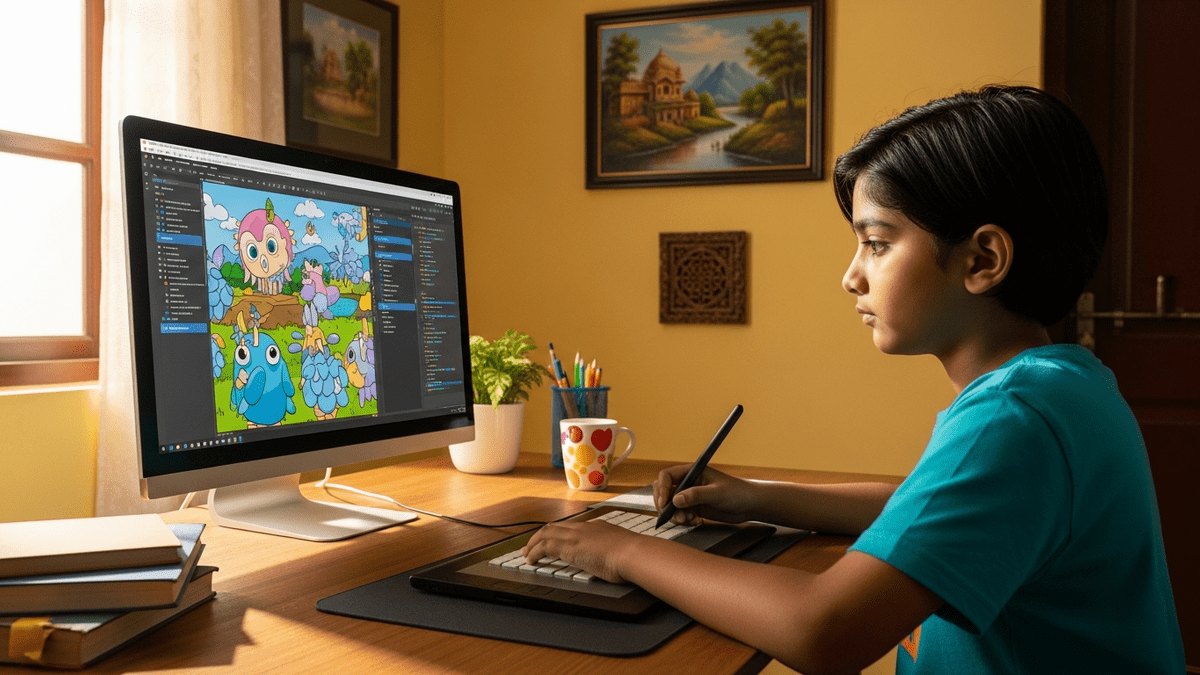
Here’s what matters most: computers enable genuine creation. Your child can code, design, write, edit videos, build presentations, and work on real projects. They’re not just consuming content. They’re actively producing it. This shift from passive to active learning rewires how kids think about technology.
Consider the school curriculum too. Schools across India now use platforms like India Ministry of Education and Central Board of Secondary Education (CBSE) extensively. These are designed for desktop learning experiences. Your child will need a computer eventually anyway. Why not start now?
A computer also teaches responsibility differently. It’s stationary, shared, and harder to sneak into bed at night. Natural boundaries exist with a desktop. Your child can’t carry it everywhere, which means they’re more likely to do other things: play outside, read books, talk to family.
The computer vs smartphone for kids debate comes down to this: one device limits potential, the other expands it significantly. APNA PC is designed exactly for this important moment. At just ₹30,000, you get a complete bundle with education software, 3-year warranty, and professional installation. It’s the right first device for child learning without breaking the family budget.
How to Make the Transition Smooth
You don’t need to ban smartphones entirely from your home. But make the computer the primary learning device for your child. Set clear rules: homework and projects happen on the computer. Social media apps can wait until they’re older.
Start with age-appropriate activities on the computer. Younger kids benefit from educational software and creative drawing tools. Older kids can explore coding, digital design, and research skills for school projects. The computer becomes a genuine tool for achievement, not just entertainment. When your child needs computer before smartphone, you are giving them the foundation for real digital literacy.
Make the experience social and engaging. Sit with your child sometimes while they work. Ask about what they’re creating or learning. Show genuine interest in their progress. This transforms screen time into quality bonding time for the whole family.
Talk to your child openly about why you’re making this choice. Kids understand more than we think they do. Explain that a computer helps them build real skills, create things, and prepare for school and future careers. Make it feel positive and empowering, not punitive or restrictive.
Learn more about Why Every Indian Child Deserves a Computer Before Age 12 and why early computer access shapes long-term development positively.
Your child’s future depends on the skills they build today. Give them the right tool from the start. Explore APNA PC and see how thousands of Indian families are already making this smart choice for their children.