
Your child is falling behind. Not in marks. In skills that actually matter.
While you’re worried about their next exam, tech companies are already hunting for people who can code. The gap between what schools teach and what the world needs has never been wider. Coding classes for kids India aren’t a luxury anymore. They’re survival.
Here is the truth: kids coding education isn’t about making your child a software engineer at age 10. It’s about teaching them how to think. How to solve problems. How to build things instead of just consuming them. Programming for children India is becoming as basic as reading and writing.
Key Takeaways
- Coding classes for kids in India are about teaching children to think, solve problems and build things, not about turning them into software engineers early.
- Schools and CBSE are adding computational thinking, but crowded classroom coding is often slow and one-size-fits-all.
- Small batches at a home or community POD let children learn at their own pace with a teacher who notices them.
- Coding needs a real computer with a keyboard, not just a phone, to build actual programming fundamentals.
- Children who code become confident creators rather than passive consumers of technology, a life skill beyond exam marks.
Why 2026 Is the Year to Start Coding Classes for Kids
Most people don’t realise that the job market has already shifted. Central Board of Secondary Education (CBSE) is pushing computational thinking. Schools are adding coding to their curriculum. But here’s what they won’t tell you: classroom coding is slow, crowded, and one-size-fits-all.
Your child needs personalised learning. They need a teacher who has time to actually see them. They need to code at their own pace, not the pace of 40 other kids in a classroom.
This is where home and community learning centres matter. This is where APNA PC changes the game.
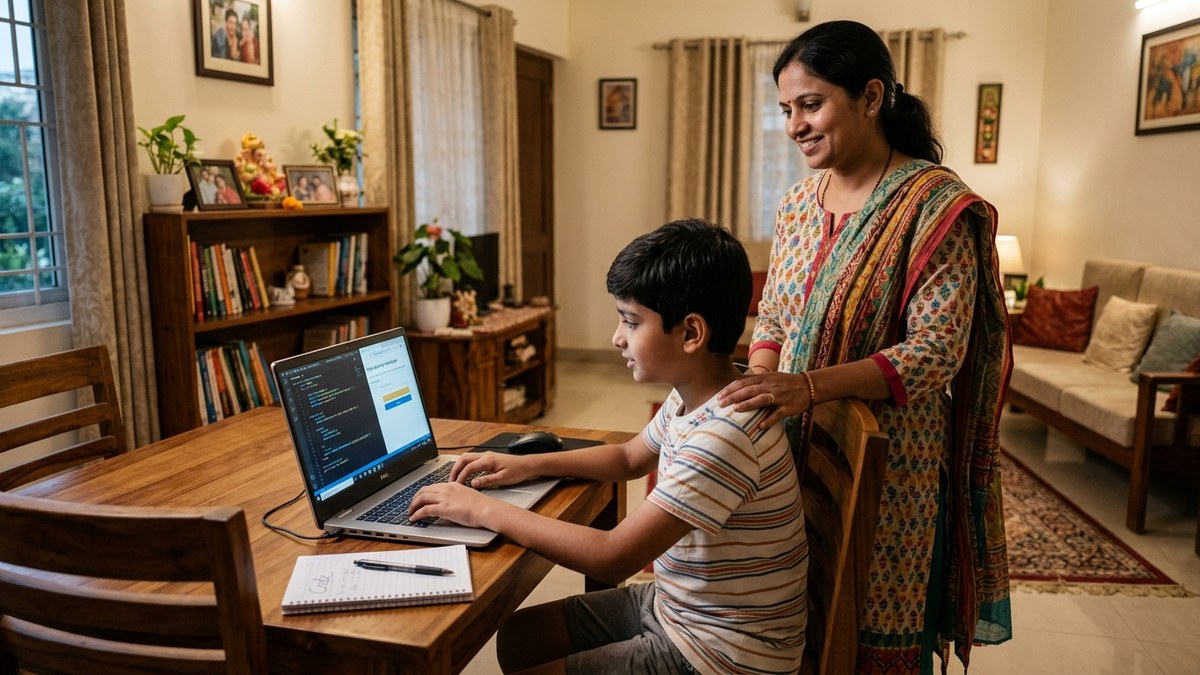
Let’s be honest: most coding platforms are expensive. Most require expensive laptops. Most leave parents confused about what their child is actually learning. APNA PC solves all three problems at once.
For Rs.30,000, you get a complete bundle. Not just software. A Mini PC with i3 7th Gen processor, 8GB RAM, 128GB SSD. Monitor. Keyboard. Mouse. Webcam. Headset. Three years warranty. Installation. Everything a child needs to start learning computer programming fundamentals.
This isn’t a toy. This is a real machine. This is professional-grade learning infrastructure.
The POD Advantage: Kids Coding Education That Actually Works
You don’t need to send your child to a fancy coaching centre. You don’t need to spend hours commuting. You don’t need to pay Rs.5,000 per month for classes that treat all kids the same.
A Point of Digital Learning (POD) is different. It’s a home or community learning centre run by a trained educator. Small batches. Real attention. Real progress.
- Your child learns coding classes for kids at the pace they need
- You can teach coding to kids at home with proper infrastructure and support
- Teachers get trained. Parents get updates. Kids get results
- No hidden fees. No pressure. No nonsense
The investment in kids coding education isn’t just about your child. If you’re a tuition teacher, an edupreneur, or a senior citizen looking for meaningful work, this is your moment. You can start a POD. You can train other kids. You can earn while you teach.
That’s the beauty of TeachToEarn. You’re not just buying software. You’re joining a movement.
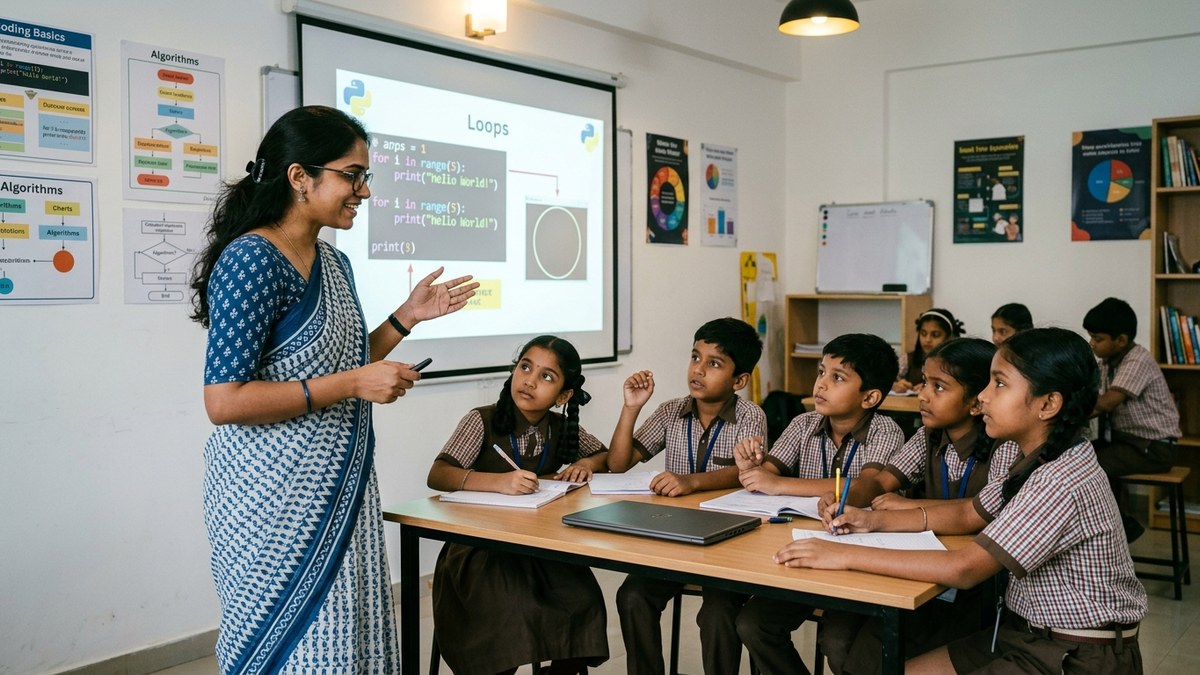
Most people don’t realise that programming for children India is also about building confidence. Kids who code aren’t afraid of technology. They’re not passive consumers. They’re creators. They understand that problems have solutions. That’s a life skill, not just a tech skill.
Here’s what happens when you wait:
- Your child falls further behind their peers
- They develop tech anxiety instead of tech confidence
- They become job applicants instead of job creators
- The cost of catching up later becomes 10 times higher
The coding investment guide for parents is simple. Spend now. Save later. Your child’s future isn’t built on exam scores alone. It’s built on skills. Real skills. Coding is one of them.
APNA PC isn’t expensive. It’s the opposite. It’s the most affordable way to give your child professional-grade learning infrastructure. Rs.30,000 for a complete bundle that lasts three years. That’s Rs.833 per month. That’s less than most parents spend on coaching for a single subject.
And if you’re thinking about starting your own POD, your own learning centre, your own business around kids coding education? The time is now. The infrastructure is ready. The demand is real. Parents are desperate for alternatives to crowded classrooms and expensive coaching centres.
Let’s be honest: education in India is changing whether we like it or not. The question isn’t whether your child should learn coding. The question is when. And where. And from whom.
The answer? At home. In a community POD. With APNA PC. With a trained educator who actually cares.
Don’t wait for schools to figure this out. Start now.
Frequently Asked Questions About Coding classes for kids in india
At what age should children start coding classes?
Many children can start block-based coding like Scratch around age seven or eight, and text-based languages like Python a few years later. NEP 2020 recommends introducing coding from Class 6. The right time depends on the child’s reading level and interest.
Are coding classes for kids worth the money?
Good coding classes build logical thinking, problem solving and confidence with technology, which help in every subject. Choose small batches with real practice time on a computer. Avoid courses that promise jobs or apps by a certain age.
Can my child learn coding without expensive classes?
Yes. Free platforms like Scratch and Code.org offer beginner courses, and a parent or local POD educator can guide practice. What your child needs most is regular time on a real computer. Small group sessions keep motivation going.
Does my child need a laptop or computer to learn coding?
Yes, a computer with a keyboard is strongly recommended. Coding on a phone is slow and teaches only a little. A shared home computer used at fixed times works well for most families.
Is coding part of the CBSE curriculum?
CBSE has introduced Coding and Artificial Intelligence as skill subjects for middle and secondary classes. Schools can choose to offer them. Extra practice outside school helps children get more hands-on time.
NEP 2020 recommends that coding be introduced to students from Class 6, and CBSE has added Coding and Artificial Intelligence as skill subjects in its curriculum.