
Riya was 12 years old when she built her first game. It wasn’t fancy. It was a simple maze game made in Scratch, running on a basic computer her parents bought for her studies. But when she showed it to her class, something shifted. Her teacher asked, “How did you do that?” Riya smiled and said, “I just learned it at home.” That moment changed how she saw herself. Coding for Indian students isn’t just a skill anymore. It’s a new kind of confidence.
Why Coding for Indian Students Is No Longer Optional
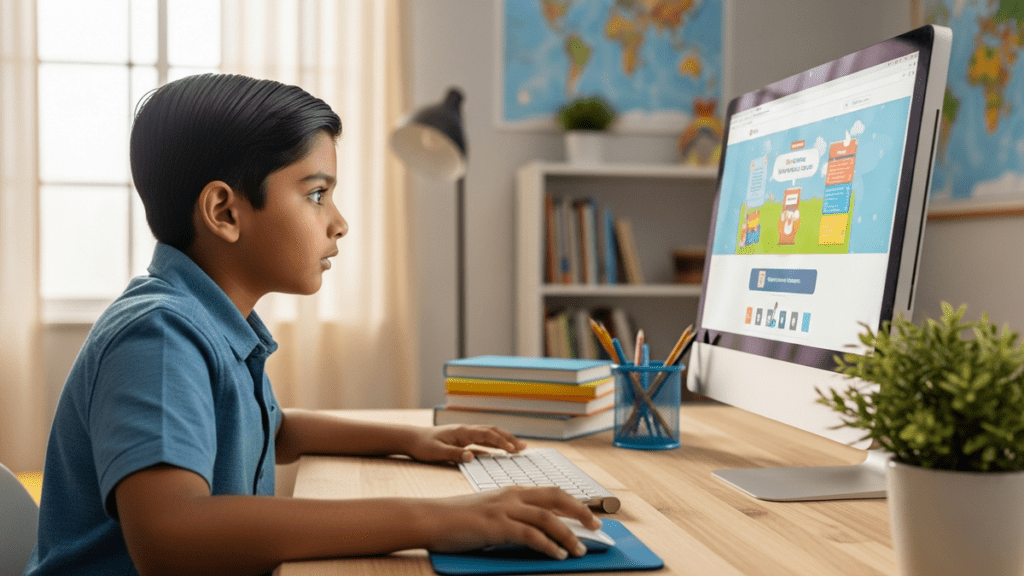
India is changing fast. The government’s Digital India initiative is pushing technology into every corner of the country. From rural schools to city startups, the demand for people who understand computers is growing every single year.
But here’s the thing. Most Indian students still graduate without ever writing a single line of code. They study hard. They score well. And then they enter a job market that wants skills their school never taught them.
Coding isn’t just for engineers anymore. A doctor who understands data, a shopkeeper who builds a simple app, a teacher who creates digital lessons. All of them benefit from knowing how computers think. It’s a tool, and every student deserves access to it.
The Best Age to Start Is Right Now
You don’t need to wait for college. You don’t need to wait for a fancy school. Kids as young as 7 or 8 can start with Scratch programming, a visual tool designed specifically for children. It uses colorful blocks instead of complex text, so young learners can build games, stories, and animations without getting overwhelmed.
Scratch programming teaches logic, problem-solving, and creativity all at once. When a child figures out why their character isn’t moving the right way, they’re learning to debug. That’s real computer programming, even if it doesn’t look like it yet.
Starting early also builds a habit of thinking in steps. Break a problem down. Test a solution. Fix what doesn’t work. That mindset helps in math, in science, and honestly in life.
You Can Learn Coding at Home Without a Tutor
One of the biggest myths is that you need an expensive class or a private tutor to learn coding. That’s simply not true anymore. There are free platforms, free videos, and structured courses that any child can follow from their own bedroom.
Platforms like DIKSHA, the national education platform by the Indian government, already have digital learning resources available for students across grade levels. Parents can explore these alongside their children and make learning a shared activity at home.
The key is consistency. Even 30 minutes a day, three or four times a week, can build strong skills over a few months. Learning to code at home works when there’s a routine and a device that doesn’t let you down.
The Right Device Makes All the Difference for Coding for Indian Students
Here’s where a lot of families get stuck. The child is motivated. The resources are free. But the family computer is slow, shared between four people, or doesn’t run the software properly. That friction kills momentum.
That’s exactly why APNA PC was built. It’s a computer designed with Indian students in mind. Reliable, affordable, and ready for everything from Scratch programming to more advanced computer programming as kids grow.
APNA PC is priced at just ₹30,000, which makes it one of the most accessible home computers for middle-class families who want to invest in their child’s future without stretching their budget too far.
And if you’re a teacher or community leader, you can also start a Teach to Earn learning pod in your area, bringing coding education to children who might not have access at home. That’s how real change spreads.
Coding isn’t a subject reserved for the gifted. It’s a skill that any child can learn with the right start, the right tools, and a little encouragement from home.
Give your child that start today. Get APNA PC now and put a dedicated learning computer in their hands.
Start Small, Think Big
You don’t need to overhaul your child’s entire routine to introduce coding. Start with just 20 to 30 minutes a day. Let them explore a beginner-friendly platform, build a simple game, or follow a short tutorial. Progress may seem slow at first, but consistency is what builds real skill. Many of today’s top developers wrote their first line of code on a basic home computer, simply out of curiosity. Your child has that same curiosity. All they need is the right environment to channel it. A dedicated learning device like APNA PC removes the distractions and barriers, giving them a focused space where small daily efforts can grow into something truly remarkable.