
Your Child Can’t Google Their Way to Success. Here’s Why Digital Literacy Examples Matter Right Now
Most people don’t realise that knowing how to use WhatsApp isn’t digital literacy. Your teenager scrolling Instagram for three hours? That’s consumption, not competence. Real digital literacy examples show us something different: the ability to create, evaluate, and solve problems using technology. And in 2026, this skill separates students who lead from students who follow.
Here’s the truth: Indian students are drowning in devices but starving for actual digital literacy skills. We’re talking about the gap between pressing buttons and understanding what’s happening behind them. Digital literacy examples aren’t fancy or complicated. They’re practical. They’re urgent. And they’re exactly what your child needs to compete in the jobs market that’s already here.
What Real Digital Literacy Examples Look Like in 2026
Let’s be honest. When we talk about digital literacy skills, most schools are still teaching students to open Microsoft Word. That’s 2005 thinking in a 2026 world. Real digital literacy examples include:
- Coding basic scripts – Not just understanding code, but writing it. Your 10-year-old should be able to create a simple Python program. Schools with a coding club in a government school are already proving this works.
- Data evaluation skills – Spotting fake news. Understanding how algorithms work. Knowing when a source is reliable and when it’s selling you something.
- Cybersecurity basics – Creating strong passwords. Understanding phishing. Protecting personal information. This isn’t optional anymore.
- Digital citizenship – Behaving responsibly online. Understanding online ethics. Schools addressing cyberbullying and digital citizenship in Indian schools are building character alongside competence.
- Content creation – Making videos, podcasts, or presentations. Not just consuming content, but producing it.
- Problem-solving with technology – Using spreadsheets to analyse data. Using automation to save time. Using digital tools to create real solutions.
These aren’t theoretical. These are the exact skills employers are hunting for right now. And they’re not being taught in most classrooms.
The importance of digital literacy isn’t some distant future concern. It’s happening today. Your neighbour’s daughter got an internship because she could code. Your cousin’s son landed a job because he understood how to manage digital marketing. These aren’t accidents. They’re the direct result of having actual digital literacy skills, not just device access.
Why Your Current Approach Isn’t Working
You’ve probably noticed something. Your child has a smartphone. A laptop. Maybe even a tablet. Yet they can’t troubleshoot a simple problem. They can’t create anything meaningful. They can’t protect themselves online. That’s because having access to technology and having digital literacy skills are completely different things.
The importance of digital literacy examples becomes crystal clear when you see the gap. A student who can scroll through TikTok but can’t write an email professionally. A teenager with Instagram followers but no idea how to use Google Sheets. A child with a laptop but zero coding knowledge. This is the reality in most Indian homes right now.
Teachers see this problem daily. Edupreneurs running learning centres see it. Parents see it but don’t know how to fix it. The system isn’t set up to teach these skills at scale. Not yet.
Where these digital literacy skills Come From: Real Learning Spaces
Here’s what works: structured learning with actual equipment and trained educators. Not theory. Not videos. Real hands-on practice. This is why the what digital literacy actually means conversation keeps coming back to one thing: you need the right setup.
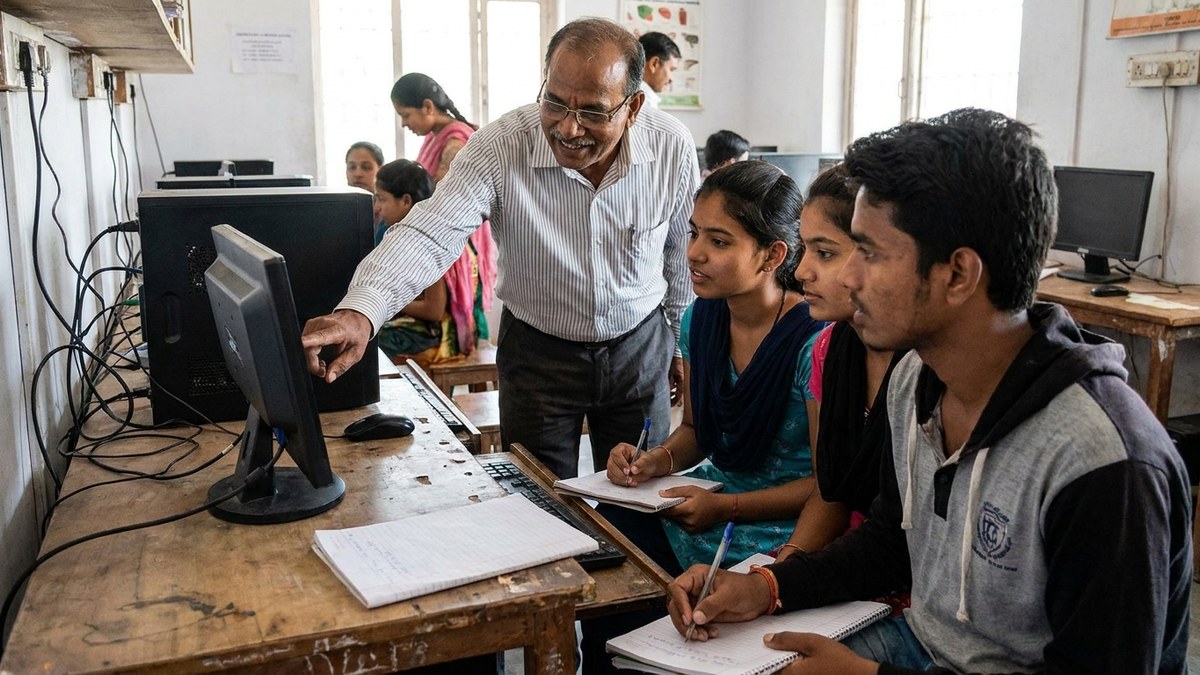
A Point of Digital Learning (POD) – a home or community learning centre run by a trained educator – creates the space where these digital literacy skills become real skills. A student sits down at a proper computer. They learn coding from someone who knows it. They practice cybersecurity. They create content. They solve actual problems.
This is already happening across India. The Digital India initiative has shown that when you combine proper infrastructure with proper training, students transform. Not metaphorically. Actually. Their grades improve. Their confidence grows. Their job prospects shift.
But here’s the barrier: equipment. Most homes don’t have a proper computer. Most community centres don’t either. A used laptop from 2015 won’t cut it for learning coding or video editing. You need something reliable. Something that lasts. Something affordable.
Building Your Own Digital Literacy Hub
If you’re a teacher thinking about starting a learning centre. If you’re a homemaker wanting to teach neighbourhood children. If you’re an edupreneur building something bigger. You need equipment that works without breaking the bank.
This is exactly why APNA PC exists. A complete bundle: Mini PC with i3 7th Gen processor, 8GB RAM, 128GB SSD, monitor, keyboard, mouse, webcam, headset. Plus education software. Plus 3-year warranty. Plus installation. All for Rs.30,000. That’s not just affordable. That’s practical.
One APNA PC can serve 15-20 students in a POD. It can handle coding software, video editing, spreadsheet work, cybersecurity simulations. Everything needed to teach real real digital literacy skills. Not theoretical knowledge. Actual skills students can use immediately.
Homemakers are running PODs in their homes and earning. Teachers are supplementing their income. Edupreneurs are building sustainable businesses. All because they have the right equipment to teach the right skills.

The Digital Literacy Skills Your Student Needs Right Now
Stop waiting for schools to solve this. They won’t. Not in time for your child to compete in 2026. The importance of digital literacy is too urgent. The gap is too wide.
Your child needs these digital literacy skills today:
Coding basics. Data literacy. Cybersecurity awareness. Digital citizenship. Content creation. Problem-solving with technology.
These aren’t nice-to-have skills anymore. They’re survival skills. And digital literacy in practice prove it every single day. The student who can code gets the internship. The teenager who understands cybersecurity doesn’t get scammed. The young adult who knows digital citizenship navigates the internet safely.
The question isn’t whether your child needs these skills. The question is: who’s going to teach them? And do they have the right setup?
Start here. Check out APNA PC and see how you can create a space where real digital literacy happens. Whether you’re teaching your own child, running a learning centre, or building an edupreneur business, the infrastructure matters. The training matters. The commitment matters.
these practical digital literacy skills aren’t abstract anymore. They’re your child’s future. Make it real.