
The Hard Truth: Your Child Is Already Behind Without Digital Literacy
Here is the truth: A child in India without basic digital literacy in 2026 is like a child without reading skills in 1995. Not optional. Not a luxury. Mandatory.
Your son or daughter may be excellent at mathematics, Hindi, or science. They may score 95% in their board exams. But if they cannot navigate a computer, use email, or understand how to find information online, they are walking into their future with one hand tied behind their back.
Digital literacy for students is no longer about learning to type or playing games. It is about survival. Career survival. Academic survival. Life survival.
Most people don’t realise that every job posting in India now expects basic computer skills. Every college entrance exam has an online component. Every government service, every banking task, every opportunity your child will chase in the next decade will demand digital competence.
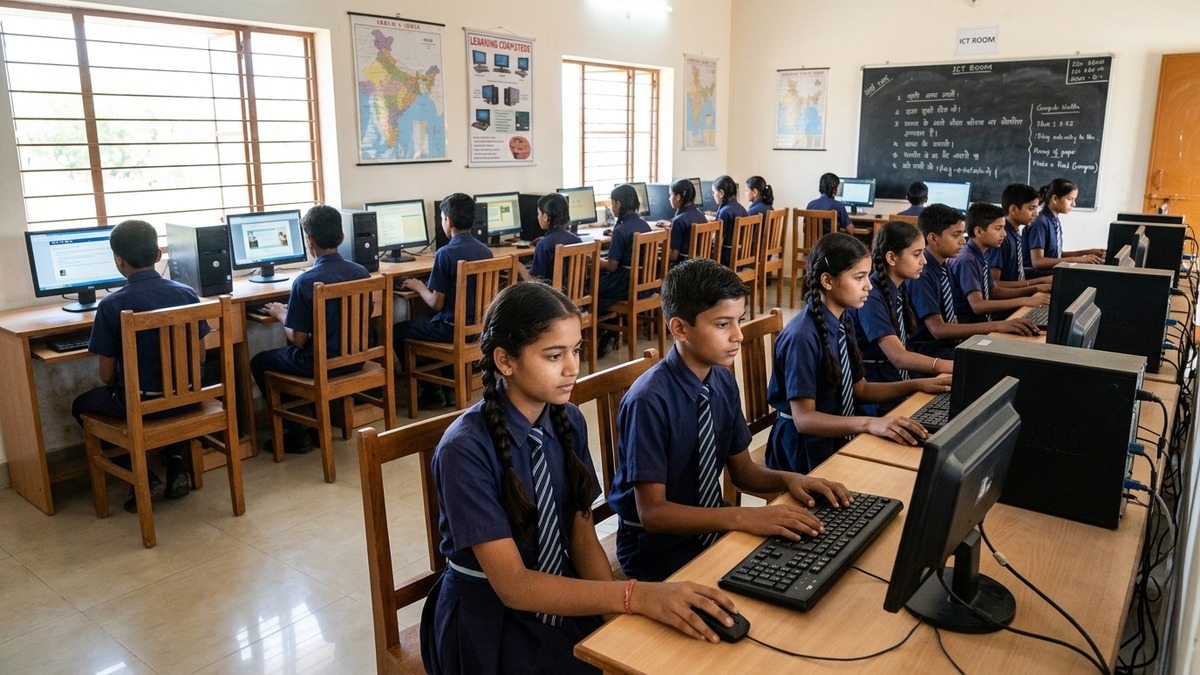
Why Digital Skills for Indian Students Matter Right Now
Let’s be honest: the pandemic showed us something we can no longer ignore. Schools that had invested in digital infrastructure survived. Students with basic computer knowledge adapted. Those without? They fell behind. Permanently.
Even now, two years later, that gap hasn’t closed. The students who learned digital skills early are moving ahead. The others are catching up. Some never will.
According to digital literacy research, students who develop computer skills by age 12 perform 30% better in competitive exams. They adapt faster to new technology. They think differently. They solve problems faster.
The government knows this. That’s why initiatives like DIKSHA digital learning platform exist. That’s why every school board is pushing online learning. That’s why coding is now part of the curriculum in many states.
But here’s what most parents miss: waiting for schools to teach digital skills is like waiting for schools to teach swimming by reading about it. Your child needs hands-on experience. Real practice. Real equipment. Real guidance.
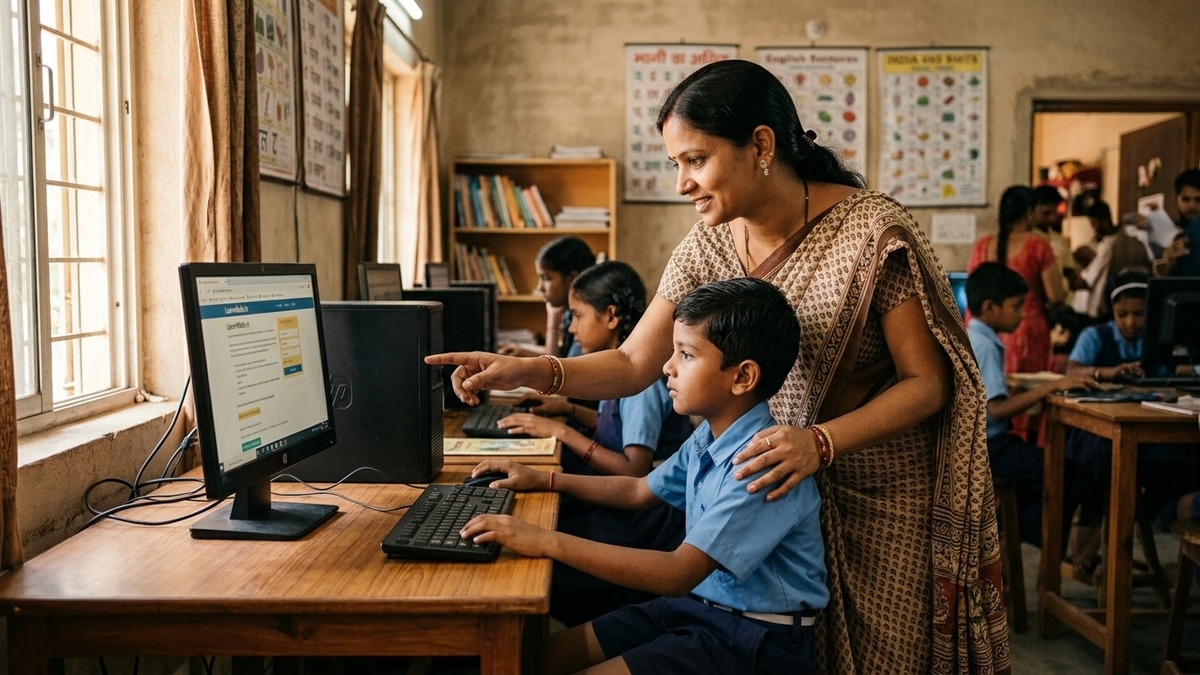
The Gap Between Rich and Poor Is Now a Digital Gap
Here’s what keeps us awake at night: the digital divide in India is real. Children in metro cities have laptops at home. Children in tier-2 and tier-3 towns do not. Children whose parents work in IT have exposure. Children whose parents are farmers, shopkeepers, or homemakers do not.
This is not fair. But it is true.
The children without access to computers are the ones who need digital skills the most. They are the ones who will compete hardest. They are the ones who need the biggest advantage.
Computer education India has been too expensive for too long. A basic laptop costs Rs.40,000 to Rs.60,000. Most Indian families cannot afford this. So their children remain offline. Unprepared. Disadvantaged.
This is where things change.
Meet APNA PC: The Game Changer Your Community Needs
APNA PC is a complete bundle designed for exactly this problem. Rs.30,000. That is it.
What you get:
- Mini PC with i3 7th Gen processor
- 8GB RAM and 128GB SSD
- Monitor, keyboard, mouse, webcam, headset
- Education software pre-loaded
- 3-year warranty and installation included
This is not a toy. This is not a budget compromise. This is a professional-grade machine that can run any educational software, any online course, any digital skill program you need.
A homemaker can set this up in her home and teach neighborhood children. A tuition teacher can add this to their center and offer computer classes. An edupreneur can start a Point of Digital Learning (POD) and change their community.
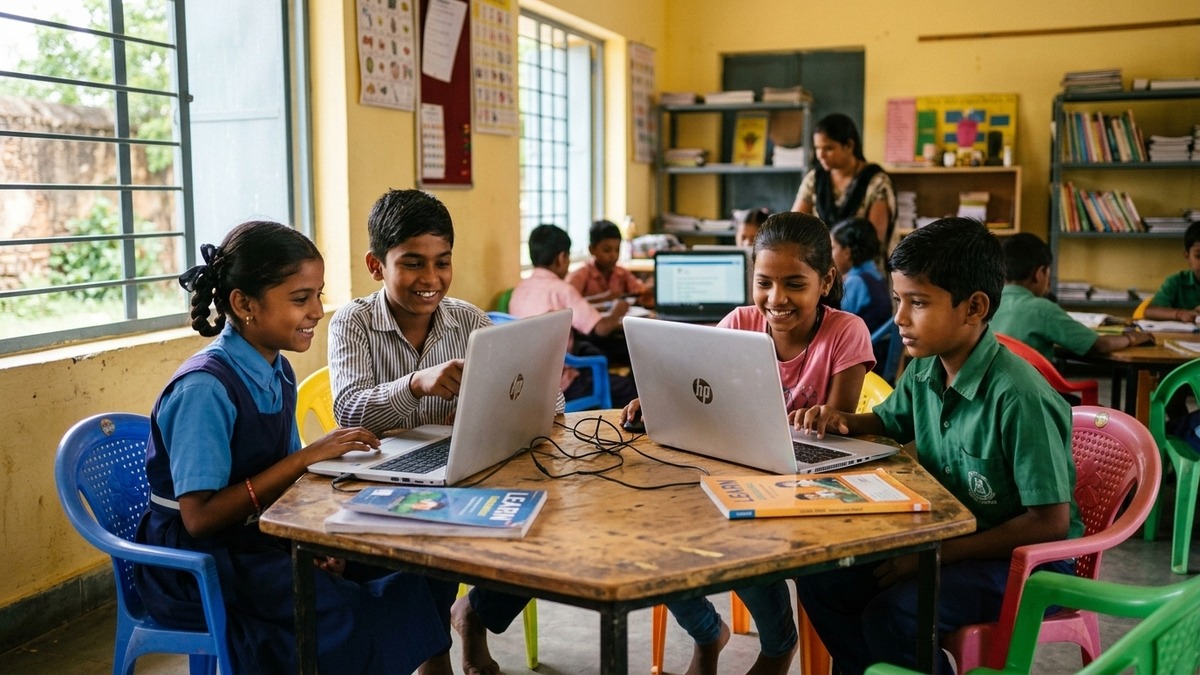
Why this matters: For the first time, a single machine can serve 5-10 students in rotation. One APNA PC in a community learning center can teach 50+ children in a month. At Rs.30,000, the investment is real. The impact is massive.
Digital Literacy Is Not Just About Computers
When we talk about why digital literacy matters, we are not talking about making every child a coder. We are talking about making every child capable.
Capable of finding information online. Capable of communicating via email. Capable of creating a document, a presentation, a spreadsheet. Capable of taking an online exam. Capable of learning independently.
These are life skills now. Not technical skills. Life skills.
A student with digital skills for career growth has options. They can take online courses. They can apply for remote jobs. They can start freelance work while still in school. They can compete nationally, not just locally.
A student without these skills has limitations. Real, permanent limitations.
What You Can Do Today
If you are a homemaker: You can start a learning center in your home. Teach 5-10 children computer basics. Earn Rs.5,000 to Rs.15,000 per month. Change lives in your neighborhood.
If you are a tuition teacher: You can add computer classes to your center. APNA PC makes this affordable. Your students get a competitive edge. Your income grows.
If you are an edupreneur: You can launch a full-fledged POD (Point of Digital Learning) in your area. Train educators. Reach hundreds of students. Build a sustainable business.
The infrastructure exists. The demand exists. The solution exists. What’s missing is action.
Start today. Learn how to start your own learning POD here.
Your students are waiting. Your community is waiting. Digital literacy for students is not the future anymore. It is now.