Your Child Can Code. Your Mother Can Email. But Can They Really?
Here’s the truth: Most Indian parents believe their kids are “digital natives” because they can swipe through Instagram and play mobile games. Most teachers think computer education means teaching Microsoft Word. Most edupreneurs launching online courses assume everyone has reliable internet and a laptop. All three assumptions are dangerously wrong.
We’re in 2026 now. Digital literacy for Indian students isn’t optional anymore. It’s not a luxury skill for the wealthy. It’s the foundation everything else builds on. Yet millions of Indian children will leave school unable to troubleshoot a frozen screen, write a professional email, or understand how data works. This isn’t a failure of ambition. It’s a failure of access and proper training.
Let’s be honest: digital skills for students India remain unevenly distributed. A student in Mumbai’s tech hub learns differently than one in a tier-2 town. A homemaker in Delhi has different needs than one in rural Bihar. Yet the gap between who gets trained and who doesn’t keeps widening. By 2026, that gap becomes a chasm.
Why Digital Literacy Matters More Than You Think
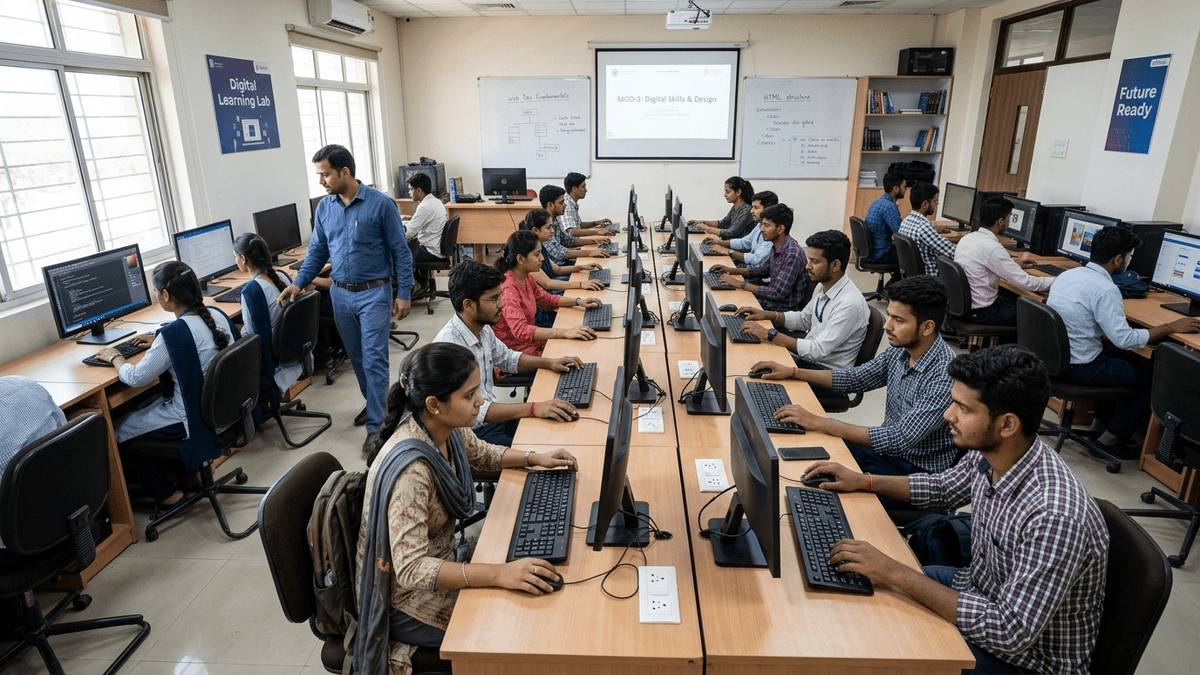
Most people don’t realise that digital literacy isn’t about being tech-savvy. It’s about survival. It’s about understanding how information flows, how to verify what’s true, how to protect yourself online, and how to use tools that literally everyone else is using.
Consider this: A student applying for college in 2026 needs to submit online applications. A job seeker needs to create a LinkedIn profile and email a resume. A small business owner needs to manage digital payments. A citizen needs to file taxes online. A parent needs to check their child’s school portal. These aren’t “nice to have” skills anymore. They’re baseline requirements.
The Digital India initiative has pushed hard to bring connectivity to every corner. But connectivity without literacy is just infrastructure. A computer without training is an expensive paperweight.
Your tuition student needs to know how to research online. Your elderly mother needs to understand email security. Your homemaker needs to manage household finances digitally. Your aspiring educator needs to deliver lessons online. These are the real demands of 2026.
The students who will thrive aren’t the ones with the fanciest gadgets. They’re the ones with proper training from someone who understands their specific context. A trained educator teaching digital skills for students India in a community setting beats a generic YouTube tutorial every single time.
The Real Barrier: Access Meets Training
Let’s separate the problem into two parts. First, access. Second, quality training.
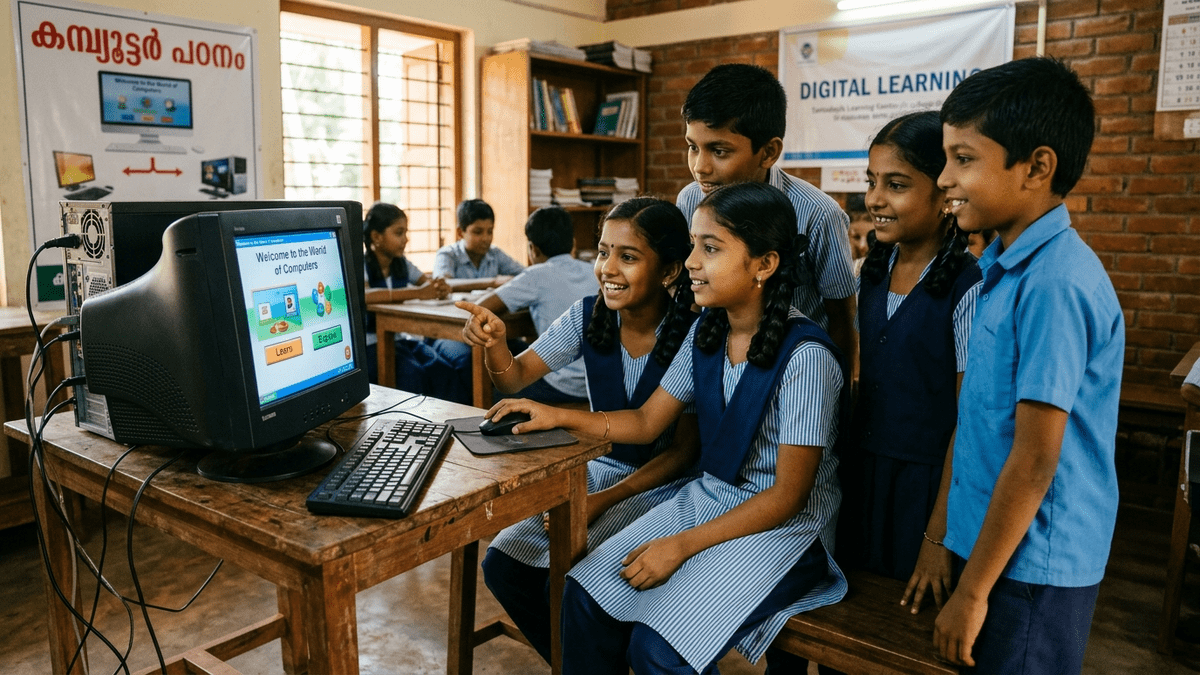
Access has improved dramatically. Schools have computer labs. Internet cafes exist in most towns. Mobile phones are ubiquitous. But access to a computer for two hours a week in a school lab isn’t the same as access to a proper learning environment where you can practice, make mistakes, and learn at your own pace.
Quality training is the real bottleneck. Most computer education India relies on outdated syllabi taught by educators who learned the material years ago. Students memorize keyboard shortcuts instead of understanding problem-solving. They type essays instead of learning how to verify sources. They play with software instead of understanding how to use it for real work.
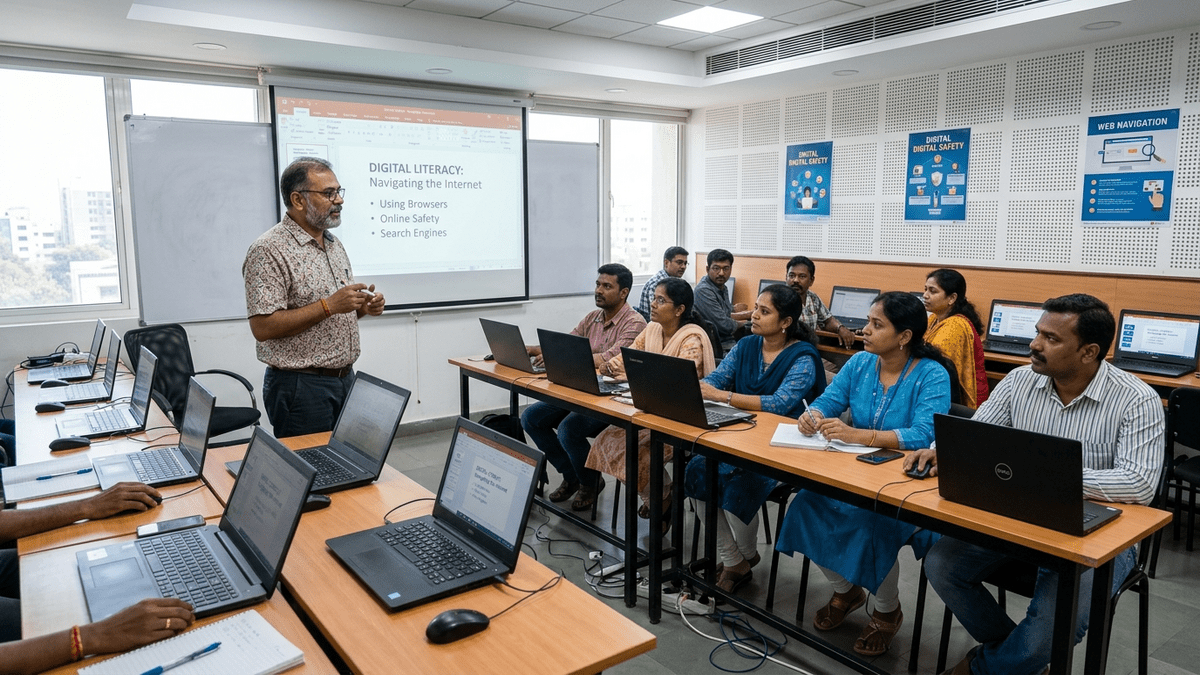
Here’s what changes everything: A Point of Digital Learning (POD) run by a trained educator in your neighborhood. Not a fancy coaching center in the city. Not a one-size-fits-all online course. A real person, in your community, teaching real skills to real students at a pace that works for them.
This is where APNA PC comes in. Not as a luxury product, but as the foundation of a learning ecosystem. A complete bundle with everything needed to start: Mini PC with i3 7th Gen processor, 8GB RAM, 128GB SSD, monitor, keyboard, mouse, webcam, headset, education software, 3-year warranty, and professional installation. All for Rs.30,000.
That’s not expensive. That’s the cost of three months of private tuition. And it unlocks something far more valuable: the ability to run a proper POD. To teach digital skills for career growth to students who genuinely need it. To transform how your community learns.
Who Needs This Right Now
If you’re a homemaker wondering how to stay relevant in a digital economy: You need this. Not for yourself alone, but to teach others and create an income stream.
If you’re a senior citizen feeling left behind by technology: You need this. To learn at your own pace, without judgment, from someone who understands your concerns.
If you’re a tuition teacher watching your traditional classes lose relevance: You need this. Digital literacy is the skill every student needs. Add it to your offerings and you become indispensable.
If you’re an edupreneur building a learning business: You need this. APNA PC gives you the infrastructure. Your training and community connections give you the students.
The common thread: You understand that computer basics for students must be taught properly, locally, and accessibly. You’re ready to fill that gap.
The Time Is Now
We’re not waiting for 2026 anymore. We’re in it. Students are being left behind every day. Communities are struggling to adapt. The window to act is closing.
APNA PC isn’t just a product. It’s your ticket to becoming the educator your community needs. To run a POD that teaches real digital literacy. To build a sustainable income while solving a real problem.
The question isn’t whether you can afford to do this. The question is whether you can afford not to.
Ready to start your Point of Digital Learning? Learn how to launch your POD today.