
Why Most Indian Homemakers Are Already Behind (And How to Catch Up Fast)
Here is the truth: digital literacy skills for Indian homemakers are no longer optional. They are survival skills. Not because anyone told you to learn them. But because your children’s schools now send assignments via apps. Your bank requires two-factor authentication. Your grocery delivery app needs you to track orders. Your doctor’s appointment is online-only.
Yet most homemakers in India are still waiting for someone else to figure this out for them. That someone never comes. So let’s be honest: the gap between digital literacy for homemakers and the real world is widening every single day.
By 2026, this gap will decide who stays relevant and who gets left behind. Not just in money matters. In dignity. In independence. In the ability to help your grandchildren with their homework without asking your son to explain.
Key Takeaways
- Digital literacy for Indian homemakers now covers five core skills: using a computer confidently, email and messaging, online banking and payments, filling government and school forms online, and spotting online scams.
- Learning alone from a phone stalls fast because a small screen cannot handle real documents, forms, or practice work.
- A shared home computer turns scattered practice into a daily habit the whole family uses.
- Homemakers who build these skills can move into paid work from home: data entry, tutoring, reselling, and content work.
The Five Digital Literacy Skills You Cannot Ignore
Most people don’t realise that digital literacy is not about becoming a programmer or hacker. It’s about these five concrete skills:
- Email and online communication: Gmail, WhatsApp messaging, video calls on Google Meet or Zoom. Your grandchild’s school will contact you via email. Your doctor will send test reports via email. You need this.
- Online banking and payments: UPI, net banking, checking account statements, making digital payments. One fraudulent transaction and your family’s savings can vanish. You need to know what’s happening with your own money.
- Searching and finding information: Using Google safely. Identifying fake news. Finding government schemes you’re eligible for. Checking medicine side effects. This skill alone can save your life.
- Basic document creation: Writing a simple letter in Word or Google Docs. Filling online forms. Taking screenshots. Creating a simple list in Excel. These are not luxuries anymore.
- Online safety and privacy: Recognizing phishing scams. Using strong passwords. Understanding what data you’re sharing. Protecting your Aadhaar and PAN details. This is non-negotiable.
These five skills form the foundation of digital literacy for homemakers. Everything else builds on top of this.
Why Learning Alone at Home Doesn’t Work
Most homemakers try to learn from YouTube videos. They get stuck. They feel embarrassed asking their children. They give up. Then they tell themselves they’re “not good with technology.”
That’s not true. You’re not bad with technology. You just learned in the wrong way. Alone. Without someone to answer your questions. Without peer support. Without patience.
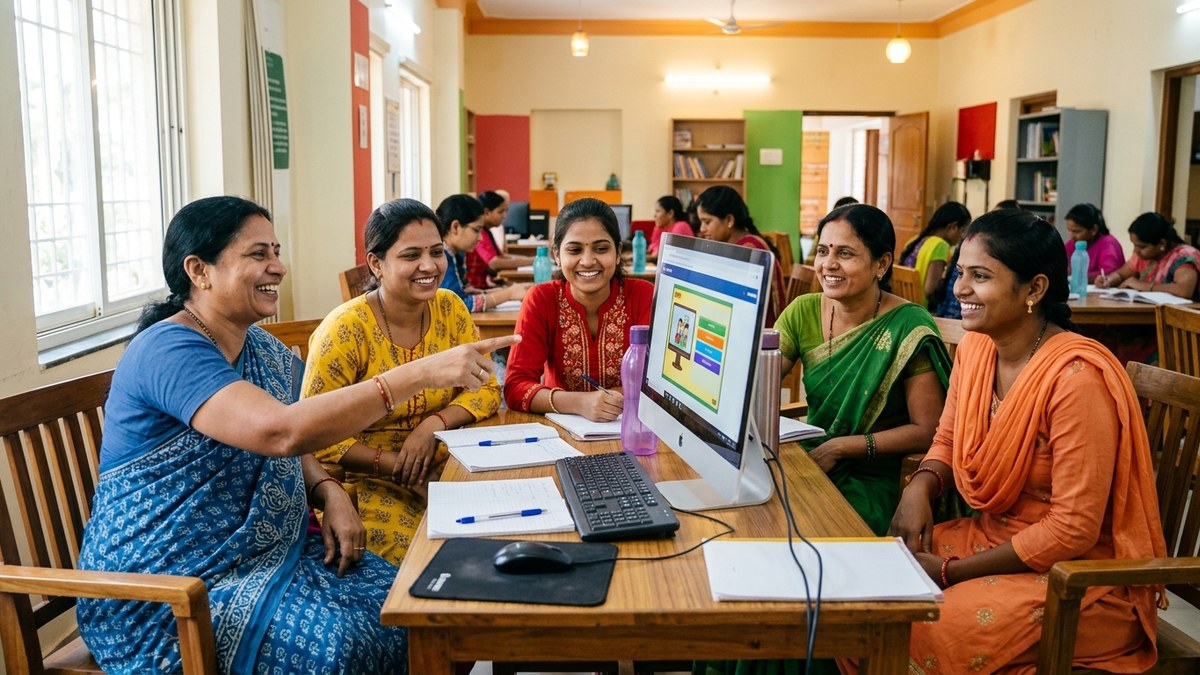
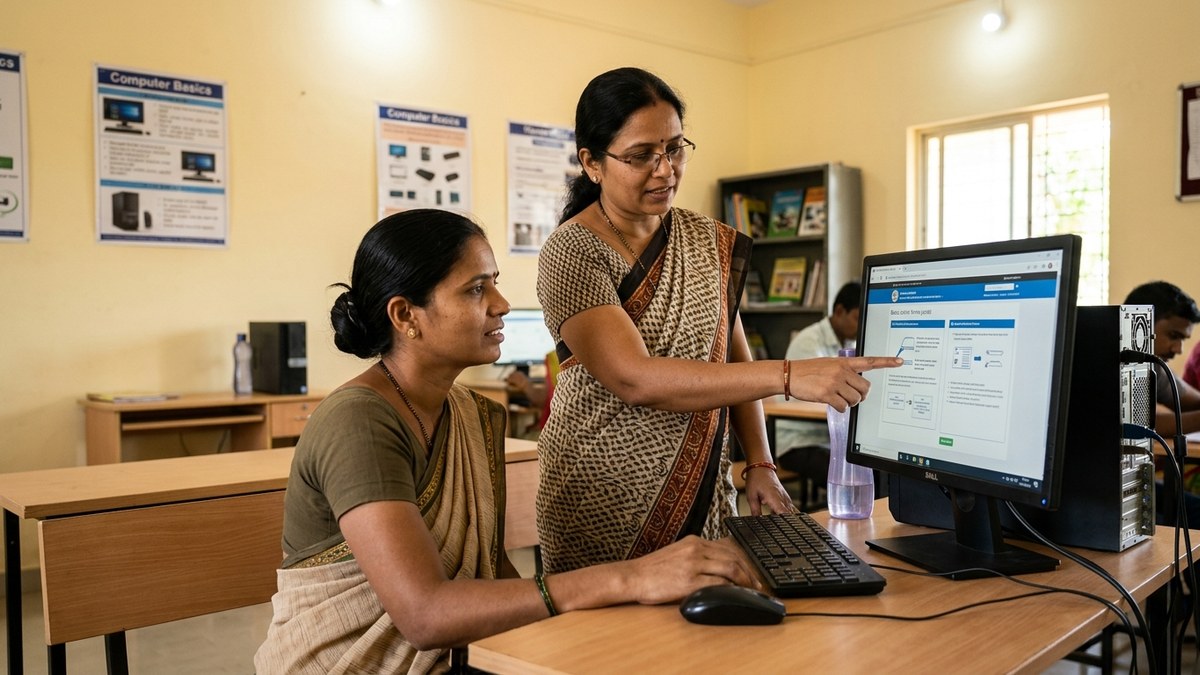
This is exactly why a Point of Digital Learning (POD) exists. A POD is a community learning centre run by a trained educator in your neighbourhood. It’s not a fancy computer institute. It’s a safe space where homemakers, senior citizens, and others learn together at their own pace.
At a POD, you learn from someone who understands your fears. You practice on real devices. You ask questions without shame. You sit next to other women learning the same skills. You finish one module before moving to the next. No rush. No judgment.
Check out DIKSHA digital learning platform to see how many free resources are available once you have basic skills.
The Hardware Problem Nobody Talks About
Here’s what stops most homemakers from learning digital literacy skills: they don’t have a computer at home.
Laptops cost 40,000 to 1,00,000 rupees. Desktops aren’t much cheaper. A smartphone is not enough for real learning. You can’t type properly. You can’t see spreadsheets clearly. You can’t practice what you learned.
This is where APNA PC changes everything. APNA PC is a complete bundle for Rs.30,000. It includes a Mini PC with i3 7th Gen processor, 8GB RAM, 128GB SSD, monitor, keyboard, mouse, webcam, and headset. Plus education software. Plus 3-year warranty. Plus installation at your home.
Think about that price. It’s less than one year of your vegetable budget. Less than a single medical emergency. Yet it’s the gateway to independence, safety, and new skills.
With APNA PC, you can set up a Point of Digital Learning in your own community. Or you can learn at home at your own pace. Either way, you have a proper device. A proper keyboard. A proper monitor. A proper learning environment.
Why 2026 is Your Deadline
Most people don’t realise that digital literacy skills for Indian homemakers are becoming mandatory, not optional. By 2026, nearly all government services will be digital-only. Bank branches will close. Forms will be online. Ration cards will be digital.
Your children might not always be available to help. Your grandchildren will grow up assuming you know how to use email and video calls. Your independence will depend on these skills.
The time to start is now. Not next year. Not when you retire. Now.
Start with one skill. Email. Master it. Then move to the next. Online banking. Then video calls. Then document creation. Then online safety. Build confidence as you go.
And if you want to teach these skills to other homemakers in your community, check out the free AI tools for teachers that can help you create simple lessons and track progress.
The choice is simple: Learn now, or struggle later. Invest Rs.30,000 in APNA PC and digital literacy, or spend 10 times that amount hiring someone to do basic tasks for you.
Get your APNA PC bundle today and start your digital literacy journey. Your future self will thank you.
Frequently Asked Questions About Digital literacy skills for Indian homemakers
What digital skills should an Indian homemaker learn first?
Start with the basics you use every week: switching on and navigating a computer, typing, sending email and messages, and making a UPI or net-banking payment safely. Once those feel natural, move to filling school and government forms online and checking whether a link or call is a scam.
Can I learn digital skills at home without going to a class?
Yes. Free lessons on YouTube and the government DIKSHA platform cover almost everything a beginner needs. The one thing you need beyond that is a proper computer to practice on, because most real tasks like forms and documents do not work well on a phone.
Is a smartphone enough to become digitally literate?
A phone is fine for calls, messaging, and simple payments, but it is not enough for the skills that lead to income or independence. Job applications, form filling, spreadsheets, and online course work all need a keyboard and a full screen.
How long does it take to become confident with a computer?
Most adults who practice 30 to 45 minutes a day feel comfortable with everyday tasks within six to eight weeks. Progress is faster when a family member or a local learning centre can answer questions as they come up.
Can digital skills actually help a homemaker earn money?
Yes. Common starting points are online data entry, home tutoring, selling products through WhatsApp and Instagram, and simple content or typing work. All of these need the same base computer skills, so the learning pays for itself once you begin.
India’s Ministry of Electronics and IT runs the PMGDISHA and Digital India programmes precisely because everyday services, from school admissions to pensions, have moved online and assume basic computer access at home.