Your Child Is Already Behind. Here’s Why.
A 14-year-old in Bangalore can code. A 16-year-old in Delhi manages social media for local businesses. And a homemaker in Mumbai just launched her own online tuition centre. Meanwhile, millions of Indian students still can’t create a professional email, use a spreadsheet, or troubleshoot basic computer problems. Let’s be honest: digital literacy skills for students aren’t optional anymore. They’re survival skills.
The gap between digitally fluent and digitally lost is widening fast. And it’s not just about knowing how to open Google. Real digital literacy skills Indian students need in 2026 go much deeper. Here’s what actually matters.
The Five Digital Literacy Skills Indian Students Must Master by 2026
1. Data and Information Literacy
Most people don’t realise that finding information online and understanding it are two completely different things. Your student can Google anything in seconds. But can they spot fake news? Can they evaluate sources? Can they understand how algorithms work? These are the real questions. Schools aren’t teaching this. Parents aren’t either. Yet this is the foundation of everything else.
2. Cloud and File Management
Google Drive. OneDrive. Dropbox. These aren’t fancy extras. They’re essential. A student who can’t organize files, share documents, or back up work is setting themselves up for disaster. Exams lost. Projects deleted. Assignments corrupted. This happens constantly. And it’s preventable with proper digital literacy guide for students training.
3. Basic Coding and Automation Logic
You don’t need to raise a programmer. But your student needs to understand how code works. Python. Excel macros. Simple automation. Why? Because every job in 2026 will touch code somehow. Even if they become a chef or a doctor, they’ll use software built by someone. Understanding the logic makes them smarter users and opens career doors.
4. Cybersecurity and Digital Safety
Passwords. Two-factor authentication. Phishing scams. Data privacy. Your teenager is sharing everything online. Are they doing it safely? Most aren’t. They don’t know the difference between public and private. They click suspicious links. They reuse passwords. One breach and their entire digital life collapses. This is urgent.
5. Multimedia Creation and Communication
The world doesn’t need more consumers of content. It needs creators. Video editing. Podcast recording. Graphic design basics. Presentation skills. These aren’t luxuries for art students. Every field needs people who can communicate clearly with visuals and audio. This skill separates the average from the exceptional.
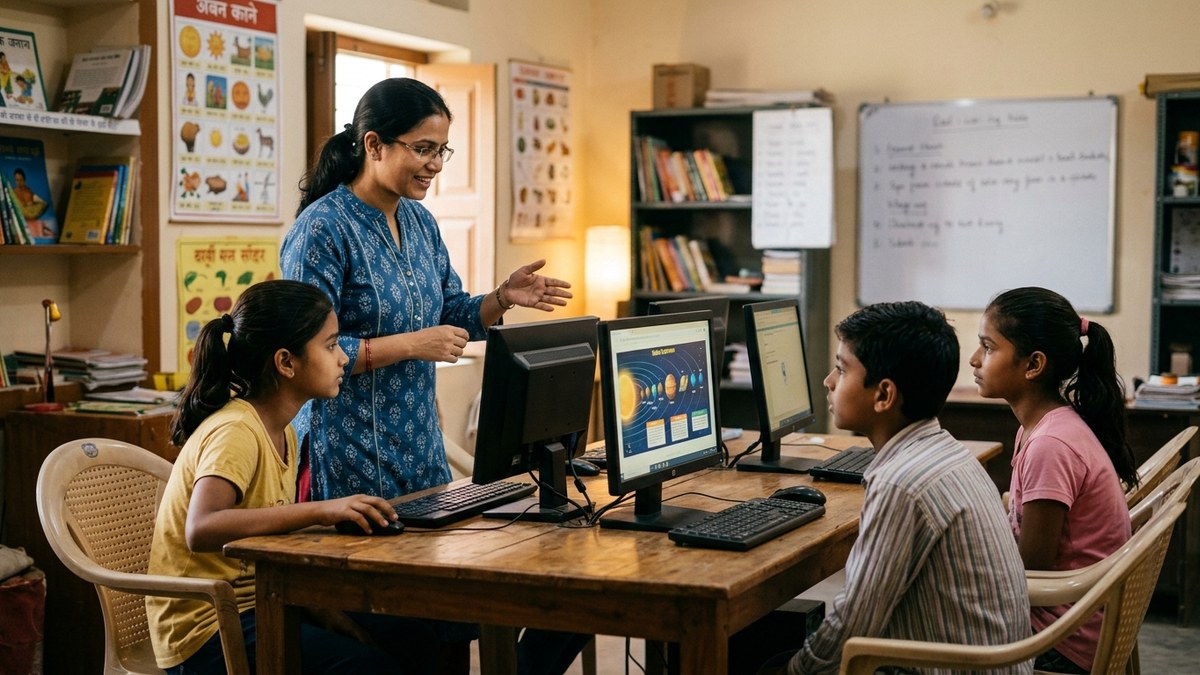
Here’s the truth: most computer literacy India programs focus on outdated skills. MS Word. Basic internet browsing. That’s not enough. Your student needs hands-on training with real tools they’ll actually use. They need a mentor. They need practice. They need accountability.
This is where things get practical. You can’t just hand a kid a laptop and expect them to figure it out. They need structured learning. A trained educator. Real hardware. And time to practice without pressure.
The how AI helps students learn faster approach is changing how we teach digital skills. AI tutors can adapt to each student’s pace. They don’t get frustrated. They work 24/7. But they still need a human mentor to guide the bigger picture.
Why Most Indian Students Are Still Struggling With Digital Skills
Three reasons:
- Schools teach theory instead of practice. Students memorize facts about computers instead of using them.
- Parents don’t have the skills themselves. How can they guide their kids?
- Access is still limited. Not every home has a decent computer. Not every community has a learning centre.
The Digital India initiative has helped. But there’s still a massive gap between policy and reality. Rural areas lag behind cities by years. Low-income families can’t afford devices. And even when they can, the quality of training is inconsistent.
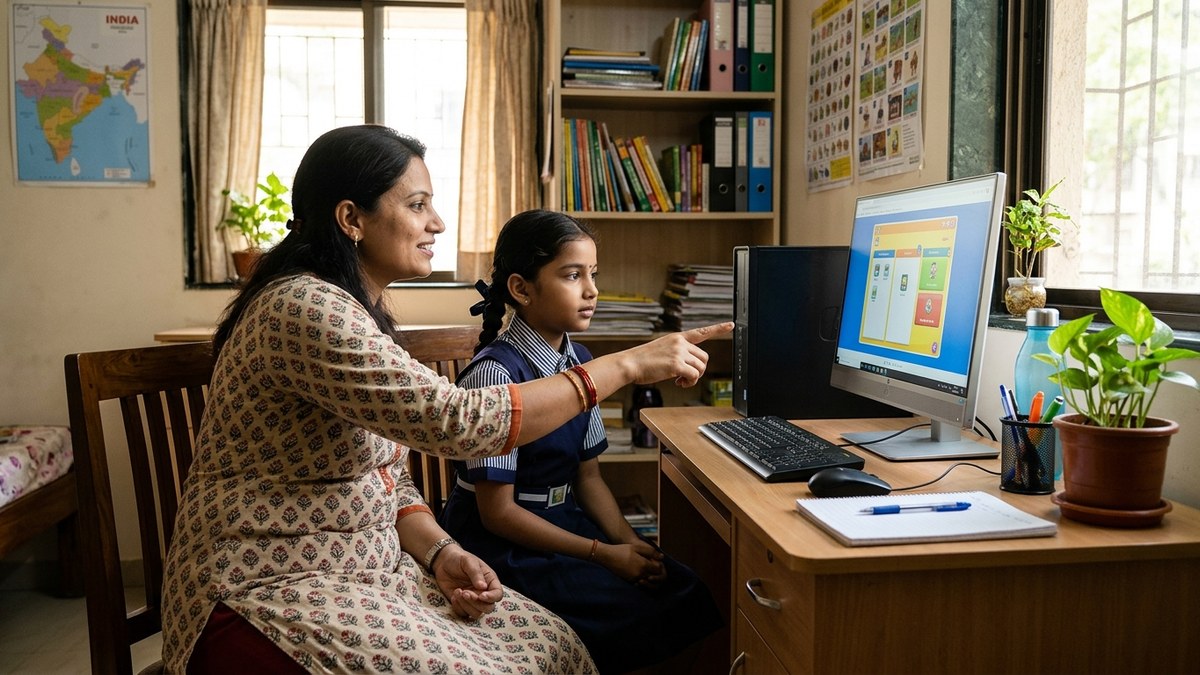
Most people don’t realise that digital literacy is a social justice issue. Students without these skills are locked out of opportunities. College applications. Job interviews. Freelance work. Online businesses. All require digital competence. If your child doesn’t have it, they’re competing with a hand tied behind their back.
The Practical Solution: Start Where You Are
You don’t need to wait for schools to catch up. You don’t need expensive coaching classes. You need three things:
- Reliable hardware that works
- Structured curriculum focused on real skills
- A trained mentor to guide the learning
This is exactly what APNA PC offers. The complete bundle includes everything: a Mini PC (i3 7th Gen, 8GB RAM, 128GB SSD), monitor, keyboard, mouse, webcam, headset, professional education software, 3-year warranty, and installation. Just Rs.30,000. That’s one semester of coaching. But the value lasts years.
Pair APNA PC with a Point of Digital Learning (POD). This is a home or community learning centre run by a trained educator. Not a franchise. Not a corporate chain. A real person in your neighbourhood who understands your students and teaches hands-on digital skills. Your tuition teacher can run one. Your homemaker neighbour can run one. Anyone with the right training can do it.
Here’s what happens next. Students learn data literacy. File management. Coding basics. Cybersecurity. Multimedia creation. They practice on real hardware. They get feedback from a mentor. They build confidence. They develop skills that actually matter in 2026.
Parents see results. Students get better grades. They apply for internships successfully. They start freelance projects. They build portfolios that impress colleges. Suddenly they’re not behind anymore. They’re ahead.
The question isn’t whether your student needs digital literacy skills. They do. The question is when you’ll start. 2026 is closer than you think. And every month of delay costs them.
Ready to bridge the gap? Start a Teach to Earn learning POD today and give your community the digital education they deserve.