Your Child Won’t Get a Job Without Digital Skills. Period.
Let’s be honest: if your child cannot use a computer, they are already behind. Not by a little. By a lot. The job market in India has shifted. Companies are not hiring people who can only read, write, and do math. They want people who can navigate software, understand basic coding, use spreadsheets, and communicate online. Digital literacy skills for Indian students are no longer optional. They are survival skills.
Most people don’t realise that digital literacy is not just about knowing how to open Google Chrome. It’s about understanding how technology works, solving problems with it, and adapting when things change. Your daughter’s school might teach her English and Hindi, but who is teaching her to build a digital portfolio? Who is showing her how to use tools that employers actually want? Nobody. That’s where you come in.
Here is the truth: Indian families are waiting for the government to fix education. The government is waiting for schools to modernise. Schools are waiting for budgets. Meanwhile, your child is losing time. Every month without hands-on computer experience is a month they’re falling further behind their peers in metros and abroad.
Why Digital Literacy Matters Right Now
The Digital India initiative has pushed connectivity into villages. But connectivity alone doesn’t create skilled workers. You need training. You need access to actual machines. You need someone who understands both the technology and the Indian context.
Consider this: a student who learns spreadsheets can manage inventory for a family business. A student who understands email and online tools can work remotely for companies across India and the world. A student who knows basic digital literacy skills can teach others and earn money while still in school. These are not fantasies. These are real opportunities happening right now.
The problem is access. Not everyone can afford a laptop. Not everyone lives near a computer training centre. Not every teacher knows how to teach digital skills because they didn’t learn them in their own education. This gap is widening, not shrinking.
- Students in Bangalore get coding classes at age 8
- Students in smaller towns get typing practice if they’re lucky
- Students in villages get nothing
This is not fair. It’s also fixable.
Building Future-Ready Digital Skills at Home and in Your Community
You don’t need to wait for the perfect school or the perfect teacher. You can start today. Here’s what future-ready digital skills look like for Indian students:
- Computer basics: Understanding hardware, software, file management, and basic troubleshooting
- Internet safety: Knowing how to protect yourself online, recognizing scams, understanding privacy
- Productivity tools: Using Word, Excel, and presentation software with confidence
- Online communication: Email, video calls, collaborative documents, professional writing
- Problem-solving: Using technology to solve real problems, not just playing games or scrolling
The challenge? You need three things: a device, quality training, and someone who can guide learners through it all. Most families have one or two of these. Almost none have all three.
That’s exactly why APNA PC exists.
APNA PC: Your Complete Solution for Digital Literacy
APNA PC is not just a computer. It’s a complete bundle designed for Indian families, teachers, and community educators who want to build digital literacy skills without the massive expense or confusion.
Here’s what you get for Rs.30,000:
- Mini PC (i3 7th Gen, 8GB RAM, 128GB SSD): Powerful enough for real work, affordable enough for real families
- Complete hardware: Monitor, keyboard, mouse, webcam, headset. Everything you need to start immediately
- Education software: Pre-loaded tools for learning digital skills, not just entertainment
- 3-year warranty: Peace of mind. Repairs covered. No hidden costs
- Professional installation: Someone comes to your home or learning centre and sets it up properly
This is not a toy. This is a machine that will help your child learn real, marketable skills. The same skills that AI in Indian classrooms assumes students already have. The same skills that employers are desperate to find.
The POD Model: Bringing Digital Literacy to Your Neighbourhood
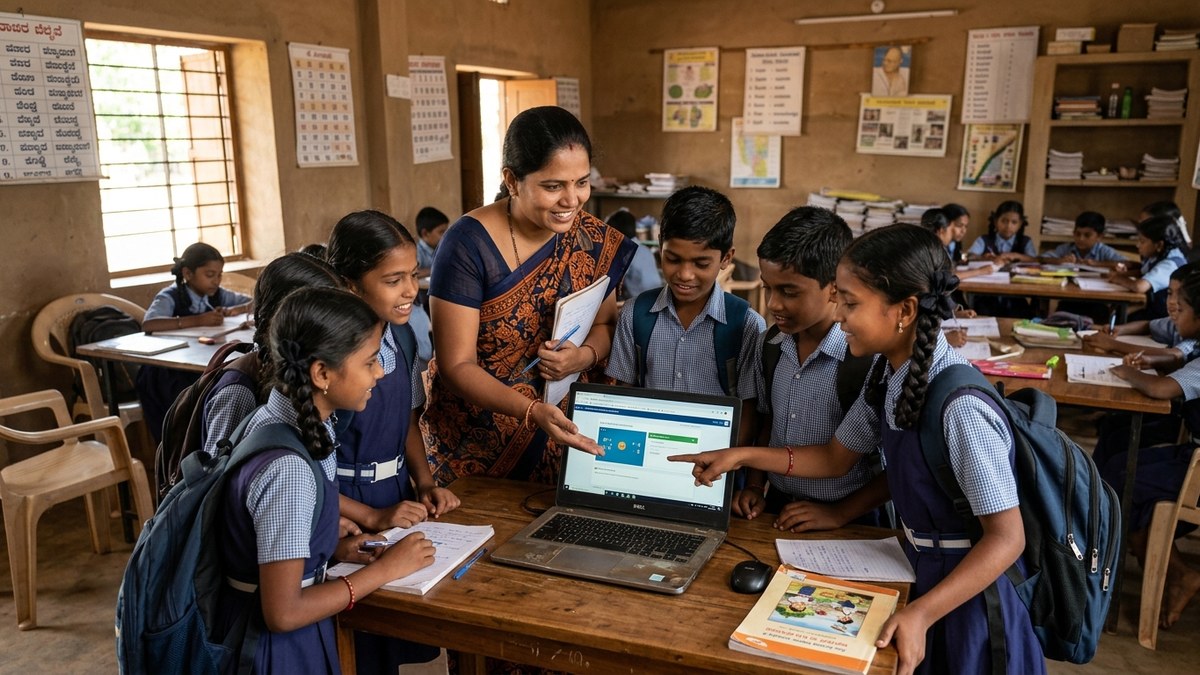
You don’t have to do this alone. Thousands of Indian educators, homemakers, and small business owners are running Points of Digital Learning (PODs) in their communities. A POD is a home or community learning centre run by a trained educator using APNA PC.
Think of it like a tuition centre, but for digital skills. Kids come for 2-3 hours after school. They learn on actual computers, not just theory. They build real projects. They get certified. And the educator who runs it? They earn while helping their community.
If you’re a tuition teacher, this is your chance to expand. If you’re a homemaker with some tech knowledge, this is your chance to earn. If you’re a parent worried about your child’s future, this is your chance to act.
The digital literacy roadmap for 2026 is clear: students without these skills will struggle. Students with them will have options.
What Digital Literacy Actually Means (And Why Schools Get It Wrong)
Most schools teach computer class like they teach history. Memorize facts. Pass the test. Forget everything. That’s not digital literacy. That’s theatre.
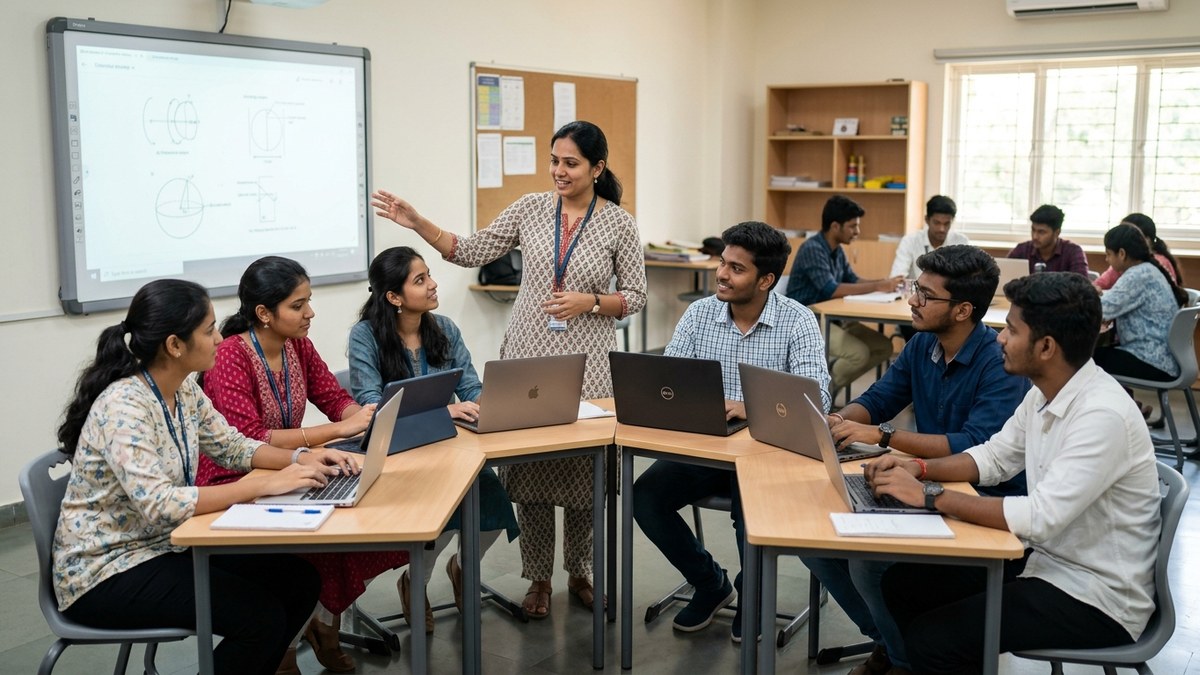
Real digital literacy basics means being able to use technology to solve actual problems. To create things. To communicate. To learn independently. To adapt when software changes (and it always does).
A student with real digital literacy skills can:
- Set up their own email and manage it properly
- Create a resume and portfolio online
- Learn new software on their own by watching tutorials
- Understand when they’re being scammed online
- Use spreadsheets to track data for a school project or family business
- Collaborate with others online using shared documents
This is not advanced stuff. This is basic survival in 2026 India. And your child should be learning it now, not in college, not in their first job, now.
Start Building Digital Literacy Skills Today
You have options. You can wait and hope schools catch up. You can send your child to an expensive coaching centre in the city. Or you can take action right now by setting up a learning space at home or in your community.
APNA PC makes this possible. The hardware is affordable. The warranty covers you. The installation is handled. All you need is the commitment to help your child or your community build the skills they actually need.
If you’re ready to create a Point of Digital Learning in your area, if you want to help students gain real digital literacy skills, if you want to turn your knowledge into income, start your POD today. The students in your community are waiting. They just don’t know it yet.