
Your Money is Being Stolen Right Now. Here’s How to Stop It.
Digital payment safety for students isn’t optional anymore. It’s survival. Every day, Indian students lose money to UPI fraud, phishing scams, and fake payment apps. Parents panic. Tutors lose trust. Learning stops. But here’s what most people don’t realise: the problem isn’t digital payments themselves. The problem is ignorance about how to handle money online without getting robbed.
Let’s be honest. Your child’s tutor is probably asking for payment via UPI. You’re probably sending money without thinking twice. That’s exactly where criminals are hunting. And students, the ones new to managing money, are the easiest prey.
Key Takeaways
- Digital payment safety means students and tutors must know UPI scam signs before sending or receiving money.
- Students are easy targets because they are new to handling money and trust easily.
- Phishing links and fake payment confirmations are common tricks, so always check payments in your bank app.
- Report fraud quickly, since early reporting improves the chance of action.
Why UPI Safety for Students Matters More Than You Think
Here’s the truth: UPI is brilliant. Fast, free, accessible. But it’s also a playground for fraudsters. Students are the softest targets because they’re new to money management and trust easily. Home tutors accepting payments are vulnerable too because they often don’t know the warning signs.
The numbers are scary. According to the Digital India initiative, payment fraud cases have jumped 40% in the last two years. Most victims are between 15-25 years old. Students losing pocket money, tuition fees, and savings to scams that could have been prevented with basic safety knowledge.
What makes this worse? Many parents and tutors don’t report fraud because they’re embarrassed or don’t know it’s happening.
- Phishing links disguised as payment reminders steal your UPI PIN
- Fake tutor apps collect money and disappear overnight
- Request money scams where criminals pose as friends needing urgent help
- Screenshot traps where showing a payment screenshot is treated as completed payment
- OTP sharing which gives criminals direct access to your bank account
Online Payment Fraud Protection: The Real Rules Nobody Tells You
Most people don’t realise that your bank won’t always refund fraud. You need to protect yourself first. Online payment fraud protection starts with awareness, not technology.
Here are the rules that actually work:
- Never share your OTP with anyone. Not your mother. Not your best friend. Not even your bank. Your bank will never ask for it.
- Never click payment links from messages or emails. Always open the app directly from your phone.
- Screenshot is not payment. A screenshot proves nothing. Only a transaction confirmation from your bank counts.
- Check merchant details before sending money. Verify the tutor’s registered name matches what they told you.
- Use strong passwords. Not your birthday. Not your child’s name. Random combinations of letters, numbers, symbols.
- Enable transaction alerts on your bank account. Know immediately when money moves.
- Keep your phone updated. Outdated phones are hacking magnets.
- Set daily transaction limits on UPI apps. Even if someone gets your PIN, they can only steal so much.
- Talk to your children about digital payment safety. Awareness is the best defence against fraud.
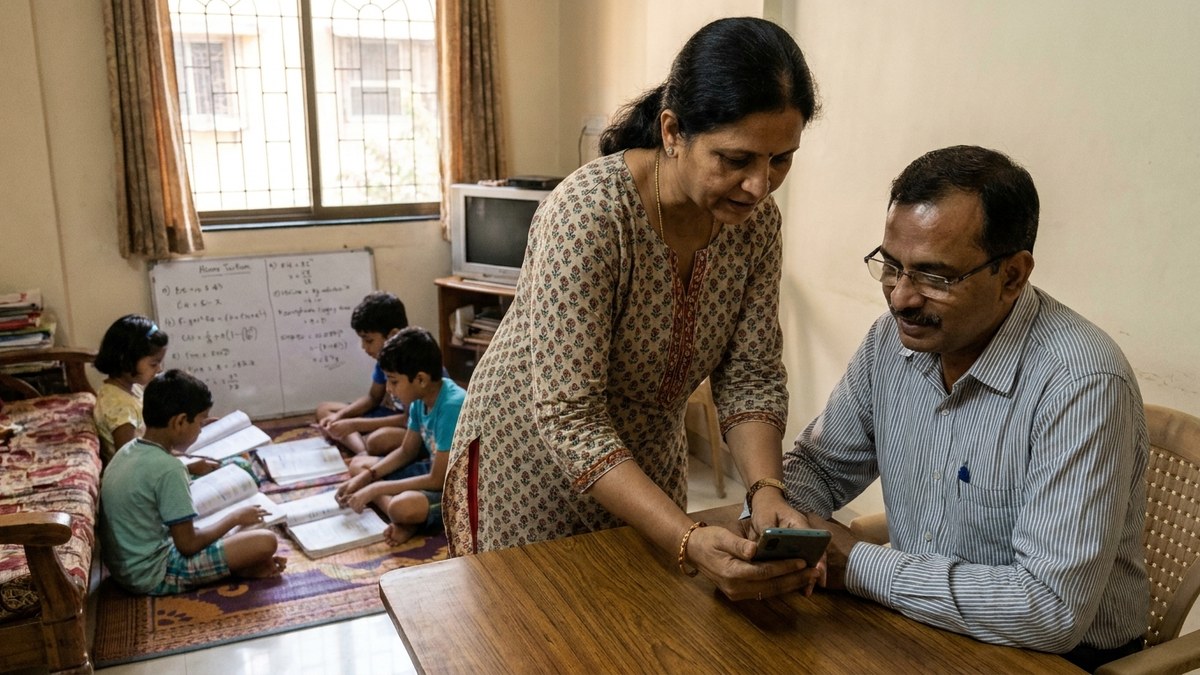
Safe Digital Payments India: What Home Tutors Must Do
If you’re running tuition classes or a Point of Digital Learning (POD) from home, you’re handling student money. That’s responsibility. That’s also liability. Safe digital payments demand proper systems, not casual WhatsApp messages with “send money here.”
Here’s what safe digital payments in India look like for educators:
- Register officially. Get a GST number if you’re earning above the threshold. It’s not just legal, it’s protection.
- Use verified payment methods. Stick to major UPI apps like Google Pay, PhonePe, or your bank’s official app. Avoid random payment apps nobody’s heard of.
- Send payment confirmations. After receiving money, send a receipt with date, amount, and what it’s for. This protects both you and the parent.
- Keep records. A simple spreadsheet or notebook works. Banks love documentation when disputes happen.
- Educate your students. Show them how to spot phishing. Teach them that real institutions never ask for OTPs. Make payment safety part of your curriculum, especially if you’re running after-school activity programs.
The truth is simple: tutors who take digital payment safety seriously build better relationships with parents. Parents who understand digital safety trust their tutors more. Trust means loyalty. Loyalty means sustainable income.

Building a Secure Payment System for Your Learning Centre
Safe digital payments aren’t just about protecting money. They’re about creating a secure learning environment where students focus on education, not anxiety about being scammed.
When you run a professional POD with proper payment systems, proper technology, and proper training, everything changes. Parents relax. Students concentrate. Learning happens.
This is where having the right infrastructure matters. APNA PC is the complete bundle designed for educators running home or community learning centres. It comes with education software pre-installed, meaning you can track student payments, attendance, and progress digitally. No more paper. No more confusion. No more fraud opportunities.
For Rs.30,000, you get a Mini PC (i3 7th Gen, 8GB RAM, 128GB SSD), monitor, keyboard, mouse, webcam, headset, 3-year warranty, and professional installation. Everything you need to run a secure, modern learning centre with proper payment systems in place.
You can also integrate modern tools like AI study notes tools to enhance your teaching while maintaining security standards across your entire operation.
According to UNESCO education standards, safe learning environments are foundational to quality education. That includes financial safety. Digital payment safety for students is not an add-on. It’s the foundation of trust in educational settings.
Start today. Teach your students about UPI safety. Verify your payment methods. Keep records. Invest in proper technology. Show parents that you’re serious about security.
Your reputation depends on it. Your income depends on it. Most importantly, your students’ trust depends on it.
Ready to build a secure, professional learning centre? Visit teachtoearn.in to explore APNA PC and transform your home tuition into a modern, trustworthy POD today.
Frequently Asked Questions About Digital payment safety
How can students stay safe while using UPI?
Never share your UPI PIN, never approve a collect request you did not expect and verify the receiver’s name before paying.
How do home tutors avoid fake payment screenshots?
Check your bank or UPI app for the credit, not a screenshot sent by the payer.
What should I do if I lose money in a UPI scam?
Call your bank at once, report the fraud on the National Cybercrime Reporting Portal or call 1930, and keep screenshots as proof.
Does a UPI PIN need to be shared to receive money?
No. You never need your PIN to receive money. If anyone asks for it, it is a scam.
Is a computer safer than a phone for payments?
Both are safe with care. A proper computer with updated software can help you review statements and manage fees easily.
The National Cyber Crime Reporting Portal, run by the Ministry of Home Affairs, and the helpline 1930 let citizens report online financial fraud.