
Dyslexia teaching strategies help students who struggle with reading and writing to learn effectively in mainstream classrooms. The right classroom approach, combining multisensory techniques, structured literacy, and assistive tools, can transform how dyslexic learners engage with lessons. This article covers eight practical strategies and classroom tools that create an inclusive environment for all students.
What Is Dyslexia and Why Does It Matter in Teaching?
Dyslexia is a specific learning difference that affects how the brain processes written language. Students with dyslexia may read slowly, reverse letters, struggle with spelling, or find it hard to connect sounds to letters, even when they are intelligent and motivated. It is not laziness, poor vision, or low intelligence.
Teaching dyslexic students with standard methods alone often leads to frustration, low confidence, and disengagement. When you use dyslexia teaching strategies tailored to how these learners’ brains work, they can access the curriculum, build confidence, and succeed academically. Many Indian schools lack formal dyslexia training, so teachers often feel uncertain about how to support these students.
How Can You Use Multisensory Learning in the Classroom?
Multisensory teaching engages sight, sound, touch, and movement together. Instead of asking a student to read a word silently, you might have them trace the letter shapes in sand, say the sound aloud, and then write it. This approach strengthens the brain’s pathways for processing written language.
How to apply it:
- Use textured materials: sandpaper letters, clay, or finger-painting to form words.
- Pair reading with listening: play audiobooks or recorded lessons while the student follows the text.
- Incorporate movement: have students walk or jump while spelling words aloud.
- Use colour and images: highlight key letters or pair words with pictures and symbols.
- Teach letter formation with hand movements that match the sound.
Multisensory methods work because they create multiple memory anchors. A student who has traced, heard, and moved with a word is far more likely to remember it than one who only read it once.

What Is Structured Literacy and How Do You Teach It?
Structured literacy is a systematic approach that teaches the rules of how letters, sounds, and words work. Unlike guessing from pictures or context, this method builds skills step by step, from single sounds to complex words.
Key steps:
- Start with individual sounds (phonemes), not whole words.
- Teach letter-sound relationships (phonics) in a set order, usually starting with common consonants and short vowels.
- Move to blending sounds into syllables, then words.
- Introduce spelling rules once phonics is secure.
- Use decodable books, texts where almost every word follows the rules taught so far.
This method is slower than whole-word teaching but far more effective for dyslexic learners. CBSE curriculum increasingly supports differentiated instruction, so you can use structured literacy alongside the standard textbook for students who need it.
How Do You Break Tasks Into Steps and Support Dyslexic Learners?
Dyslexic students often feel overwhelmed by large, complex tasks. Breaking work into smaller, manageable steps and providing support (scaffolding) helps them succeed independently over time.
Examples of scaffolding:
- Provide a word bank or sentence starter instead of a blank page.
- Use graphic organisers (flowcharts, tables, mind maps) to structure ideas before writing.
- Read instructions aloud and check understanding before the student starts.
- Offer a model or example of the finished task.
- Use checklists so students know exactly what to do and can track progress.
As the student gains confidence, gradually remove the support. This approach builds independence rather than dependence on help.
What Assistive Technology and Tools Support Dyslexic Students?
Technology can level the playing field for dyslexic learners. Text-to-speech tools, speech-to-text software, and reading apps reduce the cognitive load of decoding and allow students to focus on meaning and learning.
Useful tools:
- Text-to-speech: Built into many devices (Windows, iOS, Android) or available as free apps; reads text aloud while the student follows.
- Speech-to-text: Allows students to dictate ideas instead of typing or writing by hand, saving time and effort.
- Digital worksheets: Converting PDFs to interactive digital worksheets makes content accessible and easier to navigate.
- Reading apps: Apps like Audible, Kindle with audio, or DIKSHA platform provide audiobooks and structured content aligned to Indian curricula.
- Design tools: Canva for teachers helps you create visually clear, dyslexia-friendly worksheets with large fonts and minimal clutter.
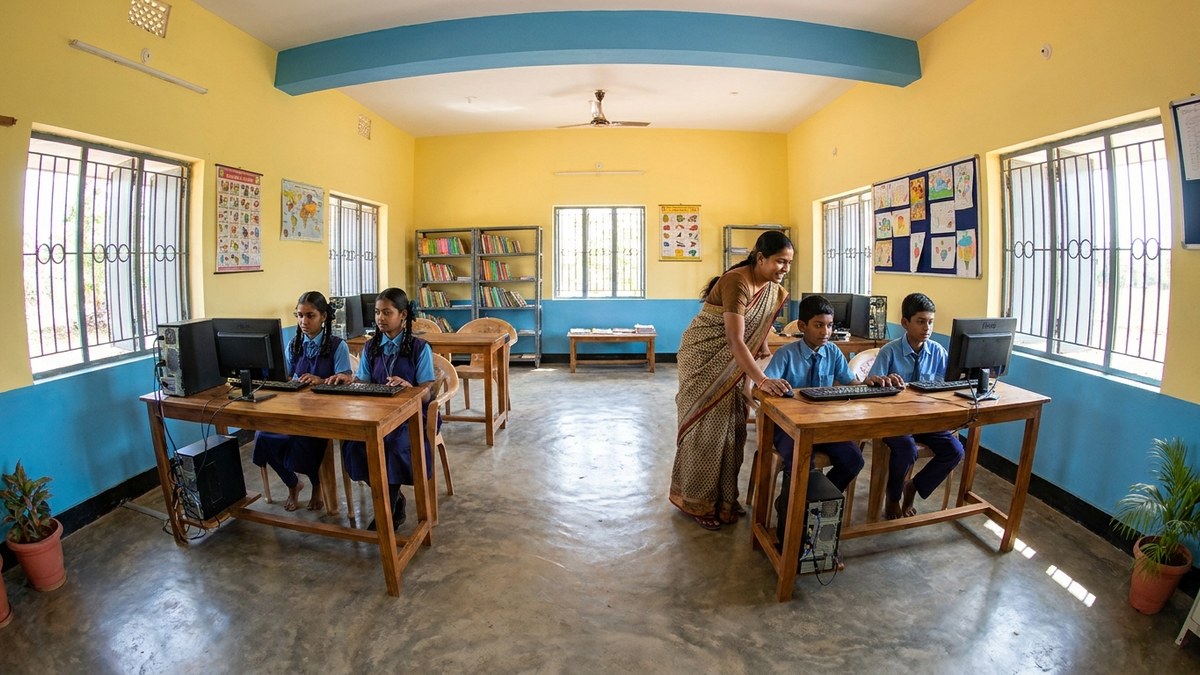
A reliable computer with pre-loaded educational software is invaluable in a POD or classroom setting. APNA PC (Rs. 30,000 complete bundle) includes Scratch, LibreOffice, Audacity, and other tools that support inclusive learning without additional software costs.
How Should You Format Reading Materials for Dyslexic Readers?
The way text is formatted affects how easily dyslexic students can read it. Simple changes to font, spacing, and layout make a huge difference.
Formatting tips:
- Use sans-serif fonts (Arial, Verdana, Calibri) in 12pt or larger.
- Avoid italic, all-caps, or underlined text; use bold for emphasis instead.
- Increase line spacing to 1.5 or double spacing.
- Use left alignment, not justified text.
- Keep margins wide and avoid cramped pages.
- Use off-white or cream backgrounds instead of bright white.
- Break text into short paragraphs and use headings frequently.
- Include images, diagrams, and visual supports alongside text.
These changes benefit all learners, not just those with dyslexia. Many teachers find that dyslexia-friendly formatting improves engagement and comprehension across the class.
How Can You Build Confidence and Support Emotional Wellbeing?
Dyslexic students often develop anxiety around reading and writing after years of struggle. Your role as a teacher includes building emotional safety and celebrating small wins. Combining these strategies with upskilling and collaboration creates a strong foundation for inclusive teaching.
Strategies to build confidence:
- Praise effort and strategy, not just correct answers (“You tried three different ways to sound out that word” rather than “You got it right”).
- Separate the student from the task: “This is hard work, and you are working hard” not “You are not good at reading.”
- Provide frequent, low-stakes feedback so mistakes feel safe.
- Use peer support: pair the student with a patient classmate for reading or writing tasks.
- Allow breaks when frustration builds; pushing through exhaustion is counterproductive.
- Share stories of successful people with dyslexia (entrepreneurs, scientists, artists) to show that dyslexia does not limit potential.
A student who feels safe and seen will take more risks and learn faster than one who is anxious or ashamed. Teaching dyslexic students effectively requires knowledge and collaboration. Free online certifications in education and inclusive teaching are available and can boost your confidence and credentials. Many are offered by government platforms and NGOs at no cost.
Regular communication with parents and clear documentation of what works help maintain consistency across home and school. Keep notes on which techniques help each student most, and track progress with simple measures (words read per minute, spelling accuracy, confidence in reading aloud) rather than relying on feeling. If you run a POD or tuition centre, use monitoring software like Apni Prerna to track learning progress and flag students who need extra support.
If you are preparing to teach competitive exams, dyslexia teaching strategies also help students who struggle with reading speed and retention. NEET preparation at home without coaching often requires self-paced, structured learning, the same methods that work for dyslexic learners. Investing in your skills shows students and parents that you are serious about inclusive teaching and makes your POD or tuition centre stand out.
Frequently Asked Questions
Can dyslexic students succeed in mainstream schools in India?
Yes, absolutely. With the right teaching strategies, assistive technology, and emotional support, dyslexic students can learn the full curriculum and perform well. Many Indian schools are beginning to recognise dyslexia and offer accommodations like extra time in exams and access to audiobooks. The key is early identification and consistent, structured support.
What is the difference between dyslexia and general reading difficulty?
Dyslexia is a specific, neurological learning difference that affects how the brain processes written language; it runs in families and is lifelong. General reading difficulty may result from poor teaching, limited exposure to books, language barriers, or lack of practice. A formal assessment by a trained professional can distinguish between the two.
How much time do dyslexia teaching strategies take to show results?
Results vary, but most students show improved confidence within weeks of consistent, structured teaching. Measurable gains in reading speed and accuracy typically appear within months. The key is consistency; daily practice with the same methods is far more effective than sporadic effort.
Can I use dyslexia teaching strategies with non-dyslexic students?
Yes. Multisensory learning, structured literacy, clear formatting, and scaffolding benefit all learners. Many teachers find that using these strategies improves engagement and outcomes across the entire class, not just for students with dyslexia.
What role does technology play in teaching dyslexic students?
Technology is a powerful enabler. Text-to-speech, speech-to-text, and digital learning platforms reduce the physical effort of reading and writing, allowing dyslexic students to access content and express ideas. However, technology is a tool, not a replacement for good teaching. Combine assistive tech with explicit instruction and emotional support for best results.
Dyslexia teaching strategies are not optional extras; they are essential skills for any teacher working in modern Indian classrooms. Start with one or two strategies, observe what works for your students, and build from there. Explore how APNA PC supports inclusive learning in your POD. Visit APNA PC to learn more about affordable technology that makes assistive software and digital tools accessible to every learner.