Your child can code. Your neighbour’s kid can design. But can either of them convince an employer they’re worth hiring?
Here’s the truth: employability skills are the bridge between what students learn and what employers actually need. In India, where over 1.5 million graduates enter the job market every year, technical knowledge alone won’t cut it anymore. Skills like communication, problem-solving, teamwork, digital literacy, and adaptability separate the hired from the passed-over.
The AI revolution has made this gap wider, not narrower. Most people don’t realise that AI isn’t replacing jobs because of what machines can do. It’s replacing people who can’t do what machines can’t do: think critically, communicate nuance, collaborate under pressure, and learn continuously.
Key Takeaways
- Employability skills in the age of AI include communication, problem-solving, teamwork, digital fluency and the habit of continuous learning.
- Marks and degrees alone do not show an employer what a student can do, so skills must be visible and practised.
- AI tools change often, so learning how to learn and judging when to use AI matters more than any single tool.
- Many schools and tuition centres still teach for exams, leaving a gap in interview and workplace readiness.
- Regular practice on a shared computer, including documents, video calls and spreadsheets, builds skills that phones alone do not.
Why Employability Skills Matter More Than Ever
Let’s be honest: your child’s board exam marks won’t get them a job. Neither will a degree certificate sitting in a drawer. What will? Proven skills that employers can see, measure, and trust.
The Digital India initiative has pushed tech access into every corner of the country. But access to a computer and knowing how to use it are different things. What employers now expect:
- Digital fluency: not just using apps, but understanding how digital tools work and troubleshooting problems independently
- Data awareness: reading charts, understanding basic analytics, spotting patterns
- Collaboration in virtual spaces: video calls, shared documents, remote teamwork
- Continuous learning mindset: because AI tools change every six months
- Ethical judgment: knowing when to use AI and when not to
These aren’t soft skills anymore. They’re survival skills.

The AI Skills Gap in Indian Education
Most Indian schools and tuition centres are still teaching students to pass exams, not to pass job interviews. There’s a fundamental mismatch.
Students are learning Python syntax but not how to break down a real-world problem using code. They’re memorising economics but not understanding how digital payment systems or gig economy platforms actually work. They’re sitting in classrooms with no practice in the skills that actually matter: presenting ideas clearly, handling rejection, working with people they don’t like, and admitting when they don’t know something.
The Ministry of Education has recognised this. Vocational training, skill development, and industry partnerships are now part of the curriculum push. But implementation is slow. Meanwhile, your child is losing time.
Building Employability Skills at Home and in Your Community
You don’t need a fancy institution to build them. You need three things: a real problem to solve, a digital tool to solve it with, and someone to give honest feedback.
Start here:
- Give your child a project. Not homework. A real project. “Create a small online business plan.” “Analyse your family’s monthly expenses using a spreadsheet.” “Film a 2-minute video explaining something you learned.” These build communication, digital skills, and problem-solving simultaneously.
- Make them present it. To family, to friends, to a tuition teacher, to anyone. These skills live in the moment of presentation, not in the preparation.
- Expose them to failure safely. A bad presentation to your neighbour is better than a bad interview to an employer.
- Connect skills to jobs. Don’t just teach coding. Show them how coders actually work in teams, how they handle bugs, how they communicate with non-technical people.
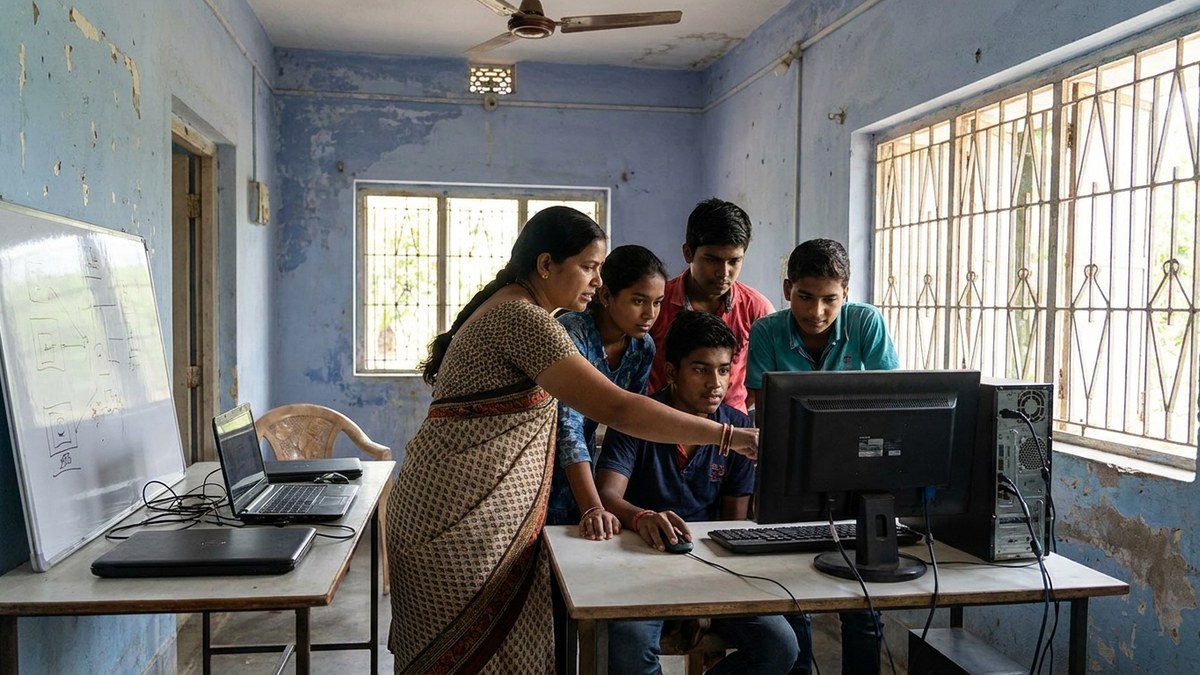
Many educators and homemakers are now running Points of Digital Learning (PODs) in their communities, small learning centres where students come to build these exact skills. It’s not about replacing school. It’s about filling the gap between school and employment.
The Equipment Question: How to Start Building These Skills
Here’s what stops most families: they think they need expensive setups. They don’t.
To build employability skills, students need a working computer, internet access, and someone who can guide them. That’s it. You don’t need the latest MacBook or a gaming rig. A reliable, affordable setup like the APNA PC Rs.30,000 complete bundle, which includes a Mini PC with i3 7th Gen processor, 8GB RAM, 128GB SSD, monitor, keyboard, mouse, webcam, and headset, plus 3-year warranty and installation, is exactly what Indian families and tutors need to create a functional learning space at home or in a POD.
With that setup, your child can:
- Take online courses on the DIKSHA platform
- Learn design, coding, or digital marketing through free and paid platforms
- Practice video communication and virtual collaboration
- Build a portfolio of real projects to show employers
For more context on how these skills fit into formal education, check the employability skills class 10 CBSE framework and explore practical teaching approaches on the Apni Pathshala blog.
What Parents and Educators Should Do Now
Stop waiting for the system to change. It will, but slowly.
Start now. Identify one skill your child or student needs most, let’s say communication or digital literacy. Find one project that builds it. Get access to the right tools. Create space for practice and feedback. Repeat monthly.
These skills aren’t learned in a classroom. They’re built through real work, real stakes, and real feedback. The sooner you create that environment, whether at home, in a tuition centre, or in a community POD, the sooner your child will stand out when the job interview comes.
The AI age isn’t about competing with machines. It’s about being the kind of human that machines can’t replace. That starts now.
Frequently Asked Questions About Employability skills in the age of AI
What are employability skills?
They are the skills that help you get and keep a job, such as communication, teamwork, problem-solving, digital literacy and adaptability. Technical knowledge works best alongside them.
Which skills will matter most as AI grows?
Critical thinking, clear communication, collaboration, digital fluency and ethical judgement are likely to matter. These are skills where people add value alongside AI tools.
How can students build employability skills at home?
Practise speaking, work on small projects, learn documents and spreadsheets, and join group activities. A shared home computer makes this practice regular and realistic.
Should students learn to code to be employable?
Coding helps, but it is not enough alone. Students also need to break down problems, communicate and work with others.
How can tuition centres teach employability skills?
Add short sessions on presentations, group tasks, email writing and interview practice. Even weekly activities build habits that exams do not cover.
The Government of India’s Skill India mission and Digital India programme both treat digital and workplace skills as central to youth employability.
Explore become an edupreneur and how to one room to learning hub checklist.