
A 10-year-old in Bengaluru opens a laptop for the first time and types her own name. She stares at the screen like she’s just discovered fire. That moment, that spark, is something every child in India deserves to feel before they turn 12.
We talk a lot about quality education, about closing the gap between urban and rural learners, about preparing kids for the future. But the conversation often skips the most basic question: does your child actually have a computer to learn on?
The truth is, a computer for Indian children is no longer a luxury. It’s as essential as a school bag.
Why a Computer for Indian Children Changes Everything Early On
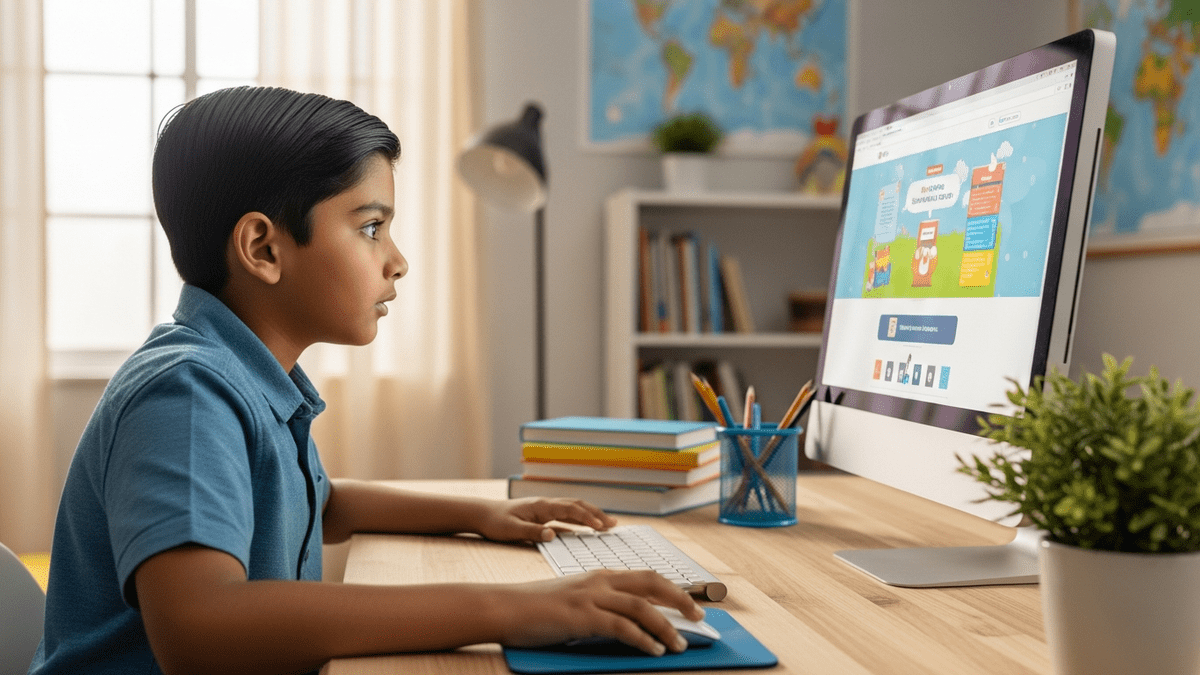
The human brain is at its most adaptable between ages 4 and 12. Children who interact with computers during these years don’t just learn software. They learn how to think logically, how to solve problems step by step, and how to express ideas in new ways.
Digital literacy for kids isn’t about teaching them to scroll through YouTube. It’s about helping them understand how information works, how to ask better questions, and how to find reliable answers. These are skills that will serve them in every subject, every career, and every corner of life.
Schools are doing their best. But a teacher managing 40 students in a classroom can’t give each child individual screen time. That practice has to happen at home, and it has to start young.
Platforms like DIKSHA, India’s national digital infrastructure for education, already offer thousands of free learning resources. But those resources are useless without a device to access them on.
The Real Cost of Waiting Too Long
Parents often say they’ll get a computer “when the child is older” or “when they really need it for studies.” That wait has a cost most families don’t see until it’s too late.
Children who don’t get early computer education spend their teenage years catching up instead of moving ahead. They’re slower with typing, unfamiliar with basic tools like spreadsheets or presentations, and less confident in digital environments. Their peers who grew up with access to computers are already miles ahead.
Early computer education isn’t about making your child a programmer at age 8. It’s about making sure they’re not starting from zero at age 15.
UNESCO’s research on education consistently shows that early exposure to technology improves long-term academic outcomes, especially for children from lower-income households. The window is real, and it matters.
What Good Child Development Looks Like With Technology
When a child has regular access to a computer, you start seeing changes that go beyond academics. They become more curious. They ask more questions. They get comfortable with trial and error because computers let you try, fail, and try again without any shame attached.
Child development experts point to something called “self-directed learning,” and computers are one of the best tools for building it. A child who can explore topics on their own, at their own pace, develops a kind of confidence that’s hard to teach in a traditional classroom.
Creative skills grow too. Kids start making presentations, writing stories digitally, editing photos, and even building simple games. These aren’t just hobbies. They’re the early signs of skills that employers and colleges will look for in 10 to 15 years.
You can explore how structured learning environments support this kind of growth through Teach to Earn’s Apna PC program, designed specifically to bring quality computing access to Indian families.
Making It Practical for Indian Families
The biggest barrier has always been cost. A decent computer felt out of reach for many households. That’s exactly the problem Teach to Earn set out to solve.
The APNA PC is a reliable, education-ready desktop computer built for Indian families, priced at just ₹30,000. It comes with the support and setup that parents need, not just a box of hardware. It’s meant to be a real tool for learning, not a showpiece.
If you’re a parent, a teacher, or someone who believes in community-level change, you can also look at how to bring this access to more children through the Teach to Earn Learning Pod program. It’s one of the most practical ways to make digital literacy for kids a neighborhood reality.
Every child who gets a computer before age 12 gets a head start that compounds for decades. Don’t let your child wait.
Give your child that head start today. Check out the APNA PC on Teach to Earn and take the first step toward real digital readiness for your family.