
Here’s the truth nobody wants to admit: gamification in education isn’t a gimmick. It’s the future of learning. And Indian schools are already behind.
Let’s be honest: traditional classroom learning is boring. Kids stare at blackboards. Teachers drone on. Nobody’s actually engaged. And then we wonder why Indian students struggle with retention and motivation.
Why Gamification Works (And Why We’ve Ignored It)
Gamification in education means applying game mechanics like points, badges, leaderboards, and instant feedback to learning. It’s not about turning math into Candy Crush. It’s about tapping into what actually makes humans learn: engagement, reward, and progress.
The brain releases dopamine when you level up, earn a badge, or see your score improve. That’s not manipulation. That’s neuroscience. And it works better than any motivational speech a teacher can deliver.
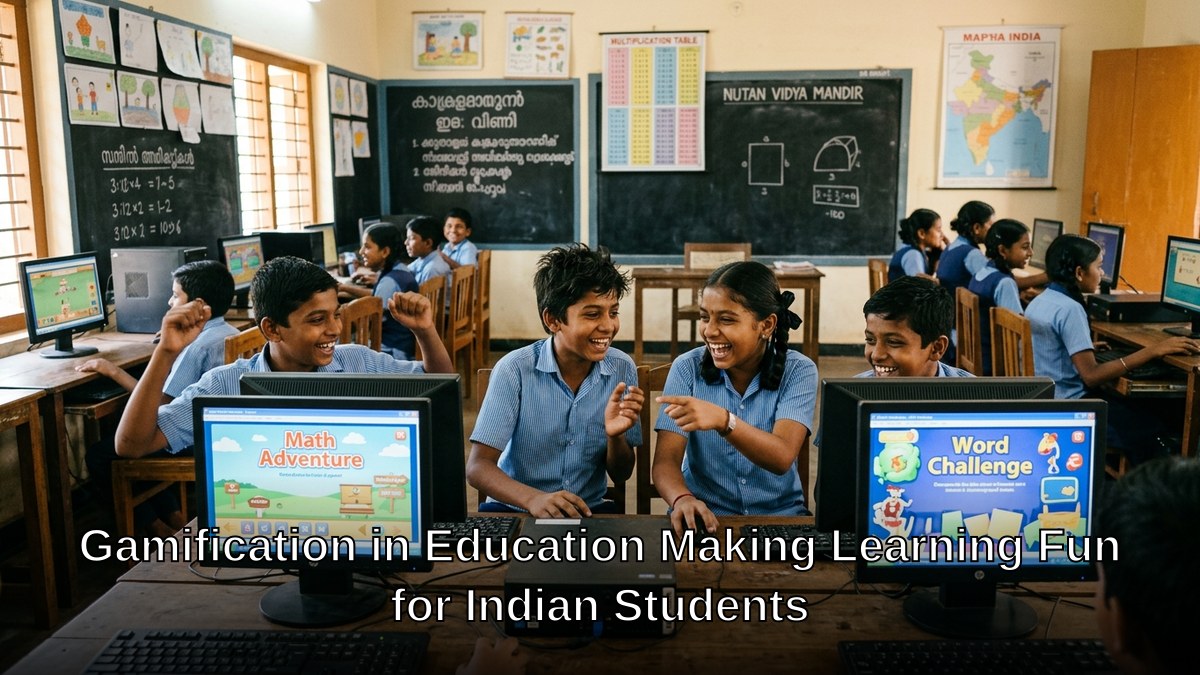
Indian students from metro cities to tier-2 towns are already gaming. They understand progression systems, achievement unlocks, and competitive challenges. So why do we teach them using methods from the 1950s?
The Indian Education Gap: Where Gamification Fits In
Here’s what we know about Indian learners:
- Rote learning dominates. Students memorize without understanding.
- Limited teacher-student interaction. One teacher, 40+ students. No personalization.
- Low engagement in tier-2 and tier-3 cities. Quality education feels out of reach.
- Parents are skeptical of “fun” learning. They equate serious education with serious faces.
Gamification in education solves all of this. When a student plays an educational game, they’re solving problems repeatedly without feeling like repetition, getting instant feedback instead of waiting for exam results, competing and collaborating with peers, and learning at their own pace so nobody gets left behind.
According to UNESCO global education research, interactive and student-centred approaches dramatically improve learning outcomes across developing nations. India is no exception.
Real Examples: Gamification That Works in India
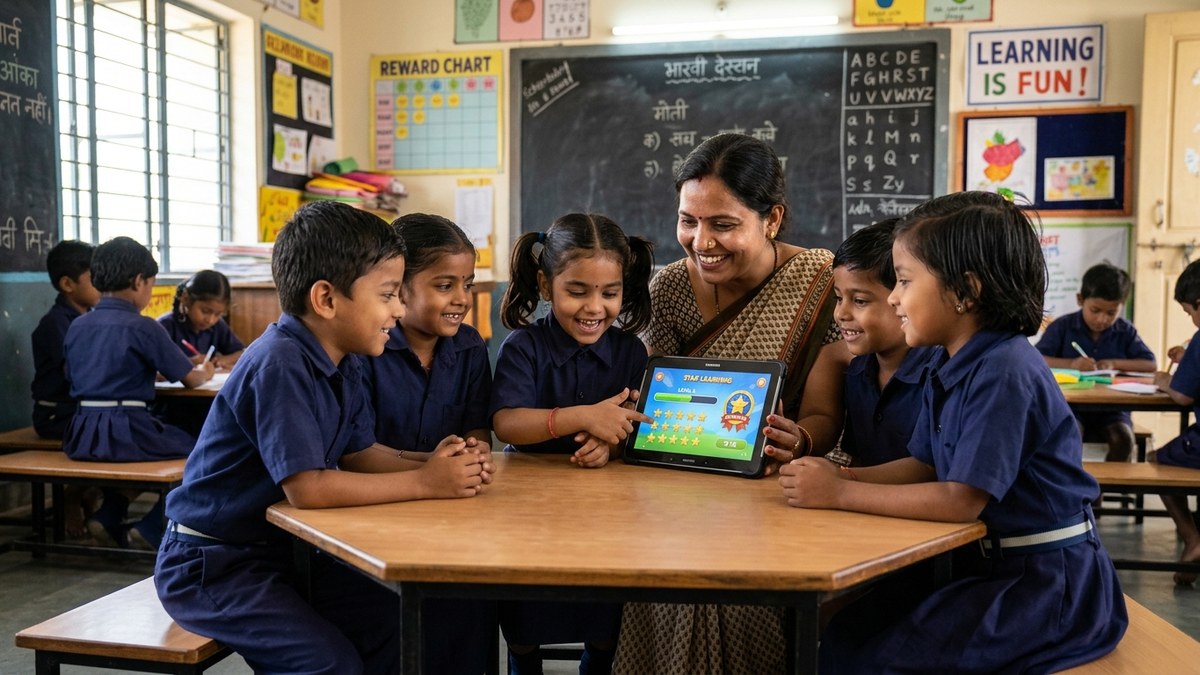
A tuition teacher in Bangalore using gamified math software saw student test scores jump 23% in three months. Why? Kids were actually practicing because it felt like playing.
A POD (Point of Digital Learning) operator in Pune introduced gamified English learning. Parents who thought their kids were “wasting time on screens” were shocked when vocabulary improved dramatically.
A homemaker turned edupreneur in Delhi used interactive game-based learning modules. Her students stopped dreading subjects. They started asking for more.
This is what happens when you align learning with how the human brain actually works. As explored in our guide to best educational YouTube channels, digital tools that combine visual learning with interactive elements produce measurably better results.
How Gamification in Education Works in Indian Classrooms
You don’t need to be a tech genius. Here’s what you need:
- A system that tracks progress through a digital learning platform
- Clear achievement levels from beginner to intermediate to expert
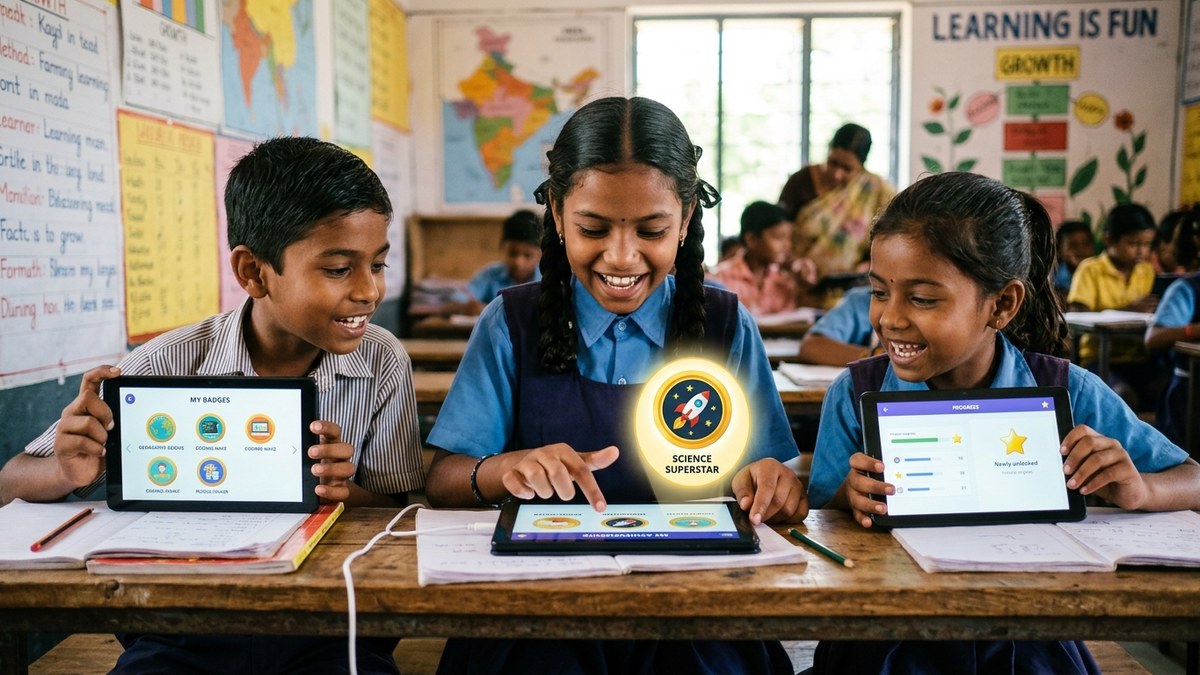
- Visible rewards like certificates, badges, and leaderboards
- Regular challenges through weekly quizzes and monthly tournaments
- Community engagement with peer competition and parent updates
The challenge is that most Indian educators lack the infrastructure. They’re still using printed worksheets and chalk. The Central Board of Secondary Education has been pushing for digital integration, but ground-level adoption remains slow. Meanwhile, the Digital India initiative is creating the infrastructure needed for gamified learning to scale.
This Is Where APNA PC Changes Everything
Here’s the thing: to implement gamified learning, you need reliable technology. Not some flaky laptop that crashes during a lesson. You need a complete, ready-to-use system.
APNA PC is exactly that. For Rs.30,000, you get a Mini PC with i3 7th Gen processor, 8GB RAM, and 128GB SSD that runs education software smoothly. It comes with a monitor, keyboard, mouse, webcam, and headset for a professional setup. You get a 3-year warranty plus installation so there are no technical headaches. And it’s pre-loaded with education software including gamified learning tools.
Whether you’re a tuition teacher setting up your first center, a homemaker starting a POD, or an edupreneur scaling to multiple locations, APNA PC gives you the hardware foundation to deliver gamified learning. No more excuses about “not having technology.” No more watching students lose interest because your teaching methods are outdated.
As we’ve discussed in our analysis of EdTech startups in India, the opportunity for educators who embrace technology is enormous. Gamification isn’t the future. It’s now.
The Parent Question: “But Isn’t Screen Time Bad?”
Parents ask this. Here’s the real answer:
Screen time isn’t the problem. Mindless screen time is. A kid scrolling Instagram for three hours? Bad. A kid solving interactive math problems for forty-five minutes? Excellent.
Gamified learning is structured, purposeful screen time. It’s supervised. It’s educational. It’s measurable. When parents see their child’s test scores improve and their confidence grow, they stop worrying about screen time.
The Challenge to Indian Educators
Stop waiting for the perfect student. Stop blaming kids for lacking motivation. Stop pretending that traditional methods work when they clearly don’t.
Gamification in education isn’t optional anymore. The educators who adopt it, who invest in APNA PC, who implement game-based learning, who engage students through progress and achievement, they’ll be the ones building thriving PODs and tuition centers.
The ones clinging to blackboards and rote learning? They’ll become irrelevant.
Which side will you choose?