
Your Child Doesn’t Need a Fancy School Building to Learn Well
Here is the truth: Thousands of Indian families are choosing homeschooling and discovering their children learn faster, retain more, and actually enjoy studies. But most parents who consider homeschooling back away because they think it requires expensive setups, constant parent expertise, or isolation from peers. None of that is true anymore.
Homeschooling in India has shifted completely. You don’t need to be a teacher. You don’t need a separate classroom. And you definitely don’t need to spend a fortune. What you actually need is a solid home learning environment, the right technology, and a clear structure. That’s it.
The challenge most Indian families face isn’t philosophy or pedagogy. It’s practical: how do you set up a proper homeschooling space for under Rs.30,000? How do you ensure your child has access to quality educational content? How do you keep them engaged without constant screen time battles?
We’re going to walk you through exactly how to build a homeschooling setup that works, stays within budget, and actually produces results.
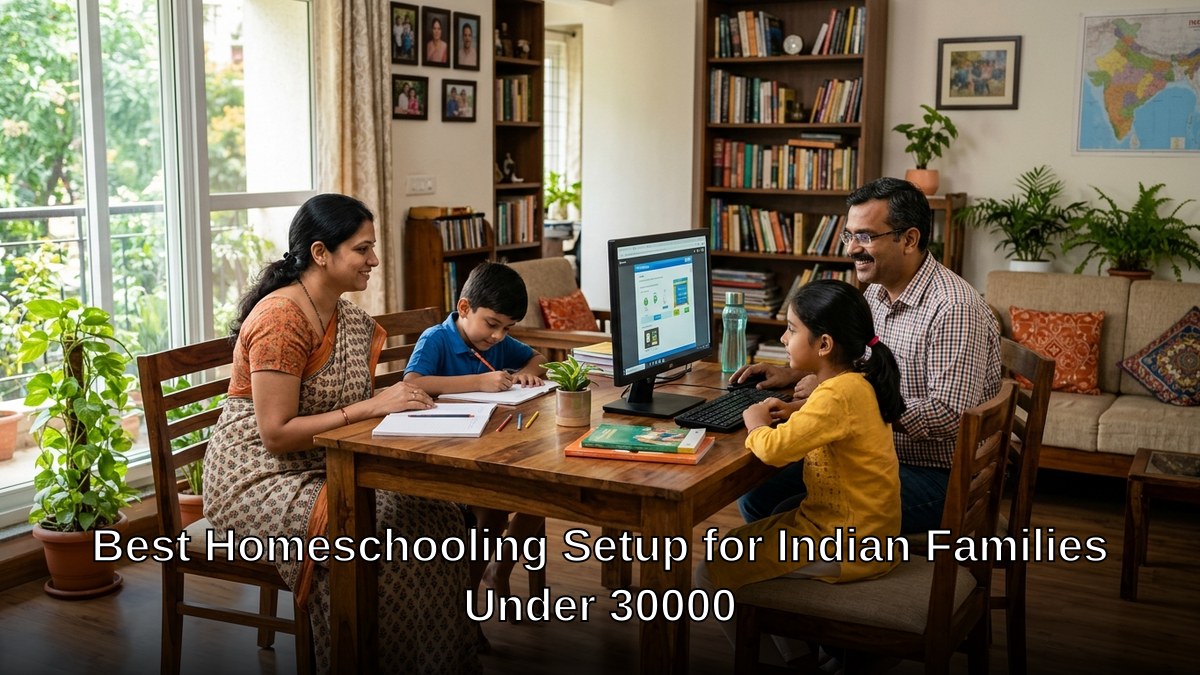
Key Takeaways
- A working homeschooling setup under 30000 is achievable for Indian families without needing a teaching degree or a separate classroom.
- What actually matters is a solid learning environment, reliable technology, and a clear daily structure, not expensive furniture or gadgets.
- Families often worry about cost and isolation, but a modest budget setup with a shared computer covers most real homeschooling needs.
- A dedicated study corner with a computer helps children stay focused compared to trying to learn on a shared family phone.
- Keeping screen time purposeful, tied to specific lessons rather than open browsing, reduces the common battles parents worry about.
Why Homeschooling Matters Right Now for Indian Families
Let’s be honest: traditional schooling works for some children. For others, it’s a poor fit. Some kids are ahead of their grade level and bored. Others need more time to process concepts. Some have learning differences that schools can’t accommodate quickly. Some thrive with flexible schedules. Some need one-on-one attention their parents can actually provide.
Homeschooling worldwide has grown 40% in the last five years. India is following that trend, but slower. Why? Cost and confusion, mainly.
Most people don’t realise that online learning at home has become genuinely structured. It’s not unschooling hippies in ashrams anymore. It’s rigorous curriculum, certified educators, peer interaction, and accountability. You can build this at home now.
The Ministry of Education in India has recognised this shift. Their guidelines now permit alternative learning models, including homeschooling with proper documentation and periodic assessments.
The Budget Reality: Rs.30,000 Gets You Everything You Need
Stop thinking about homeschooling as a premium option. It’s actually cheaper than private school fees for one year, and you get better outcomes for many children.
Here’s what Rs.30,000 covers when you invest smartly:
- A reliable home computer for students that handles educational software without lag
- Educational software licenses bundled for three years
- Professional installation and setup
- Three-year warranty and support
- All peripherals: monitor, keyboard, mouse, webcam, headset
The APNA PC bundle is designed exactly for this. It’s a Mini PC with i3 7th Gen processor, 8GB RAM, and 128GB SSD. Not flashy. Not overkill. Practical. It runs educational platforms, video conferencing, research tools, and content creation software without struggling.
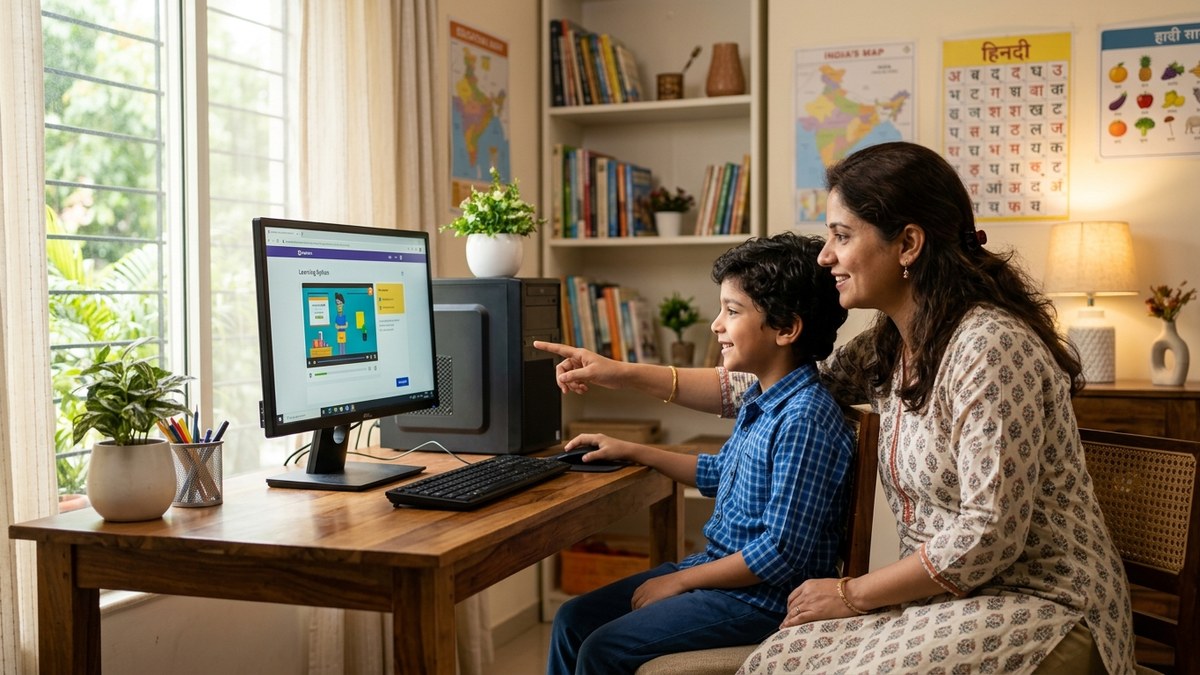
The bundle includes three years of educational software. That’s your curriculum foundation. Your child gets structured learning, progress tracking, and age-appropriate content. You’re not scrambling for resources or paying subscription fees every month.
Beyond the Computer: Building Your Home Learning Structure
The computer is the tool. The structure is what actually works. Most families fail at homeschooling because they skip this part.
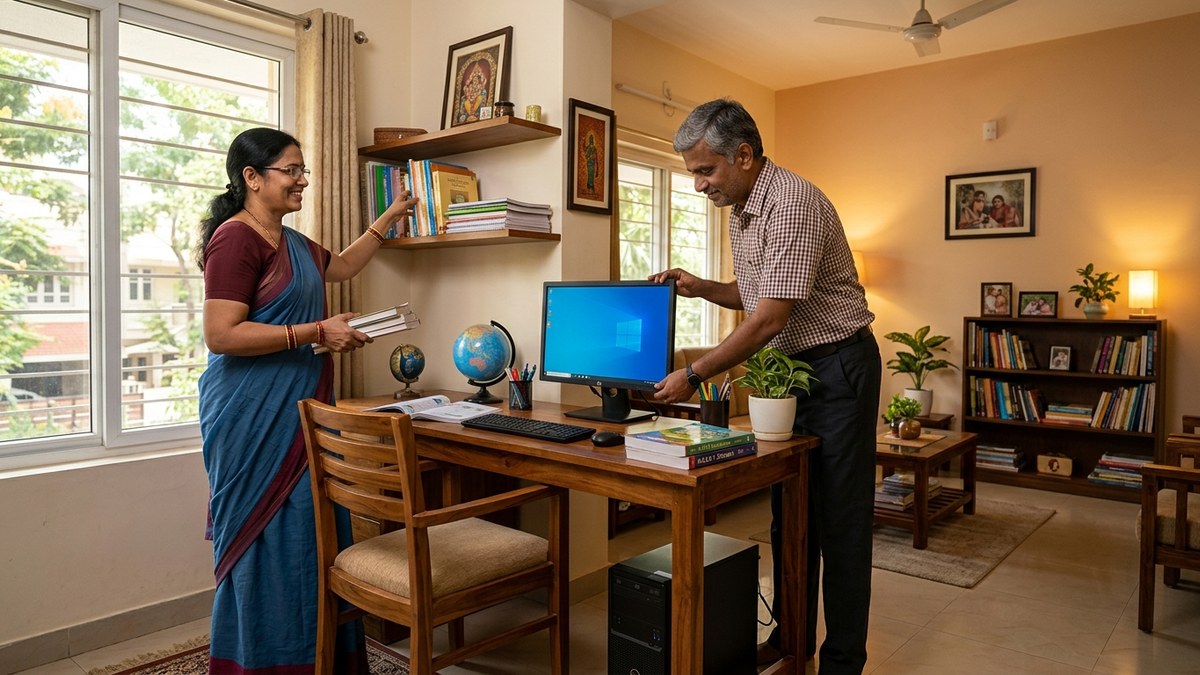
You need: a dedicated learning space (doesn’t have to be big, just consistent), a daily schedule (not rigid, but predictable), a curriculum framework (you can build this yourself or use existing ones), and a way to stay accountable (this is crucial).
Many Indian families are now using a Point of Digital Learning (POD) model. This is a trained educator who runs a small home or community learning centre. Your child attends 2-3 times per week for structured sessions, peer interaction, and guidance. The rest of the learning happens at home with your support.
This hybrid approach solves the isolation problem. Your child gets peer interaction, professional guidance, and the flexibility of homeschooling. You get expert support without full-time private school costs.
What Actually Changes When You Homeschool
Your child learns at their own pace. A concept that takes three weeks in a classroom might take one week or three weeks for your child. That’s fine. You adjust.
Learning becomes project-based and curiosity-driven. Your child reads about monsoons because they’re interested, not because it’s in the textbook this week. They build things. They fail. They iterate. This is how real learning works.
You spend more time with your child. This isn’t always comfortable. You see their struggles directly. But you also see their breakthroughs immediately. You know exactly where they stand.
Most people don’t realise how much time is wasted in traditional school: transitions, crowd management, waiting for others to catch up, administrative tasks. In homeschooling, learning time is actually learning time.
The Practical First Steps
Start small. Don’t overhaul everything at once. Pick one subject to start with. Build confidence. Then expand.
Set up your learning space this week. Get the APNA PC bundle. Install it. Test the software. Let your child explore it without pressure.
Find a POD or trained educator in your area. Even if you’re confident, having professional support 2-3 times weekly prevents gaps and keeps things structured.
Connect with other homeschooling families. You’ll learn what works, what doesn’t, and you’ll feel less alone in this choice.
Start with a one-month trial. See how it feels. Most families who try homeschooling seriously for a month don’t go back to traditional school.
Ready to set up your homeschooling environment? Explore the APNA PC bundle today. It’s built for exactly this purpose: affordable, reliable, complete.
Frequently Asked Questions About Homeschooling setup under 30000
What does a homeschooling setup under Rs 30000 actually include?
It typically covers a basic desktop or refurbished computer, a simple desk and chair for a dedicated study corner, internet access, and access to free or low-cost educational content and platforms. The budget goes toward the essentials that support daily learning, not decoration or extras. Prioritising the computer and a quiet space matters more than any single app or gadget.
Do parents need a teaching background to homeschool successfully?
No, most successful homeschooling parents in India are not trained teachers. What matters more is structure, consistency, and using good learning resources, many of which are freely available through platforms like DIKSHA. Parents act as guides and organisers rather than lecturers for every subject.
Is a computer necessary for homeschooling or can a phone work instead?
A computer works much better for homeschooling because it supports typed assignments, longer video lessons, and organised access to learning materials without the small screen and distractions of a phone. A shared family APNA PC set up for study hours gives a child a consistent, focused environment. A phone can supplement but should not be the primary device for daily lessons.
How do I keep my homeschooled child socially engaged without a regular school?
Joining local learning pods, community groups, or co-op classes with other homeschooling families addresses most social concerns. Many cities now have small groups of homeschooling parents who organise joint activities and group lessons. Isolation is a real risk only if it is not actively planned around.
How much daily screen time is reasonable in a homeschooling setup?
Screen time tied directly to specific lessons, assignments, or educational platforms is more productive than open-ended screen access, and most families keep structured screen time to a few focused hours a day. Balancing it with offline reading, practice, and hands-on activities reduces the common battles parents worry about. Setting a clear daily schedule, rather than reacting hour by hour, makes this much easier to manage.
NEP 2020 explicitly recognises alternative and flexible modes of schooling, including home-based learning, as part of India’s education framework.