What is a Learning Pod and Why is it Exploding Across India
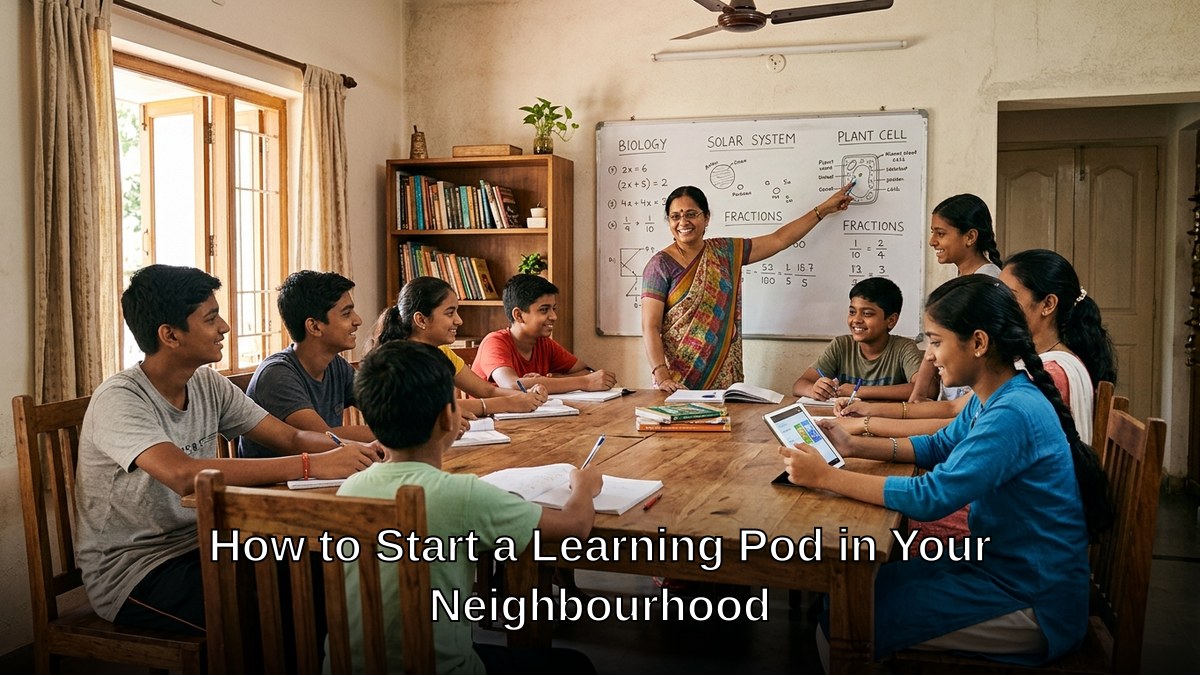
A tuition teacher in Pune teaches 8 students from her living room. She earns more than a school principal. She has no overhead, no rent, no staff salary. This is not a fairy tale. This is a learning pod India, and it is reshaping how education works in this country. While big coaching centres burn through lakhs on infrastructure, smart educators are building profitable businesses from their homes. Here is the truth: the learning pod model is the most underrated business opportunity in Indian education right now.
Most people do not realise that parents are actively looking for alternatives to crowded coaching centres. They want personalised attention. They want small batches. They want an educator who knows their child by name. A learning pod India delivers all three. And it costs almost nothing to start.
Key Takeaways
- A learning pod in your neighbourhood lets an educator teach a small batch of local students from home with almost no overhead cost.
- Parents are actively looking for alternatives to crowded coaching centres, wanting personalised attention and an educator who knows their child by name.
- The model sidesteps the rent, staff, and furniture costs that make traditional coaching centres expensive to run.
- Educators use their own home space and furniture, which keeps the barrier to starting extremely low compared to a physical centre.
- A reliable home computer supports scheduling, tracking student progress, and preparing lessons for a neighbourhood learning pod.
The Business Model Behind Learning Pods
Let’s be honest: most education businesses fail because of overhead. Rent. Staff. Furniture. Marketing. A learning pod India sidesteps all of this. You teach from home. You use your own furniture. Your students are neighbourhood kids whose parents already trust you. Your marketing is word of mouth. The result? High profit margins with minimal risk.
Consider the math. A learning pod India with 10 students charging Rs.2,000 per month generates Rs.20,000 monthly. Your costs? Almost zero. Compare this to a coaching centre that needs Rs.30,000+ just for rent. The learning pod model is not just education. It is smart business.
- No rent or commercial space needed
- No staff salaries to manage
- Small batches mean better student outcomes
- Parents prefer neighbourhood educators over big centres
- You can start with students you already know
Step by Step Guide to Starting Your Learning Pod
Starting a learning pod India requires three things: a room, a computer, and students. You already have the room. The APNA PC bundle at Rs.30,000 gives you the computer, complete with monitor, keyboard, mouse, webcam, headset, education software, and a 3-year warranty. For students, start with the children in your building or street.
Here is the step-by-step process. First, decide your target age group. Primary students (Class 1-5) need basic digital literacy. Middle school students (Class 6-8) need homework help and computer skills. Senior students (Class 9-12) need exam preparation and coding exposure. Pick one group and become the go-to educator for them.
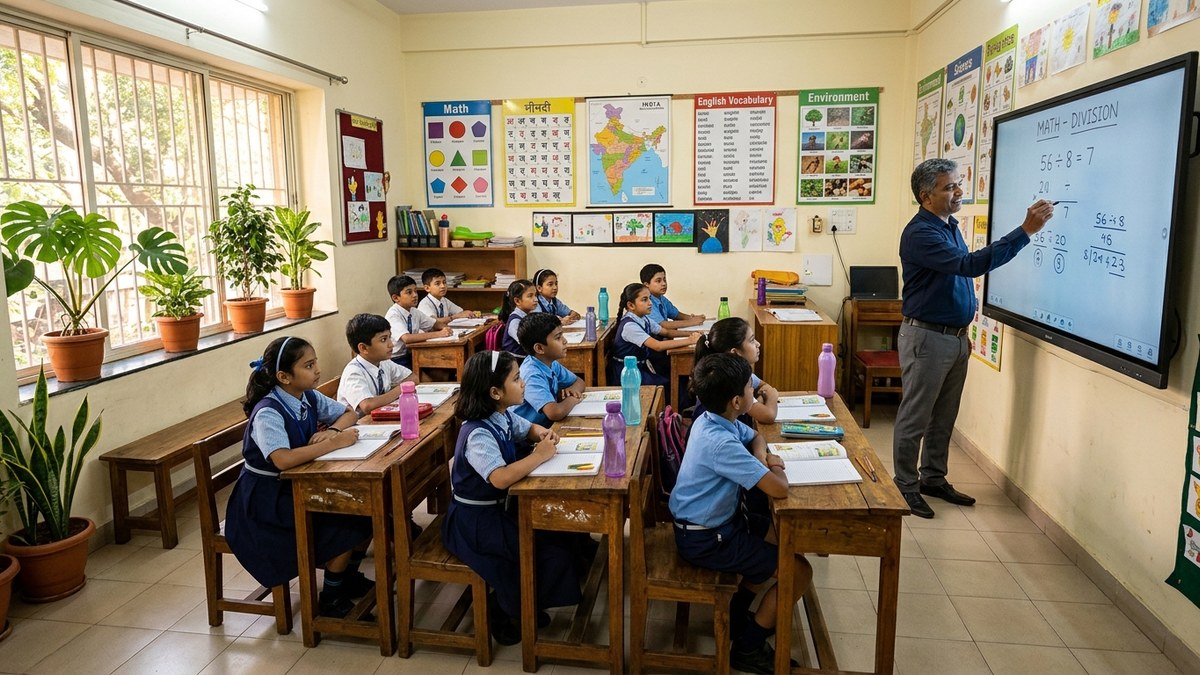
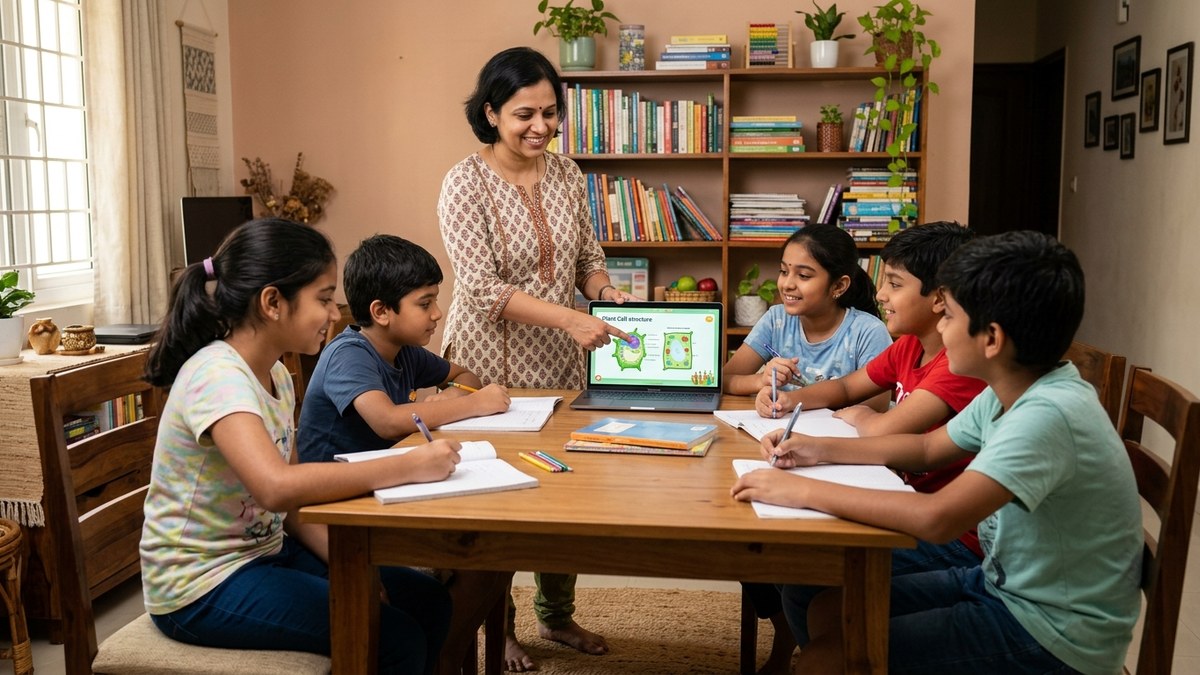
Second, set up your space. You need 4-6 chairs, a table, and your APNA PC connected to the monitor. That is it. No whiteboard needed if you use digital tools. No fancy setup. Just a clean, quiet corner where learning happens.
Third, create a simple schedule. Monday to Friday, 2 hours per batch. You can run 2-3 batches per evening. That means 20-30 students without burning out. A learning pod India works because it is sustainable. You are not a factory. You are a educator who genuinely cares.
Why Learning Pods Are the Future of Education in India
The learning pod India model is growing because it solves real problems. Parents are tired of overcrowded classrooms. Students are tired of being invisible in a batch of 50. Educators are tired of earning peanuts at coaching centres. The learning pod fixes all three problems simultaneously.
Most people do not realise that the Indian education system is already moving in this direction. DIKSHA digital learning platform supports exactly this kind of decentralised, community-based education. The government is building infrastructure. You need to build the access point. Your learning pod is that access point.
A learning pod is not just about academics. It is about building a community of learners. It is about giving every child in your neighbourhood a fair chance at digital literacy. It is about proving that quality education does not require lakhs in fees.
Start Your Learning Pod Today
You have everything you need. You have a neighbourhood full of children who need better education. You have the ability to teach. You have access to technology. You have a business model that works.
What you need now is to take the first step. Join the learning pod India movement. Build something meaningful. Earn serious money. Change your community.
Ready to start? Sign up for your learning pod with TeachToEarn today.
If you are also thinking about starting a microschool in India or want to know how to start a coaching class with APNA PC, the learning pod model is your best starting point. Low risk, high reward, real impact.
Frequently Asked Questions About Learning pod in your neighbourhood
What is a learning pod in your neighbourhood and how does it work?
It is a small, home-based teaching setup where an educator takes on a handful of local students, often neighbourhood kids whose parents already know and trust them. The educator uses their own home and furniture, avoiding the rent and overhead of a coaching centre. Sessions are usually personalised, with far smaller batches than a typical tuition class.
How many students does a typical neighbourhood learning pod serve?
Most learning pods stay small, often in the range of a handful to around a dozen students, which is what allows the educator to know each child individually. This size keeps management simple for one person without needing extra staff. Growing beyond that usually means starting a second pod or adding help.
How much does it cost to start a learning pod in your neighbourhood?
Costs are low since the educator uses existing home space and furniture, with the main expense being a reliable computer for lesson prep, scheduling, and tracking student progress. There is no rent, staff salary, or major infrastructure investment involved. This is what makes the model accessible compared to opening a coaching centre.
Why do parents prefer a neighbourhood learning pod over a big coaching centre?
Parents want personalised attention and small batches where the educator actually knows their child by name, which large coaching centres struggle to offer. Proximity also matters since a nearby pod means less commute and easier scheduling. Trust built through neighbourhood familiarity often matters more to parents than brand recognition.
What equipment does someone need to start a learning pod at home?
A dependable computer is central for scheduling, preparing lesson material, and keeping track of each student’s progress, alongside basic seating and a quiet teaching corner. A dedicated APNA PC setup used specifically for pod administration and lessons keeps things organised as the pod grows. Beyond that, the model needs very little extra equipment to begin.
NEP 2020 supports small-scale and community-based learning models as part of expanding flexible access to quality education in India.