
Common Job Interview Mistakes Freshers Make Before the Interview
Here’s the truth: Most freshers in India make the same five mistakes in job interviews, and they don’t even know it. You’ve cleared your engineering exams, you’ve got your degree, you think you’re ready. But job interview mistakes freshers make are costing them offers every single day. The worst part? These aren’t hard to fix. They’re just habits nobody told you to break.
Let’s be honest. You’re competing against hundreds of other freshers from your city alone. The interviewer has 15 minutes to decide if you’re worth their time. You don’t get a second chance to make a first impression, and that first impression starts before you sit down.
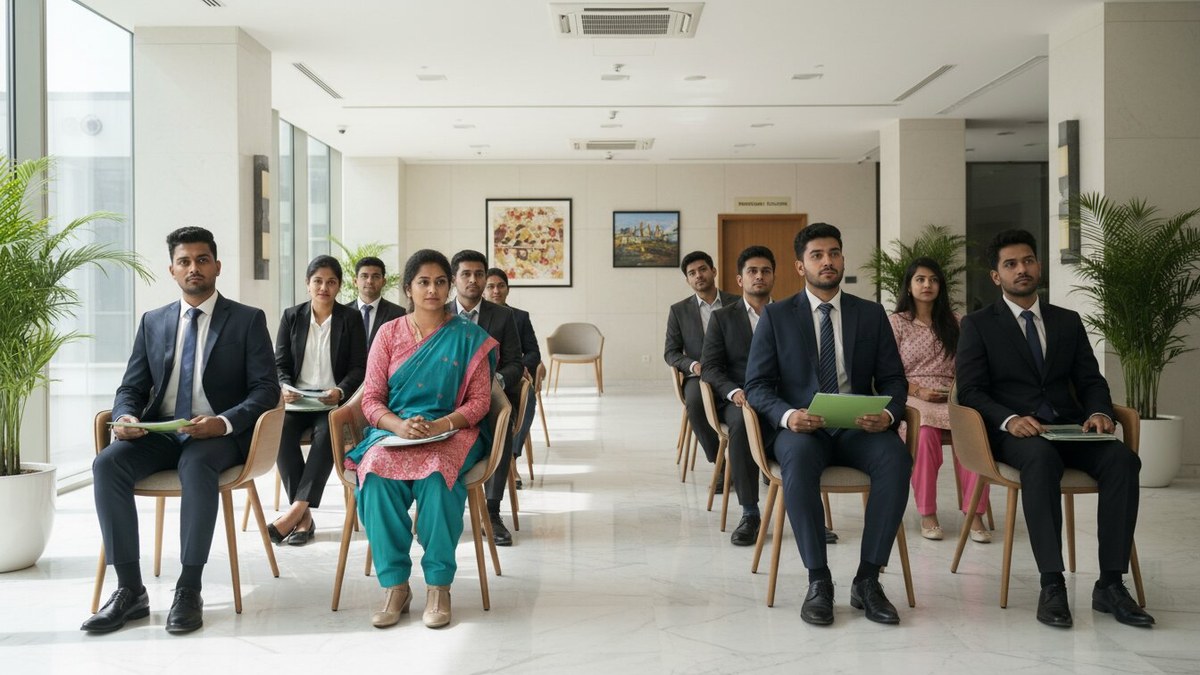
The Five Mistakes That Cost Freshers Jobs
Mistake 1: You’re Late (Or You Don’t Know Where You’re Going)
Traffic in Bangalore, Delhi, Mumbai, Pune. Everyone knows it’s bad. The interviewer doesn’t care. Showing up late tells them you don’t respect their time. Worse, arriving flustered means you’ve already lost your confidence before the conversation even starts.
- Leave 45 minutes earlier than you think you need to
- Check the office location on Google Maps the night before
- Know which building, which floor, which reception desk
- Arrive 10 minutes early, not 30 seconds before the interview time
Mistake 2: Your Clothes Say “I Didn’t Care Enough”
You wore your college casuals because the job posting didn’t explicitly say “formal dress code.” Wrong move. For your first job interview in India, assume formal unless told otherwise. That means a blazer, proper trousers or a saree, closed shoes, minimal jewellery. Clothes are the first thing they see. Make them count.
Mistake 3: Your “Tell Me About Yourself” Answer Sounds Like a Resume Read-Out
You memorised three paragraphs. You practiced in front of the mirror. Then you recite it like a robot. Interviewers can hear memorised answers from a mile away. They want a story, not a biography. Why you chose this field, what excites you, what you’ve actually done.
Most people don’t realise this is where you build connection. Not where you list your achievements.
Mistake 4: You Badmouth Your College, Your Teachers, or Your Last Employer
The interviewer asks, “How was your college experience?” You think it’s time to vent about how useless your professors were or how the curriculum was outdated. Stop. This signals you blame others when things go wrong. It looks unprofessional and ungrateful.
Even if you studied under the Central Board of Secondary Education (CBSE) and feel your college was a step down from school, resist the comparison. Interviewers are listening for attitude, not academic nostalgia.
Find something positive to say. Always. Even if it’s just “I learned how to manage my time under pressure.”
Mistake 5: You Ask About Salary in Round One (Or You Haven’t Researched the Company)
You walk in and ask, “What’s the salary?” or “What are the benefits?” before you’ve even discussed the role. You also haven’t bothered to read their website or understand what they actually do. This screams “I’m desperate and lazy.”
- Research the company for 20 minutes before the interview
- Know their main product, their recent news, their competitors
- Prepare 2-3 intelligent questions about the role or the company
- Let them bring up salary. Don’t you
The Hidden Job Interview Mistakes Freshers Never Talk About
Your Phone Etiquette Is Terrible
You take a call on loudspeaker in the waiting area. Your background is noisy when you do a phone screening. You use slang like “yo” or “bro” on a professional call. You’re not being casual and cool. You’re being unprofessional.
Phone interviews are interviews too. Treat them like it.
You’re Faking Confidence (And It Shows)
There’s a difference between real confidence and fake bravado. Real confidence is admitting what you don’t know. Fake confidence is pretending you know Python when you’ve only watched YouTube tutorials. Fake confidence is speaking too loudly or too fast because you’re nervous.
Real confidence is this: “I haven’t worked with that framework before, but I’ve learned three others quickly. I’m confident I can pick it up.”
You Lied on Your Resume (And You’ll Get Caught)
You said you have “advanced Excel skills” when you really just know VLOOKUP. You claimed you led a project when you were actually part of a team. Interviewers ask follow-up questions specifically to catch this. And when they do, the interview is over.
What Actually Works: The Real Interview Strategy
Stop winging it. Practice mock interviews. Not once. Repeatedly. Record yourself answering common questions. Watch the video. You’ll see your nervous habits, your filler words, your awkward pauses.
Prepare 3-4 stories using the STAR method (Situation, Task, Action, Result). Have these ready for questions like “Tell me about a time you failed” or “Describe a project you’re proud of.” Real stories beat generic answers every time.
Learn about soft skills every student needs for the modern workplace. Communication, listening, asking clarifying questions. These matter more than your GPA.

Phone etiquette matters. Sit in a quiet room, use a headset, not speaker, and pause before answering.
Research the company properly. Read their “About Us” page and LinkedIn page. Know what they do and who their competitors are. Ask one smart question that shows you’ve done this work.
The Real Advantage: Practice at Home
You know what separates freshers who get offers from those who don’t? The ones who practice. They record themselves, get feedback, and iterate.
Most freshers skip this step because they think they’ll “just wing it” in the real interview. That’s how you end up as job interview mistakes freshers make, not job interview successes.
The good news: you can practice everything at home. You need a laptop with a webcam, a quiet space, and a friend or mentor to ask you questions. That’s it.
If you’re serious about nailing your first job, you need to practice digital communication skills. You need to be comfortable on camera. You need to do mock interviews repeatedly. With APNA PC (the Rs.30,000 complete bundle that includes an i3 7th Gen Mini PC, 8GB RAM, 128GB SSD, monitor, keyboard, mouse, webcam, headset, and 3-year warranty), you can set up a professional interview practice space at home. No more excuses about not having the right equipment.
You can practice at a Point of Digital Learning (POD) too, where a trained educator can conduct mock interviews with you and give real feedback. That’s how you actually get better.
Stop making these mistakes. Start preparing like your job depends on it. Because it does.
Also explore freelancing for college students who want online jobs to build real experience while you’re still in college or between jobs.
Want the structural basics? What a job interview really is, explained on Wikipedia.
Your first job interview isn’t just about getting hired. It’s about proving to yourself that you can handle professional pressure. You can do this. Just don’t make the mistakes everyone else is making.
Set up your practice space with APNA PC today and start doing mock interviews. Your future employer is waiting.