A parent in Pune recently pulled her daughter out of a well-known coaching center after two years of paying high fees and seeing zero improvement in grades. She found a learning POD run by a local teacher just three streets away. Within one semester, her daughter’s confidence and scores had both gone up. Stories like this are becoming common across India, and they point to a real shift happening in how children learn outside school.
The debate around learning POD vs coaching class is no longer just a conversation among educators. Parents are asking harder questions, and teachers are rethinking how they deliver value. The old model is creaking under its own weight.
Learning POD vs Coaching Class: What Actually Changes for the Child
A traditional coaching class packs 40 to 60 students into a room and moves at the pace of the syllabus, not the student. If a child misses a concept in week two, she spends the rest of the year lost. The teacher rarely has time to notice, let alone fix it.
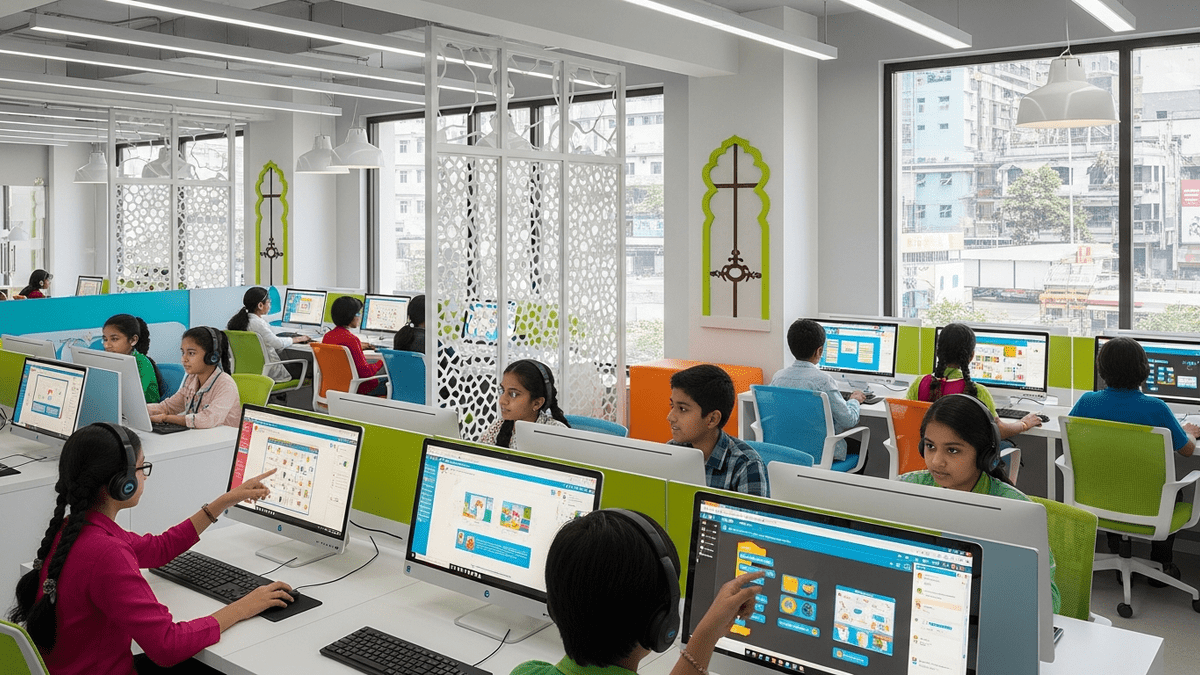
A learning POD works differently. It’s a small, focused group of 10 to 15 students, usually run from a dedicated space in a teacher’s home or a local community hub. The teacher knows each child’s weak points. There’s room for questions, revision, and real feedback.
That personal attention isn’t a luxury. For most children, it’s the difference between passing and actually understanding. And understanding is what builds long-term academic confidence.
Why the Learning POD vs Coaching Class Shift Is Happening Now
Three things have come together at the same time. First, digital tools have become genuinely affordable. A teacher no longer needs a projector, a whiteboard, and a printer to run a professional setup. A single device connected to quality content can power an entire session.
Second, government-backed platforms like DIKSHA have made curriculum-aligned digital content freely available to any teacher in India. A POD educator can pull up video lessons, assessments, and learning materials without spending extra money on content creation.
Third, India’s push under Digital India has improved internet access even in tier-2 and tier-3 towns. The infrastructure that once blocked small educators from going digital is no longer the barrier it used to be.
These three shifts together mean that a skilled local teacher can now compete with a large coaching brand on quality, while still offering something the brand never can: genuine individual attention.
What a Modern Education Setup Actually Looks Like in India
This is where modern education in India is getting practical. A learning POD doesn’t need a big space or a big budget to start. What it needs is the right device, reliable content, and a teacher who’s committed to outcomes over attendance numbers.
Teach to Earn has built its entire model around this reality. The APNA PC is a purpose-built all-in-one device priced at ₹30,000, designed specifically for POD educators. It comes preloaded with teaching tools, works smoothly even on low-bandwidth connections, and eliminates the tech headaches that stop many teachers from making the shift.
If you’re a tuition teacher thinking about upgrading your setup, or a parent wondering whether a digital learning centre near you is worth trusting, this is the kind of infrastructure that separates a serious POD from a casual arrangement.
You can also explore what it means to become an edupreneur and build a sustainable teaching business rather than just running a side income.
The Economics Make Sense for Teachers and Families Alike
A coaching class charges high fees partly because it has high overheads. Rent, staff, marketing, and administration all eat into what the teacher actually earns. A POD keeps costs lean, which means teachers can charge fair fees and still earn more per student than they would at a coaching centre.
For families, the cost of a POD is often lower than a premium coaching class, and the outcomes are more visible because the group is smaller and the teacher is more accountable.
It’s worth understanding the numbers before you start. The POD economics breakdown on the Teach to Earn website walks you through exactly what a realistic revenue and break-even picture looks like for a new POD.
The model works. The tools exist. The demand from parents is growing every month.
Ready to Start Your Own Learning POD?
Whether you’re a parent looking for a better option or a teacher ready to build something of your own, the time to act is now. Start your Teach to Earn Learning POD today and be part of the shift that’s redefining how India learns.