
Your Child Studies Alone. Their Marks Stay Alone Too.
Here’s the truth: Indian students sitting in isolation, staring at textbooks for hours, aren’t learning better. They’re just sitting longer. The moment a student joins a peer learning group, something shifts. Questions get answered instantly. Concepts click faster. Marks improve. This isn’t magic. It’s how the human brain actually works.
Peer learning groups have become the quiet revolution in Indian education. While tuition teachers still operate in the traditional one-student-one-teacher model, forward-thinking educators and parents are discovering that peer learning groups help students score better. The data backs this up. Students in collaborative learning environments score 15-25% higher on average than those studying solo.
But most people don’t realise why this works so powerfully for Indian students specifically.
Key Takeaways
- Explaining a topic to a peer forces deeper understanding than re-reading notes alone, which is why group study often raises marks.
- Peer learning groups work best with three to five students of similar level meeting on a fixed schedule.
- A shared computer lets the group watch explanations, take practice tests, and check answers together.
- The main barrier in India is space and devices, not willingness. A community learning point solves both.
Why Peer Learning Groups Work Better for Indian Students
Indian classrooms are crowded. Individual attention is rare. When a student doesn’t understand something in school, they sit confused until the next tuition class. With peer learning groups, confusion dies immediately. A classmate explains it. If that doesn’t work, another peer tries a different angle. The explanation comes from someone who just learned it too, not from an adult who forgot what confusion feels like.
Let’s be honest: Indian students are taught to compete, not collaborate. We rank them. We compare them to toppers. This creates pressure, not learning. Peer study groups in India flip this script. Suddenly, helping your classmate isn’t cheating. It’s the point. And when you explain something to someone else, you learn it 70% better yourself.
Here’s what happens in a real peer learning group:
- Student A gets stuck on a math problem. Student B explains it differently. Student C asks a question that makes everyone think deeper.
- They quiz each other. Mistakes surface immediately, not during the exam.
- They share notes, shortcuts, memory tricks. Knowledge multiplies.
- Weaker students don’t feel ashamed asking peers. They feel ashamed asking teachers.
- Stronger students cement their own knowledge by teaching.
This is collaborative learning in action. And it’s not new. It’s how humans learned for thousands of years before we invented the lecture hall.
For Indian homemakers running tuition centres, this is opportunity. For senior citizens wanting to stay active, this is purpose. For edupreneurs, this is the future. The question isn’t whether peer learning groups work. The question is: why are you still teaching students one at a time?
The Real Problem: Infrastructure Holds Back Peer Learning
Most peer learning groups in India fail for one reason. They have no proper setup. A few students sit in someone’s living room. There’s no projector. No proper audio. No way to show video explanations. No way to record sessions for students who missed it. The group dissolves after three months.
This is where infrastructure becomes everything. When you set up a proper learning space with the right tools, peer learning groups don’t just survive. They thrive. Students attend consistently. Parents see results. Teachers can manage multiple groups without burning out.
This is exactly why APNA PC exists. Rs.30,000 complete bundle. Mini PC i3 7th Gen, 8GB RAM, 128GB SSD. Monitor, keyboard, mouse, webcam, headset. Installation. 3-year warranty. Everything a Point of Digital Learning (POD) needs to run peer learning groups properly.
With APNA PC, your learning centre becomes professional. Students see videos clearly. Teachers explain using visuals. Sessions get recorded. Parents can see what their child learned. Peer learning groups suddenly have the backbone they need to work.
You don’t need fancy software or complicated setups. You need reliable hardware that works every single day. APNA PC does exactly that.
How to Start Your Own Peer Learning Group Today
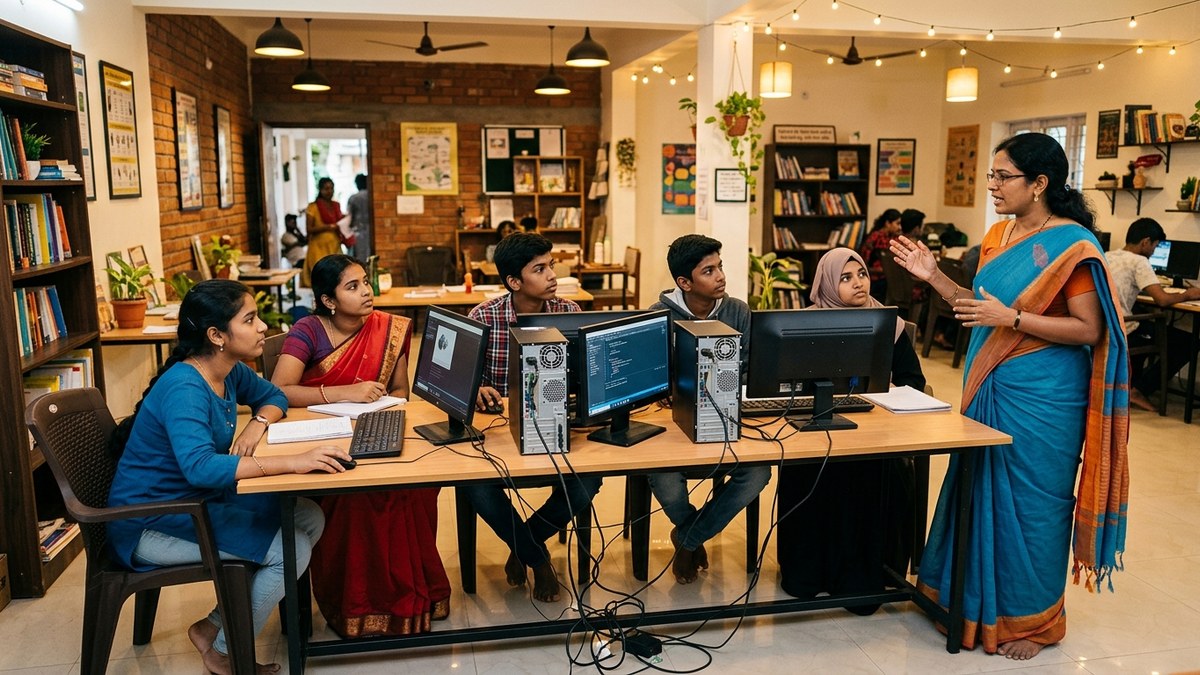 You don’t need permission. You don’t need fancy credentials. You need three things: a space, a group of 4-8 students, and the right setup.
Start small. Pick one subject. Pick one time slot. Invite 4-6 students from your neighbourhood who study the same class. Sit them together. Give them a problem to solve collaboratively. Watch what happens. They’ll solve it faster than alone. They’ll remember it longer. They’ll actually enjoy studying.
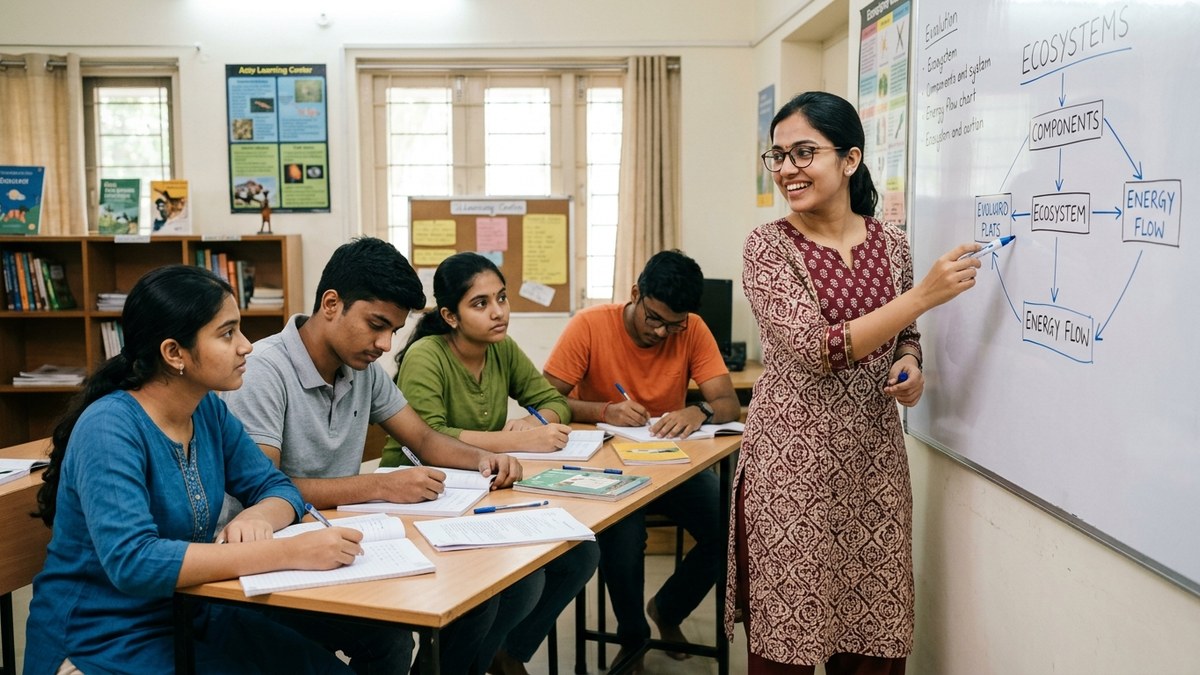
Next week, make it slightly structured. One student explains a concept. Others ask questions. Then they do problems together. This is peer learning. No teacher needed initially. Just facilitation.
As your group grows, invest in proper setup. This is where APNA PC becomes your best decision. Your POD becomes a real learning centre. You can charge Rs.1,500-3,000 per student per month. You run 3-4 batches daily. Your income scales. Your students’ marks improve. Everyone wins.
The DIKSHA digital learning platform already has thousands of free resources. The India Ministry of Education has published study materials. You don’t need to create content. You just need to facilitate peer learning using existing resources.
This is the gap in Indian education. Not content. Infrastructure. Setup. The ability to run peer learning groups professionally.
The Numbers Don’t Lie
Students in peer learning groups score 15-25% higher. They attend more consistently. They drop out less. They develop communication skills. They learn to teach, which is the highest form of learning. And they actually enjoy studying, which is rare in India.
For you as an educator or entrepreneur, peer learning groups mean lower stress. You’re not lecturing eight hours daily. You’re facilitating. You’re managing the group dynamic. You’re helping peers teach each other. Your voice doesn’t get hoarse. Your energy lasts. You can run multiple batches without burnout.
For parents, it’s cheaper than individual tuition. For students, it’s more effective. For you, it’s sustainable income.
The only missing piece is proper infrastructure. APNA PC solves that completely.
Ready to start your peer learning group? Ready to run a proper Point of Digital Learning? Start your POD with TeachToEarn today. Get APNA PC. Set up your learning centre. Begin facilitating peer study groups. Watch your students score better. Watch your income grow.
The future of Indian education isn’t one teacher, one student. It’s students learning together, with proper tools, in a structured space. That’s peer learning groups done right. That’s what works.
Now go. Stop waiting for the perfect moment. Your neighbourhood needs a peer learning group. Your students need smart study habits every Indian student needs. And you need to start earning from education.
Frequently Asked Questions About Peer learning groups for Indian students
Does group study actually improve exam marks?
Yes, when it is structured. Students who teach each other and quiz each other retain more than students who only study silently. Unstructured groups that drift into chatting do not help, so a clear plan for each session matters.
How many students should be in a peer learning group?
Three to five works best. That is small enough for everyone to speak and be tested, and large enough to cover different strengths.
How often should a peer learning group meet?
Two to four times a week for sixty to ninety minutes is a good rhythm. Shorter, regular sessions beat long occasional ones.
What do you need to run an effective peer study group?
A quiet space, a fixed schedule, a topic plan for each meeting, and ideally one computer to run practice tests and pull up explanations. A rotating group leader keeps sessions on track.
Can peer learning groups replace tuition?
For many students they reduce the need for it. Groups are strong for revision, problem practice, and doubt-clearing. A subject a student is genuinely stuck on may still need a teacher.
Large-scale education research, including work summarised by the ASER Centre in India, consistently finds that peer interaction and learning at the right level improve outcomes more than simply adding study hours.