
Picture a 14-year-old girl in a small village in Uttar Pradesh. She’s sharp, curious, and works hard every single day. But when she sits for a competitive exam that requires basic computer knowledge, she freezes. She’s never touched a keyboard in her life. That moment, right there, is where ambition meets a wall that most of us in cities never even see.
The Rural Education Gap Is Bigger Than We Admit
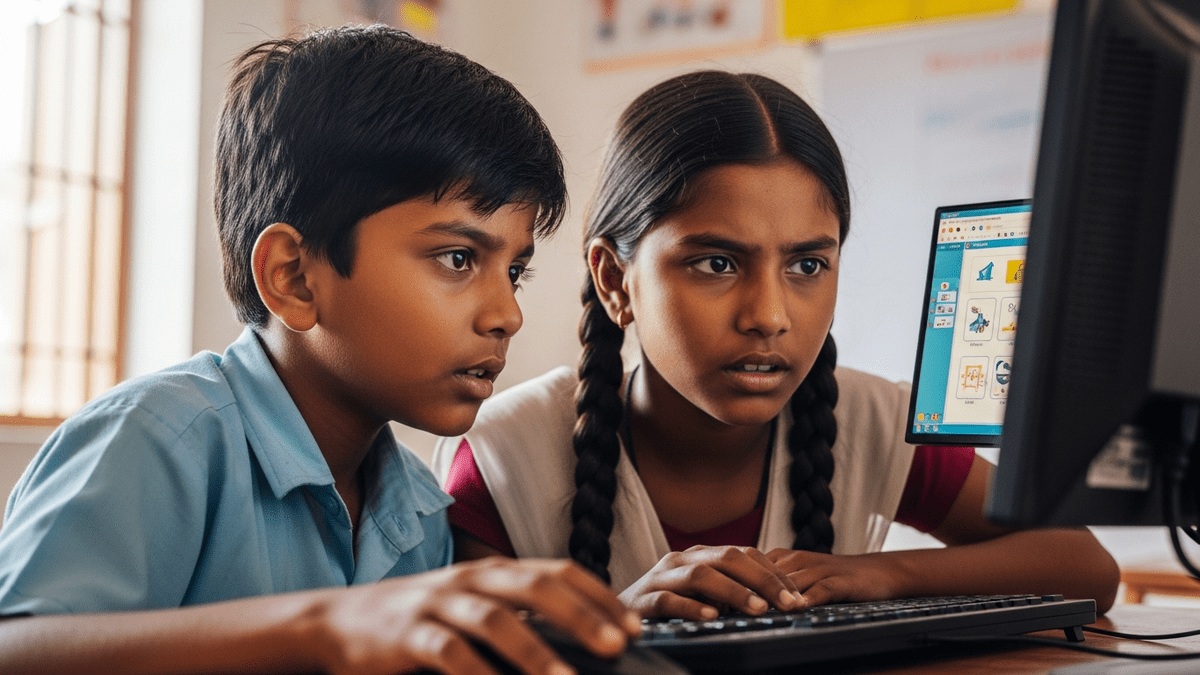
Let’s be honest about what’s happening. Children in urban areas are learning to code, use spreadsheets, and navigate online learning platforms before they finish middle school. Meanwhile, millions of students in villages across India are still waiting for their first real interaction with a computer screen.
This rural education gap isn’t just about technology. It’s about confidence, opportunity, and the ability to compete. Government jobs, private sector roles, and even small business operations now require basic digital literacy. Students who don’t have it are already behind before the race even begins.
The India Ministry of Education has acknowledged this challenge and is working toward digital inclusion. But policy takes time. Children in villages can’t wait years for change to trickle down to their classroom.
Parents and community leaders often assume that digital education is something the government will handle. The truth is, local action is what actually moves the needle. What happens in your village depends largely on what your community decides to do about it.
The Opportunity Hidden Inside the Digital Divide
Here’s something that doesn’t get said enough. The digital divide in villages is not just a problem. It’s also an enormous opportunity for the right people to step in and make a real difference.
When a community has no access to quality digital education, whoever brings that access becomes invaluable. Teachers, local entrepreneurs, and even parents with some extra space can create learning environments that change lives and generate income at the same time.
Platforms like DIKSHA, India’s national digital learning platform, already have rich content ready for students. What’s missing in most villages isn’t the content. It’s the hardware, the space, and someone trusted enough to guide young learners through it.
That gap between available resources and actual access is exactly where community-led solutions can thrive. And it’s why so many people across India are now exploring what it means to bring structured digital learning directly to their neighborhoods.
A Solution That Works at the Village Level
Teach to Earn was built with this exact problem in mind. The model is simple. You set up a small learning pod in your home, community hall, or any available space. Students come in and learn digital skills in a structured environment, and you earn income from running the pod.
The core of this setup is APNA PC, a purpose-built computer system designed for Indian learning environments. At ₹30,000, it’s an investment that can pay for itself relatively quickly when you understand the TeachToEarn POD Economics behind the model.
You don’t need to be a tech expert. You don’t need a fancy building. You need the willingness to show up for your community and the drive to make something work. That’s really it.
Computer access in rural India has always been limited by cost and infrastructure. APNA PC and the Teach to Earn framework are designed to remove both of those barriers in one practical step.
Steps Your Community Can Take Right Now
You don’t have to wait for anyone’s permission to get started. Here’s what taking action actually looks like.
First, talk to parents in your area. Ask them honestly whether their children have ever used a computer. Most will say no. That conversation alone builds awareness and creates demand for what you’re about to offer.
Second, look at your own space. A single room with reliable electricity and some basic furniture is enough to start a learning pod. You don’t need a school building or government approval to begin educating your community.
Third, explore what it means to Become an Edupreneur. This path is open to teachers, homemakers, retired professionals, and anyone who cares about giving rural children a fighting chance at the future they deserve.
Fourth, commit to consistency. Students in villages need reliable access, not a one-time workshop. When you show up week after week, you build trust, and trust is what turns a small pod into a community institution.
The children in your village are just as capable as any student in Delhi or Bengaluru. What they need is someone in their corner who’s willing to bridge the gap.
Start your journey and bring digital learning to the children who need it most. Launch your Teach to Earn Learning Pod today and become the change your village has been waiting for.