Most science education in India is theoretical. Students memorise chemical equations, reproduce diagrams, and pass exams. But ask them to design an experiment or troubleshoot a failed reaction, and they freeze.
This is not a student problem. It is a system problem. Traditional classrooms with 40-50 students cannot deliver hands-on STEM learning. There is not enough time, not enough equipment, and not enough individual attention.
Microschools are changing this equation entirely.
Why STEM Education Fails in Traditional Setups
Here is the truth: most Indian schools treat science as a subject to score marks in, not a skill to develop thinking with. The DIKSHA digital learning platform has thousands of hours of science content, but content alone does not build scientific temper.
The problems are structural. Too many students per teacher. No lab equipment. No budget for experiments. Teachers trained to deliver lectures, not facilitate discovery. The India Ministry of Education has recognised this gap, but policy changes move slowly.
Meanwhile, children are losing interest in science every single year.
How Microschools Make STEM Education Actually Work
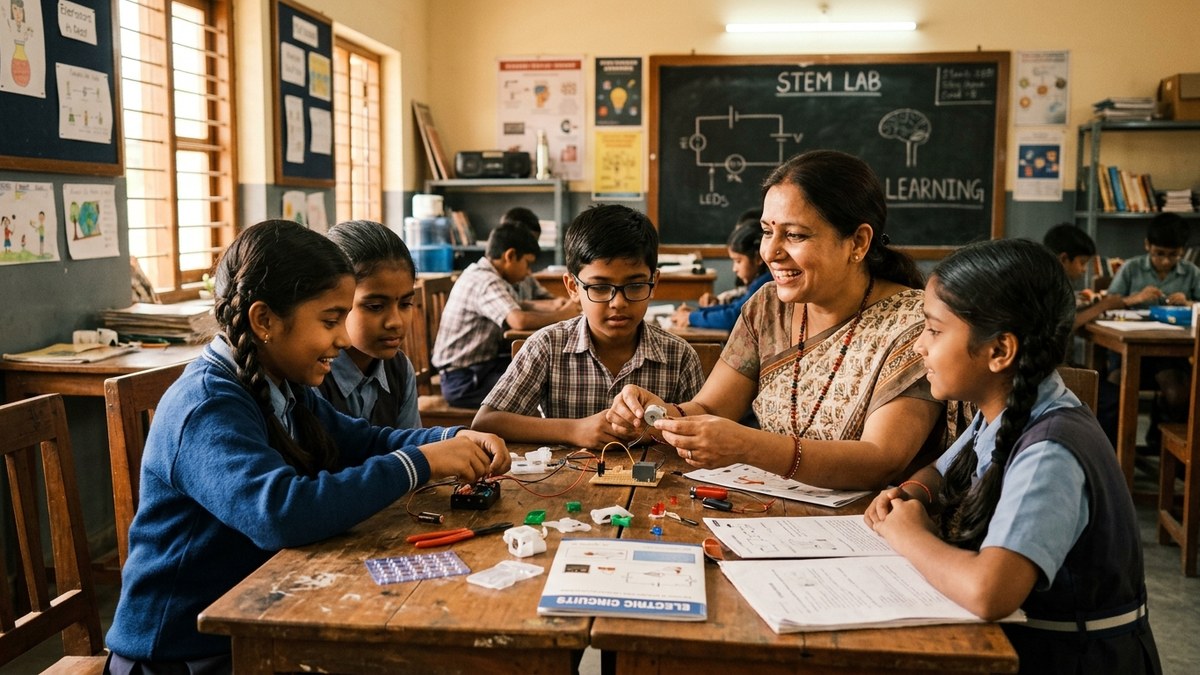
A microschool runs with 5-15 students. That changes everything for STEM education. The teacher knows every child. Every student gets hands-on time with materials. Experiments are not demonstrations, they are participation.
When you pair small-batch STEM learning with affordable technology like APNA PC, the results are dramatic. Students use simulation software, run virtual experiments, analyse real data sets, and build projects that solve actual problems. All on a single machine that costs Rs.30,000.
Compare this to a traditional lab that costs lakhs to set up and serves hundreds of students who each get maybe 20 minutes of actual hands-on time per semester.
Microschooling vs traditional schooling is not just about size. It is about the entire learning model shifting from passive consumption to active building.
Indian microschools are already proving this works. Students who learn STEM through project-based approaches score better, retain more, and develop the problem-solving skills that employers actually want.
What Makes a STEM Microschool Different
A STEM-focused microschool is not a tuition centre with a science label. It is designed around discovery. Students work on real projects. They fail, iterate, and learn from failures. The teacher is a guide, not a lecturer.
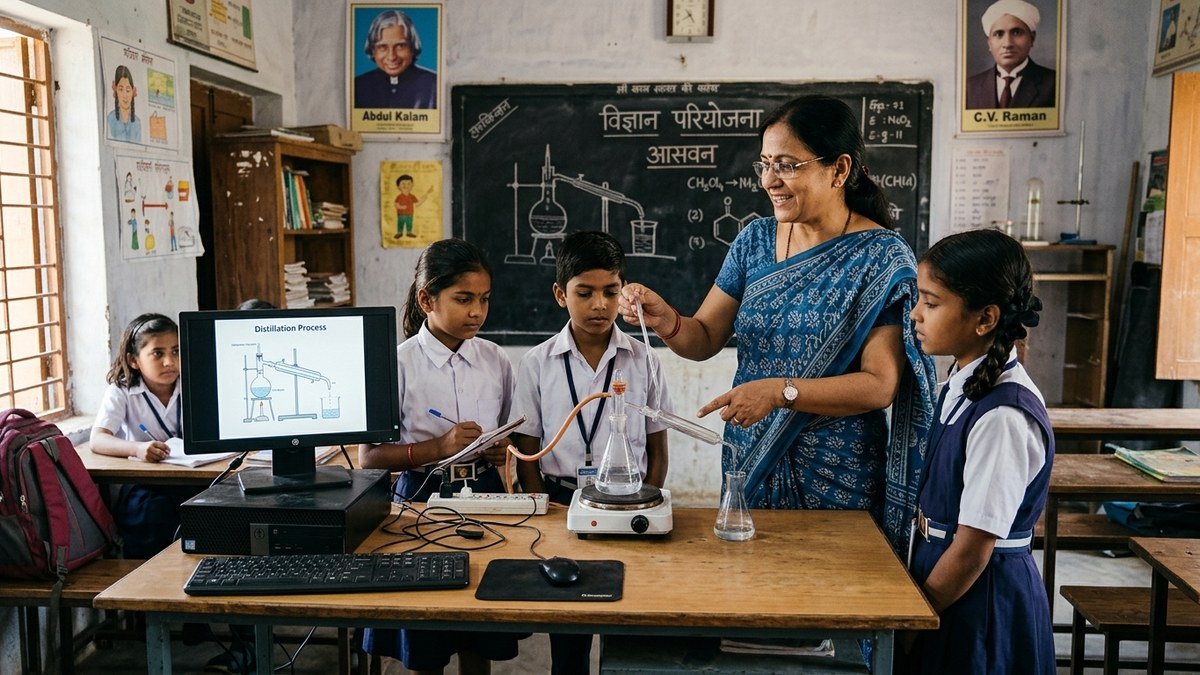
The equipment matters too. A single APNA PC connected to sensors and basic lab tools can become a data collection station. Students can measure temperature, track chemical reactions, analyse environmental data, and present findings. All within the Rs.30,000 budget that makes this accessible to more families.
Technology does not replace hands-on experiments. It extends them. Students can simulate dangerous reactions safely, visualise molecular structures, and model engineering solutions before building physical prototypes.
Why Parents Are Choosing Microschools for STEM
Parents are noticing the difference. Children who attend STEM-focused microschools talk about science differently. They ask better questions. They design experiments instead of memorising procedures.
The benefits of microschooling vs traditional schooling are clear in STEM subjects specifically. Small groups mean more experiments per student. Personalised attention means struggling concepts get addressed immediately, not weeks later.
For parents evaluating options, the math is simple. A traditional school lab serves hundreds of students with shared equipment. A microschool STEM programme serves 10-15 students with dedicated tools and focused instruction.
Apni Pathshala blog has documented how community-led learning spaces are producing results that rival expensive private schools.
Starting Your STEM Microschool
Edupreneurs have a massive opportunity here. The demand for quality STEM education far exceeds supply. Parents are willing to pay for programmes that actually develop their children is scientific thinking.
You do not need a huge investment. A small space, basic science kits, a few APNA PC units at Rs.30,000 each, and a passion for teaching science through discovery. That is enough to start.
The India Ministry of Education has recognised microschools as a legitimate educational model.
What is missing is adoption. Parents are still trapped in the traditional school mindset. Edupreneurs are unsure how to start. Educators are not trained in this approach.
But the window is open. And it is closing. The students who learn STEM in microschools today will be the problem-solvers India needs tomorrow.
If you are an educator or edupreneurs looking to start a microschool or POD focused on STEM, the time is now. You have the technology. You have the curriculum frameworks. You have the demand from parents who want something better.
Start your STEM microschool or POD today. Learn how to build a learning centre that actually develops scientific thinking in young minds.
The STEM education revolution is not coming. It is here. The only question is whether you will be part of it.