
The Student Who Fails at Time Management Fails at Everything Else
Here’s the truth: You can be brilliant. You can have the sharpest brain in your class. But if you can’t manage your time, you will lose to someone half as smart who knows how to plan their day. Time management skills students need aren’t optional extras. They’re survival tools.
Let’s be honest. Most Indian students don’t have a study schedule for students that actually works. They study when they feel like it. They cram the night before exams. They watch YouTube for “just five minutes” and suddenly three hours vanish. Then they wonder why their marks don’t reflect their intelligence.
This isn’t about being busy. It’s about being effective.

Why Time Management Skills Students Desperately Need Aren’t Being Taught
Your school teaches you history, maths, science. But nobody teaches you how to actually use your time. Your parents tell you to “study hard” but don’t show you what that means. Your tuition teacher gives you more work but not a framework to complete it.
The result? Chaos. Stress. Wasted potential.
Most people don’t realise that time management skills students develop in school directly impact their career, their health, and their relationships later. A student who learns to prioritise at age 15 becomes an employee who delivers results at 25. A student who doesn’t? They’re always firefighting, always stressed, always behind.
The Central Board of Secondary Education (CBSE) expects students to juggle multiple subjects, projects, and exams. But they don’t give you a blueprint for managing it all. That’s where you have to take control. If you’re applying through the Study India portal guide, time management becomes even more critical since you’ll be balancing applications with your regular studies.
The Real Cost of Poor Time Management
Let’s count what bad time management costs you:
- Lower exam scores because you didn’t have time to revise properly
- Missed deadlines for projects and assignments
- Sleep deprivation that destroys your memory and focus
- Anxiety and stress that affects your mental health
- Guilt about wasted time that makes you feel worse
- Resentment toward studies because you’re always rushing
Now count what good time management gives you:
- Consistent, higher marks across all subjects
- Time for sports, hobbies, and friends
- Better sleep and actual energy to focus
- Confidence that you’re prepared for exams
- Freedom from last-minute panic
- A sense of control over your life
Which list appeals to you more?
How to Build a Study Schedule for Students That Actually Sticks
Here’s what most students get wrong: they create a perfect timetable on Sunday, follow it for two days, then abandon it. Why? Because they made it too rigid or too ambitious.
Start small. Your study schedule for students should be:
- Realistic. If you’ve never studied for 3 hours straight, don’t promise yourself you will tomorrow. Start with 45 minutes.
- Specific. Don’t write “study maths.” Write “solve 20 quadratic equations from Chapter 4.” You need to know what success looks like.
- Flexible. Build in buffer time. Life happens. Your schedule should bend, not break.
- Tracked. Write it down. Use a planner, a notebook, or an app. Digital or paper doesn’t matter. Visible does.
- Reviewed. Every Sunday, look back. What worked? What didn’t? Adjust. This is how you learn what works for YOUR brain.
Exam preparation tips all point to the same thing: students who plan ahead score better. Not because they study more. Because they study smarter.
The Technology That Multiplies Your Time
Here’s something most students miss: the right tools can double your productivity. Not because they work magic. But because they remove friction.
If you’re studying on your phone, you’re one notification away from YouTube. If you’re studying on a shared family laptop, you’re interrupted constantly. If you don’t have a dedicated learning space with the right setup, you’re fighting an uphill battle.
This is where a proper study setup matters. A dedicated device, a quiet space, reliable internet. It sounds basic. It is. But most students don’t have it.
This is why APNA PC exists. It’s a complete bundle designed for serious learners: Rs.30,000 gets you a Mini PC with i3 7th Gen processor, 8GB RAM, 128GB SSD, monitor, keyboard, mouse, webcam, and headset. Plus 3-year warranty and installation.
Why does this matter for time management? Because when your learning environment is optimised, you waste less time fighting with slow devices, bad connections, or distractions. You focus. You produce.
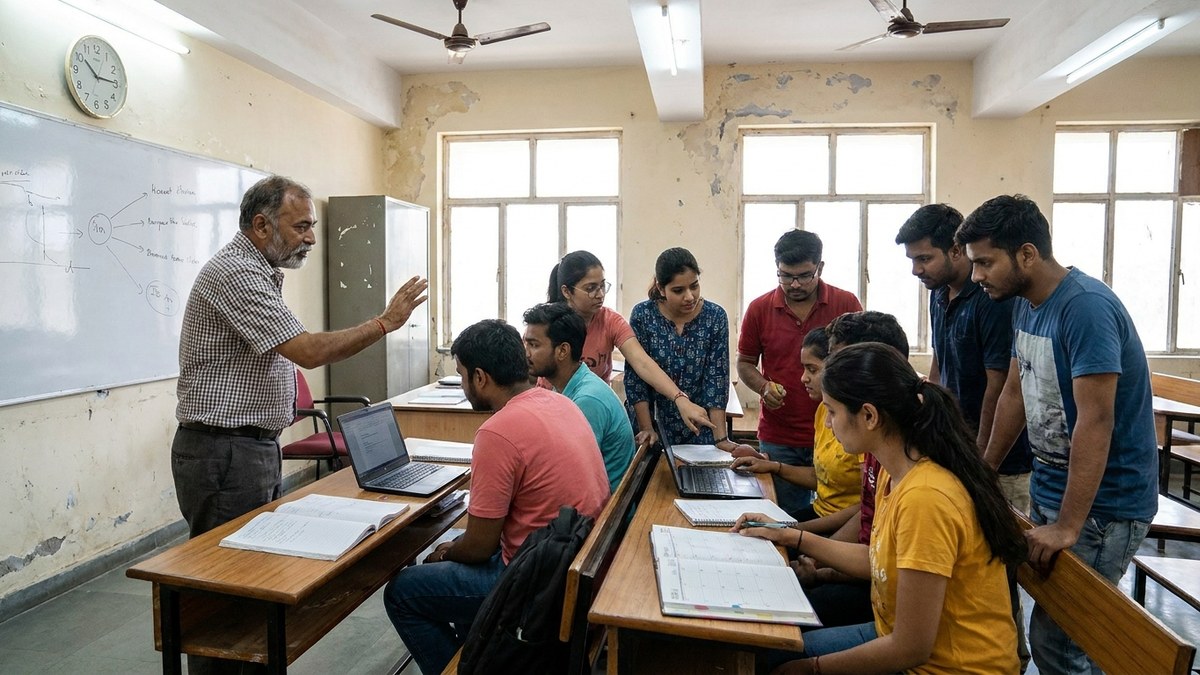
Whether you’re studying at home or at a Point of Digital Learning (POD) run by a trained educator in your community, having the right hardware removes one major barrier to consistent, focused study.
What Parents and Teachers Need to Know
If you’re a parent reading this: your child doesn’t need more tuition. They need better time management. If they can’t manage two hours of study a day, adding a third tuition class won’t help. It’ll make it worse.
If you’re a tuition teacher: stop measuring success by hours spent. Measure it by results achieved in time allocated. This is what separates average teachers from excellent ones. Check our guide on private school teacher salary to understand the premium paid for teachers who actually improve student outcomes.
If you’re running a learning centre: invest in tools and training that help students manage their time better. A POD equipped with proper devices and trained educators who teach time management will consistently outperform a crowded tuition centre.
For resources on building structured learning programs, explore the DIKSHA digital learning platform. For curriculum frameworks and exam guidelines, visit the Central Board of Secondary Education (CBSE) website.
Your Next Step
Time management skills students build aren’t mysterious. They’re learned. Practiced. Refined.
Start today. Write down how you spend your time this week. Every hour. Be honest. Then ask yourself: is this aligned with my goals? If not, change it next week.
Get the tools that support better focus. Get the space that removes distractions. Get the system that tracks your progress. Small changes compound.
Ready to set up a proper learning environment? Explore APNA PC and start studying smarter, not just harder.
Your future self will thank you.