
The Tuition Teacher Learning Pod Revolution is Here
Your tuition class model is quietly becoming obsolete. Not because tuition teaching itself is dying. But because parents and students have moved on. They want flexibility, technology, and personalized learning. They want a tuition teacher learning pod, not a cramped classroom with 15 kids sitting on plastic chairs.
Let’s be honest: if you’re still running a traditional tuition class in 2026, you’re competing on price alone. And that’s a losing game. The real money is in learning PODs – Point of Digital Learning centers that combine the warmth of personal teaching with the power of technology.
Here’s the truth: most tuition teachers don’t realize they’re already halfway there. You have the trust. You have the students. You have the teaching skills. What you’re missing is one thing: a tuition teacher computer setup that lets you deliver modern, hybrid learning.
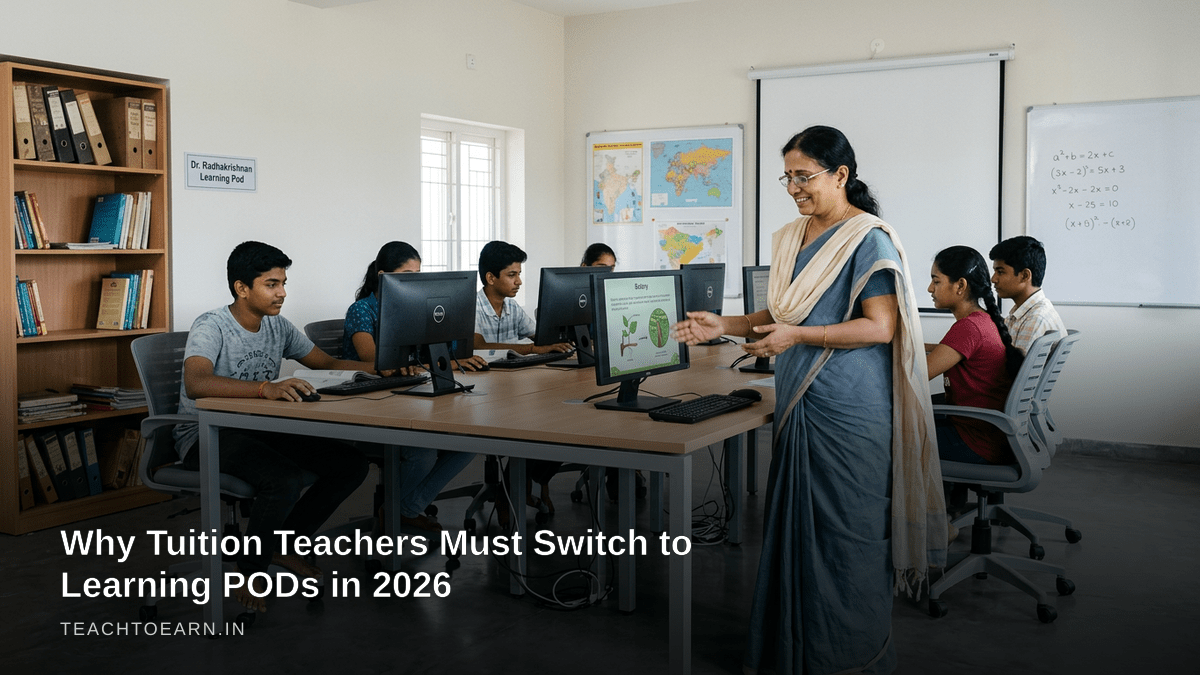
Tuition Class vs Learning POD: Why One is Dying and One is Growing
The difference between a tuition class and a learning pod isn’t just semantic. It’s structural.
A traditional tuition class is location-dependent, time-rigid, and analog. A student misses a class, they lose that content forever. A parent wants to track progress, they get a phone call. A student needs personalized pacing, they sit through content meant for the group average.
A learning POD is flexible, tech-enabled, and student-centric. Here’s how how tuition classes are becoming learning PODs works in practice:
- You teach live sessions using digital tools, not just a whiteboard
- Students access recorded content anytime, anywhere
- You track individual progress with real data, not guesses
- Parents see transparent learning outcomes
- You scale to multiple batches without hiring staff
The tuition class vs learning pod comparison isn’t even close anymore. One is yesterday’s model. One is tomorrow’s.
Most people don’t realize that the infrastructure barrier has already fallen. You don’t need a fancy IT setup. You don’t need to be tech-savvy. You need APNA PC.
Why You Need a Tuition Teacher Computer (Not Just Any Computer)
Here’s where most tuition teachers get stuck. They think “I’ll just use my laptop.” Then they realize they’re running 5 tabs, the screen is too small for students to see, the battery dies mid-class, and they can’t connect multiple monitors for hybrid teaching.
A tuition teacher computer isn’t just a device. It’s your business infrastructure. It needs to be reliable, visible, and ready for 8 hours of daily use.
APNA PC is built for exactly this. It’s a complete bundle at Rs.30,000 that includes:
- Mini PC with i3 7th Gen processor, 8GB RAM, 128GB SSD (fast, quiet, always-on)
- Monitor, keyboard, mouse, webcam, headset (everything you need)
- Education software pre-installed (learning management, assessments, content delivery)
- 3-year warranty and on-site installation
This isn’t a consumer laptop. This is a professional tool built for edupreneurs in India who are serious about scaling.
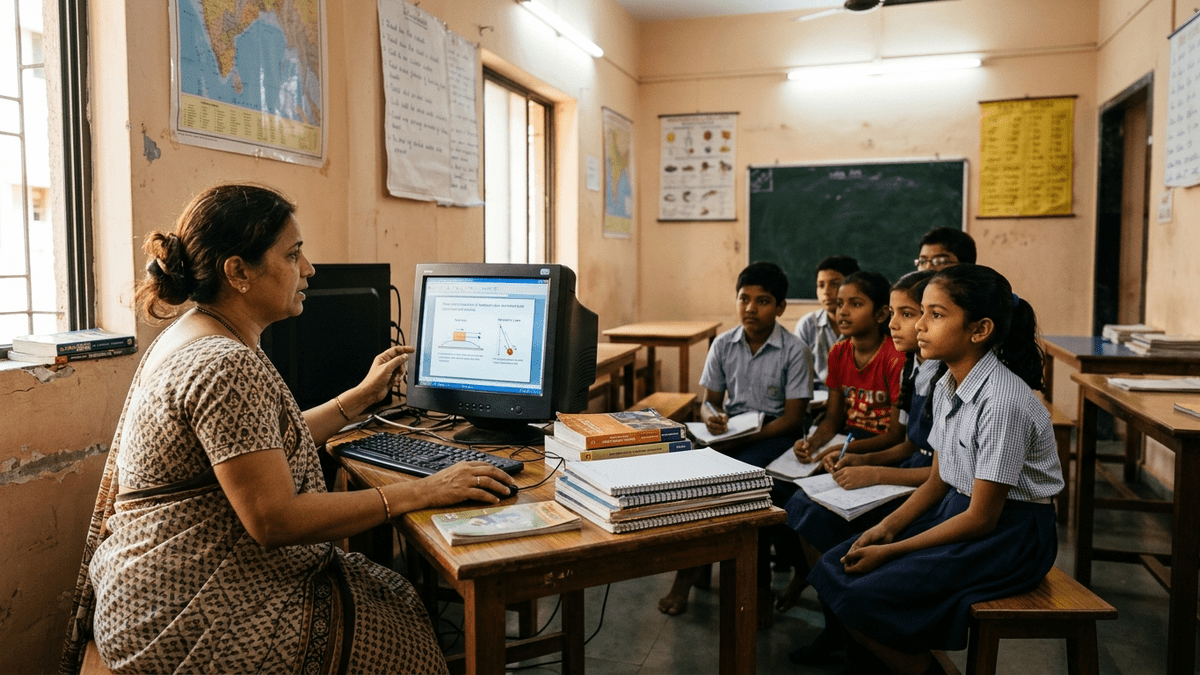
The Edupreneur India Opportunity in 2026
If you’re a homemaker, a retired professional, or a struggling tuition teacher, this is your moment. The word “edupreneur India” is trending because the market is ready. Parents are willing to pay premium rates for quality learning PODs. Students want personalized, tech-enabled education.
You can start a computer coaching centre from home or run a community learning pod with just one investment: a solid computer setup and the right software.
Platforms like DIKSHA digital learning platform show that the government itself is pushing digital learning. Why would you resist the trend?
The barrier to entry is lower than ever. The demand is higher than ever. The margins are better than ever.
But only if you act now. In 2026, the market will be crowded. The early movers will own their neighborhoods.
What Makes a Learning POD Different From a Tuition Class
A learning POD isn’t just a tuition class with a computer. It’s a fundamentally different business model.
You can run multiple batches simultaneously. You can serve students online and offline. You can sell recorded courses. You can offer group classes and one-on-one sessions. You can partner with other educators. You can scale without proportionally increasing your workload.
This is why edupreneurs are making 3x to 5x what traditional tuition teachers make. Not because they work harder. Because they work smarter.
Understanding Wikipedia on learning methods shows that blended learning (combining in-person and digital) outperforms pure tuition classes in student outcomes. Parents know this. They’re ready to pay for it.
Your job is to give it to them.

The Cost Question: Why Rs.30,000 is Your Best Investment
Most tuition teachers hesitate at the price of a tuition teacher computer. They think “that’s 3 months of tuition revenue.”
Wrong calculation. Think of it as 3 months of revenue generation. APNA PC will run for 3 years. By month 2, you’ll have recovered the cost through premium pricing and scaled batches. By year 2, you’ll have made back 10x the investment.
The real cost of not investing? Irrelevance. Stagnation. Watching your best students migrate to online platforms because you can’t offer what they want.
APNA PC includes education software, so you’re not buying just hardware. You’re buying a complete system to run a modern learning POD.
Your Move: From Tuition Teacher to Edupreneur
The transition from tuition teacher to edupreneur isn’t a leap. It’s a deliberate step.
Step 1: Get the right equipment (APNA PC).
Step 2: Transition 2-3 batches to hybrid or fully digital delivery.
Step 3: Document your process and scale.
Step 4: Add new revenue streams (recorded courses, group sessions, corporate training).
Step 5: You’re now running a learning POD business, not a tuition class.
The choice is yours. But the market has already decided. Learning PODs are the future. The question is whether you’ll lead or follow.
Ready to make the switch? Start your learning POD journey today. Click here to begin.