
Priya sat across from her 10-year-old son, watching him scroll mindlessly through videos on his phone for the fifth hour that day. Gaming apps, random YouTube content, social media reels, nothing educational, nothing productive. She felt the familiar knot of guilt tighten in her chest. Like thousands of Indian parents, she wondered: how can I help my child turn screen time into learning time instead of letting these hours slip away?
You’re not alone in this struggle. Screen time doesn’t have to be the enemy. When managed thoughtfully, it becomes a powerful tool for learning. This action plan shows you exactly how to make that transformation.
Why Unlimited Screen Time Is Hurting Your Child
When children spend 5-6 hours daily on phones watching random videos and playing games, their brains get stuck in passive consumption mode. They’re not creating, thinking, or problem-solving. They’re just absorbing whatever the algorithm feeds them.
This affects their attention span, sleep, and academic performance. Their eyes strain, their posture suffers, and they miss physical activity. The dopamine hits from endless scrolling make it harder to focus on real learning tasks later.
But the biggest cost? They’re missing the window to develop digital literacy and tech skills that’ll define their future. While watching random content, they could be coding, creating, or learning something that actually matters.
The Difference Between Passive and Active Screen Time
Not all screen time is equal. Understanding this is crucial for parents who want to manage child screen time effectively.
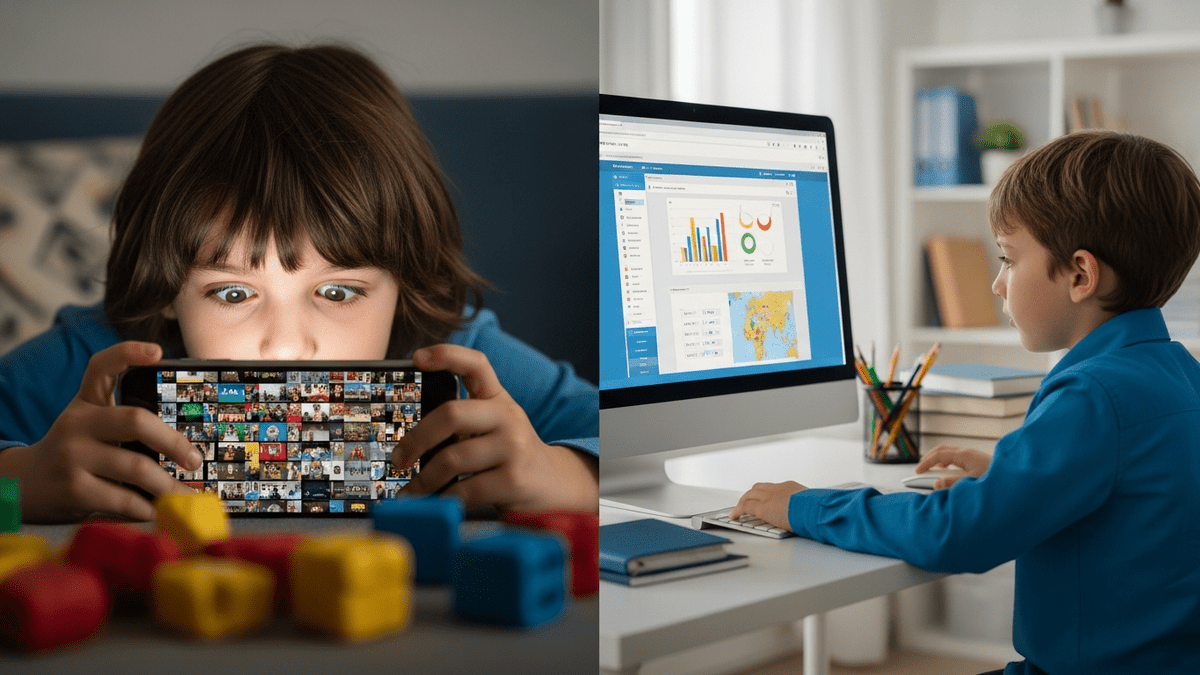
Passive consumption is what most kids do: watching videos, scrolling feeds, playing mindless games. Their brain receives information but doesn’t process or create anything. It’s like watching a waterfall and hoping you’ll learn to swim.
Active screen time requires genuine engagement. Your child thinks, makes decisions, solves problems, or creates something new. They’re coding a game, designing digital art, or completing interactive modules. Their brain is working, not just receiving.
Productive screen time for kids means building real skills, not just killing time. This difference determines whether screen hours help or harm your child’s development.
How Parents Can Turn Screen Time Into Learning Time
Choose the Right Tools and Platforms
Start with quality resources. Platforms like DIKSHA digital learning platform and NCERT official resources offer structured content aligned with school curricula. These aren’t random videos. They’re designed by professional educators.
Look for screen time learning activities matching your child’s interests. If they love stories, find interactive reading apps. If they’re curious about science, use simulation tools. When learning feels like play, they’ll engage consistently.
Introduce Coding for Kids
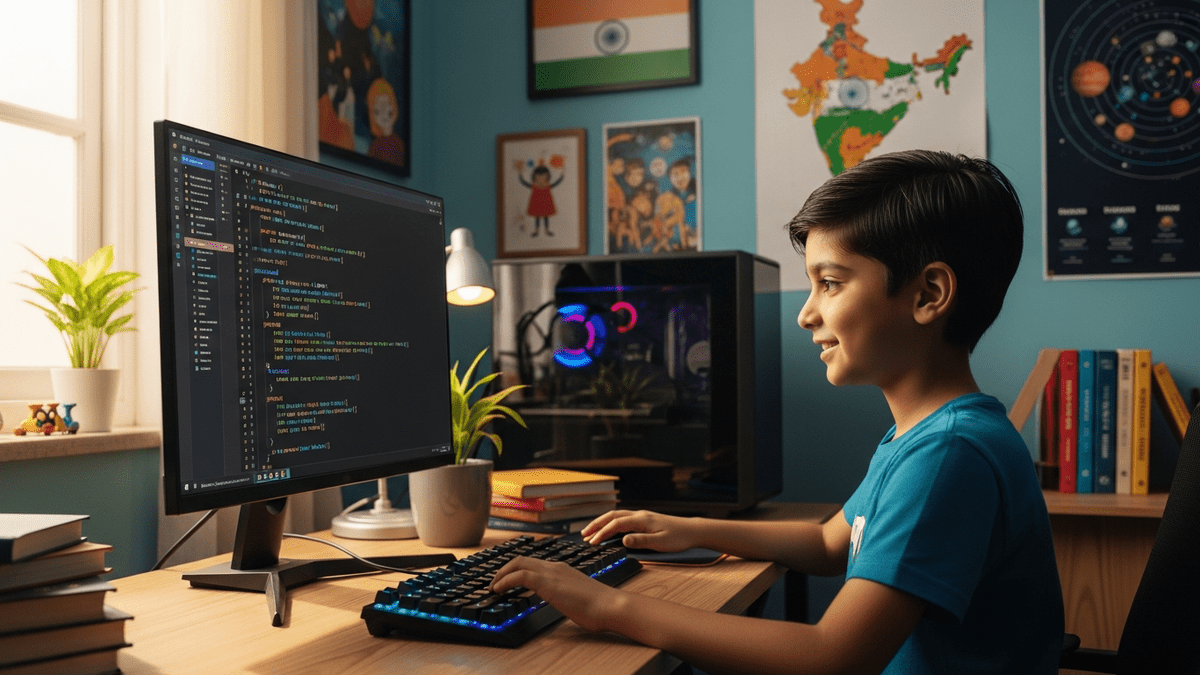
Coding teaches logic, problem-solving, and creativity simultaneously. Your child isn’t just watching a screen. They’re commanding it. Start with visual coding platforms for beginners, then progress to real programming languages as confidence grows.
Coding for kids isn’t just about becoming a programmer. It’s about developing the mindset to break down problems and build solutions. That’s a life skill.
Set Clear Boundaries
You can’t manage child screen time without structure. Decide together: how many hours daily? Which times are screen-free? What apps are allowed? Write rules down and stick to them. Consistency matters more than perfection.
Use timers. When the alarm goes off, the device goes away. No negotiations, no exceptions. Your child will adapt faster than you think.
Invest in the Right Device
Learning on a small phone screen is nearly impossible. Eyes strain, posture suffers, and real creative work can’t happen on a tiny display. They need a proper computer.
This is where APNA PC, an affordable computer for learners, changes everything. At ₹30,000, it’s a complete bundle with education software, 3-year warranty, and installation included. Your child gets a real workstation for learning and creating. Not a toy. A tool.
With a proper computer, your child accesses educational apps, coding platforms, and learning resources effectively. They sit at a desk with good posture. They create, not just consume. This single investment transforms how they learn daily.
Learn more about Why Every Indian Child Deserves a Computer Before Age 12 and why early tech access matters.
Build Digital Literacy Together
Don’t just hand over a device and hope for the best. Sit with your child. Learn together. Show them how to evaluate sources, spot misinformation, and use technology responsibly. Digital literacy requires active teaching from parents.
When your child understands why they’re using a tool and how to use it well, they’ll make better choices independently.
The shift from passive to active screen time doesn’t happen overnight. It requires intention, boundaries, and the right tools. But when you make this shift, your child stops wasting time and starts building genuine skills. Those hours become investments in their future.
Your child’s relationship with screens will define their digital future. Explore APNA PC and give your child the right tool to learn, create, and grow productively.