Digital Literacy Matters. Your Students Are Already Behind.
Here is the truth: digital literacy for Indian students is not optional anymore. It’s survival. A child in rural Maharashtra who cannot open a PDF, navigate Google, or type an email is already competing at a disadvantage against peers in metros. This gap widens every single day.
Most people don’t realise that digital skills for Indian students determine not just their exam scores, but their job prospects, their ability to access government services online, and their confidence in a world that has moved entirely digital. Yet millions of Indian homes still don’t have a computer. Millions of teachers have never taught coding. Millions of students graduate without ever touching a keyboard.
The Digital India Initiative promised connectivity. It delivered some. But connection alone is not enough. A child needs to know what to do with that connection.
Why Schools Alone Cannot Solve This
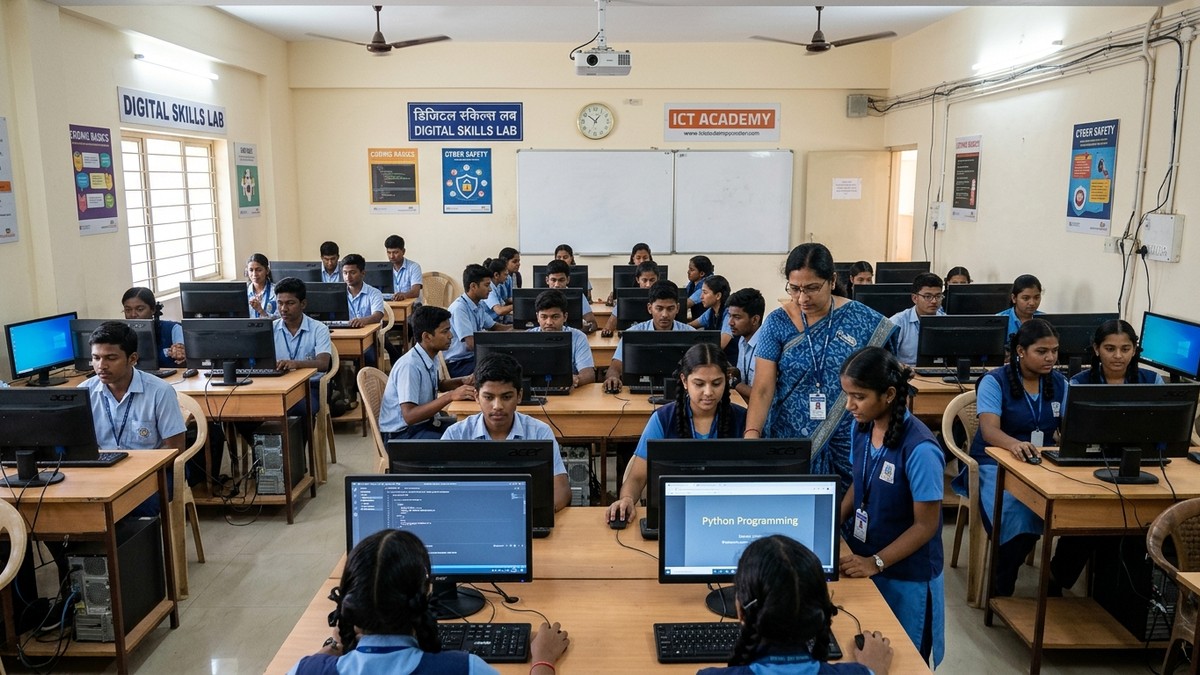
Let’s be honest: most Indian schools are still teaching computer science from textbooks published in 2010. Computer labs exist in maybe 40% of schools. Teachers in government schools often have no formal training in digital tools. Private schools do better, but the cost keeps 90% of Indian families out.
Your child’s school curriculum includes “Computer Science” as a subject. But does it teach practical digital literacy? There’s a massive difference. One is theory. The other is survival.
This is where homemakers, senior citizens, tuition teachers, and edupreneurs come in. You don’t need to wait for the system to fix itself. You can build digital skills for Indian students right now, in your community, in your home, at your tuition centre.
Think about what digital literacy actually means:
- Opening and saving files on a computer
- Using email properly (not just WhatsApp)
- Searching the internet effectively
- Creating basic documents and presentations
- Understanding online safety and privacy
- Using government portals (Aadhaar, PAN, educational portals)
- Video conferencing and online learning
- Basic troubleshooting when things go wrong
These are not advanced skills. These are baseline expectations in 2026. Yet ask any random class 8 student in India if they can do all of these. Most cannot.
The gap between digital literacy in Indian cities and rural areas is widening, not shrinking. A student in Bangalore has access to multiple computer labs, coding bootcamps, and online courses. A student in a small town has none of this. This inequality will determine which students get which jobs, which students can access online education, which students can even fill out online forms for college applications.
The Real Cost of Ignoring Digital Literacy
When you ignore digital literacy, you’re not just ignoring a “nice to have” skill. You’re setting your students up for failure in a system that has already gone digital.
Government exams now have online application portals. University admissions are online. Scholarship applications are online. Job applications are online. Bank accounts are online. Taxes are filed online. Even school fees are paid online now.
A student without digital literacy doesn’t just struggle academically. They struggle with life admin. They depend on others to fill forms. They miss deadlines because they don’t know how to check email. They cannot apply for opportunities because they don’t know how to navigate a website.
This is not a future problem. This is happening right now to millions of Indian students.
And here’s what really gets us: the solution exists. It’s not expensive. It’s not complicated. It just requires someone to take the first step.
Building Digital Literacy in Your Community
You don’t need a fancy computer lab. You don’t need a degree in IT. You don’t need expensive software licenses.
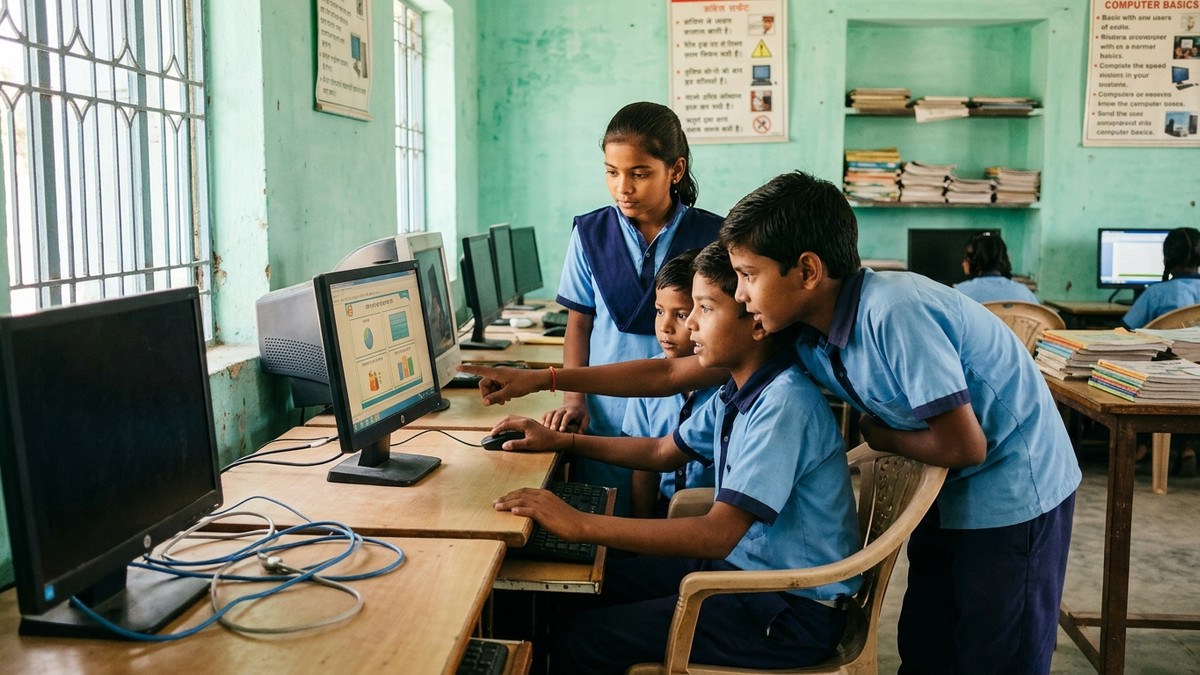
What you need is a simple setup: a computer, internet, and someone who knows how to teach the basics. A Point of Digital Learning (POD) can be your home. It can be your tuition centre. It can be a community hall. It can be anywhere.
Homemakers can run PODs from home and earn while teaching neighbourhood children. Senior citizens can share their time and knowledge. Tuition teachers can add digital literacy modules to their existing classes. Edupreneurs can build entire businesses around this gap.
The digital literacy in 2026 will look different from today, but the foundation is the same: hands-on learning, practical skills, and access to a computer.
What You Actually Need to Get Started
Here’s what works: a reliable computer, education software that actually teaches digital literacy, and a trained educator who knows how to guide students through the basics.
You don’t need the latest MacBook Pro. You don’t need expensive enterprise software. You need something practical, durable, and designed for teaching.
This is exactly why APNA PC exists. It’s a complete bundle at Rs.30,000 that includes a Mini PC (i3 7th Gen processor, 8GB RAM, 128GB SSD), monitor, keyboard, mouse, webcam, headset, education software, 3-year warranty, and installation. Everything you need to set up a Point of Digital Learning.
That’s not just a computer. That’s the entire infrastructure to teach digital literacy to 50+ students per year. That’s the tool to bridge the gap. That’s the investment that pays for itself within 3-4 months if you’re running a POD.
The Real Question
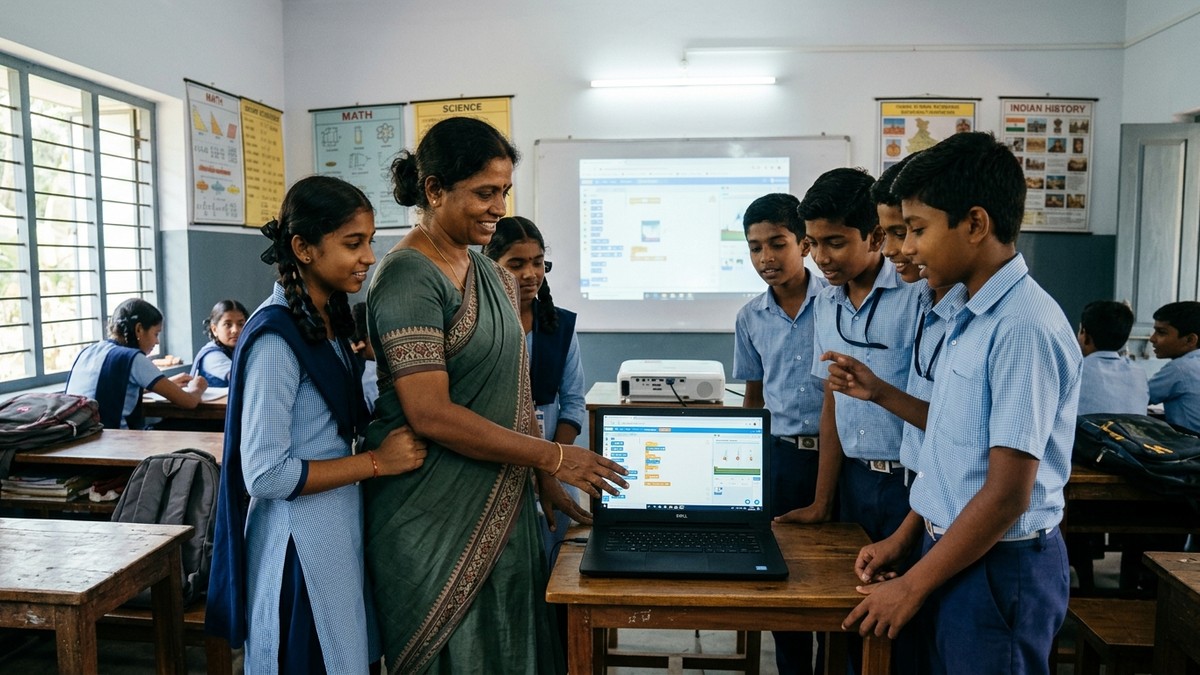
Digital literacy for Indian students is not about creating tech experts. It’s about creating citizens who can function in a digital world. It’s about equality. It’s about giving every child, regardless of where they’re born, the same basic tools to succeed.
The question is not whether digital literacy matters. The question is: what are you going to do about it?
If you’re a homemaker with time and patience, you can teach. If you’re a senior citizen with experience, you can guide. If you’re a tuition teacher, you can expand your offerings. If you’re an edupreneur, you can build a business.
The gap exists. The solution exists. The only missing piece is action.
Start with APNA PC. Set up your POD. Teach your first batch of students. Watch the difference. Learn more about APNA PC and get started today.
For more context on what digital literacy means globally, check out Digital Literacy (Wikipedia).