
Your Child Is Already Behind. Here’s Why.
Let’s be honest: if your child cannot use a computer, navigate the internet safely, or understand basic digital tools, they’re not just missing out on homework help. They’re missing out on their future. Digital literacy skills have stopped being optional for Indian students. They’re now the baseline expectation.
By 2026, every job posting will assume digital competence. Every classroom will expect it. Every competitive exam will test it. The question isn’t whether your child needs digital skills every Indian student needs. The question is whether you’ll give them the tools to develop those skills before it’s too late.
Most people don’t realise that digital literacy skills go far beyond typing or clicking a mouse. It’s about critical thinking, online safety, problem-solving, and understanding how technology shapes information. It’s about knowing when to trust a source and when to question it. It’s about protecting yourself from fraud, phishing, and misinformation.
Why 2026 Is The Deadline for Digital Literacy
The Digital India programme has already transformed how schools operate. Remote learning is no longer temporary. It’s permanent infrastructure. Students who can’t navigate digital platforms are literally unable to access their education.
Think about what your child needs right now:
- Using Google Classroom or similar platforms for assignments
- Creating presentations and documents online
- Researching information critically instead of copy-pasting
- Understanding cybersecurity basics
- Using productivity tools that employers expect
- Learning coding or AI basics (yes, even in school now)
Here’s the truth: the gap between digitally literate and digitally illiterate students is growing faster than the gap between English speakers and non-English speakers was 20 years ago. And it matters more.
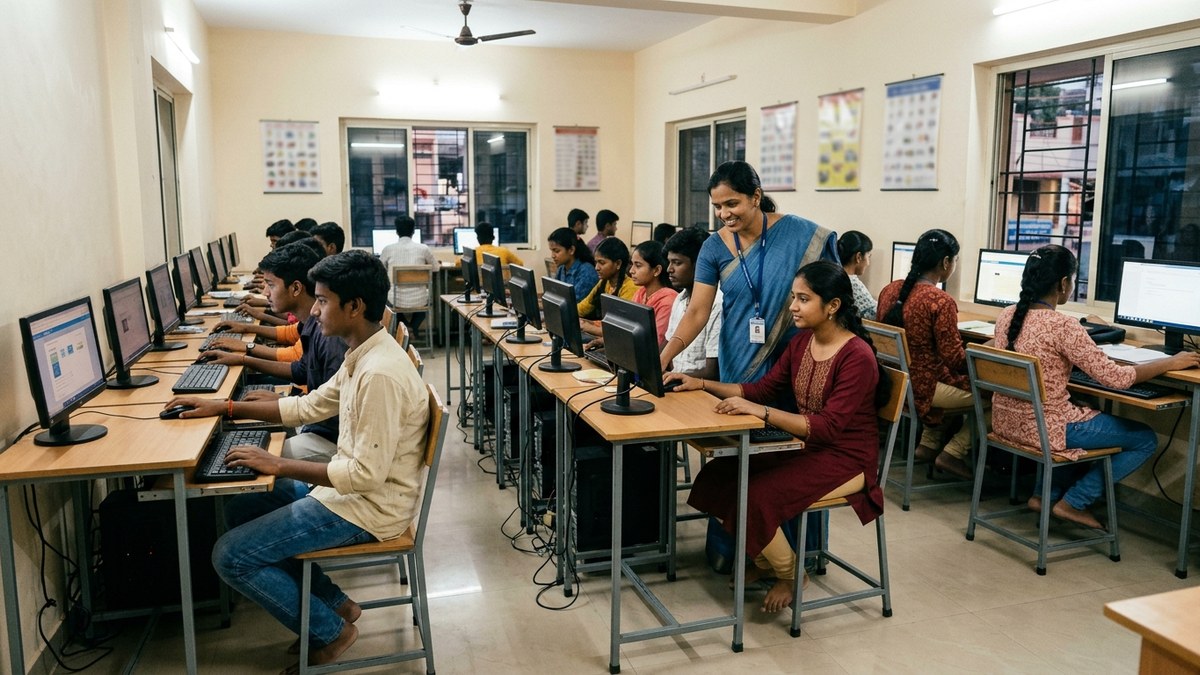
Students who have access to proper digital education are already ahead. They’re learning how AI helps Indian students learn faster. They’re collaborating with peers across states. They’re accessing resources that weren’t available to previous generations. Your child can too.
The Real Problem: Access, Not Ability
Most Indian families know their children need these skills. But they face a real barrier: access to a computer and proper guidance. Not everyone has a laptop at home. Not every school has adequate digital infrastructure. And even when devices are available, students often learn from YouTube videos or self-teaching, which leads to bad habits and incomplete understanding.
This is where structured learning matters. Your child doesn’t just need a device. They need someone trained to teach them properly. They need hands-on practice. They need to understand the “why” behind digital tools, not just the “how.”
That’s exactly what a Point of Digital Learning (POD) provides. A POD is a community learning centre run by a trained educator right in your neighbourhood. It’s not a coaching centre. It’s a space where students get proper digital literacy training, not haphazard self-teaching.
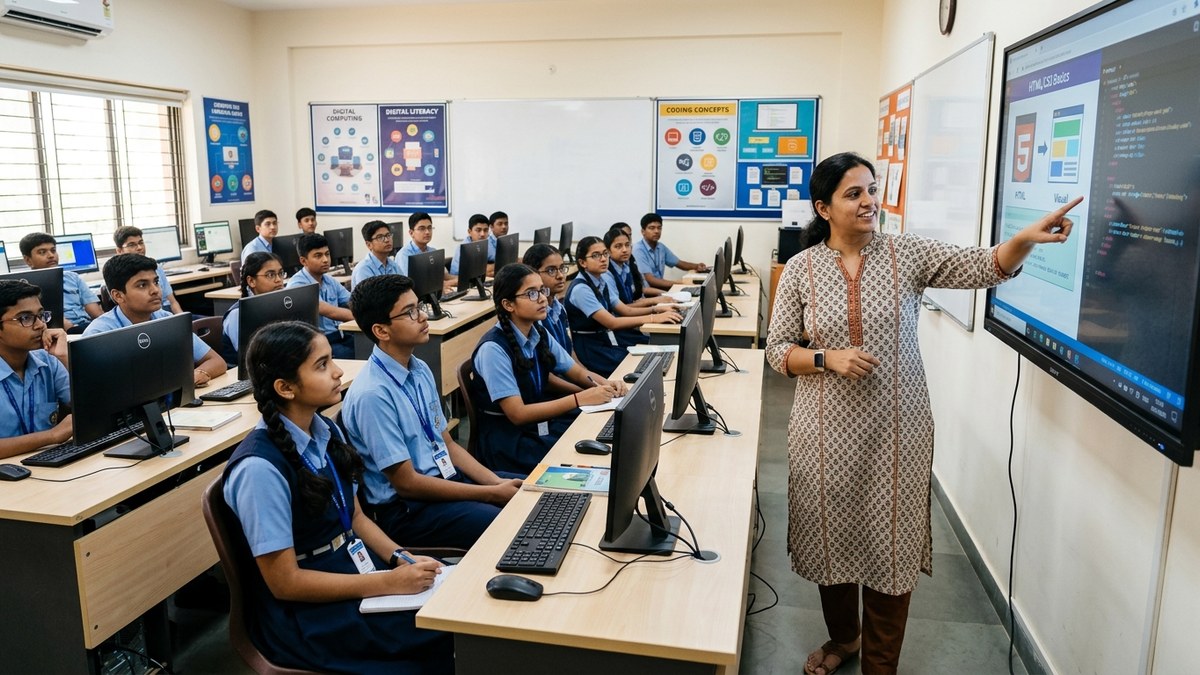
Here’s what makes this practical: you don’t need to invest in expensive laptops or complicated setups. APNA PC is a complete bundle designed specifically for this. For Rs.30,000, you get everything: a Mini PC with i3 7th Gen processor, 8GB RAM, 128GB SSD, monitor, keyboard, mouse, webcam, headset, education software, 3-year warranty, and professional installation. That’s not just a computer. That’s a complete digital learning station.
What Digital Literacy Actually Means for Your Child
It’s not about making them a tech expert. It’s about making them capable. A digitally literate student can:
- Find reliable information online instead of believing everything they read
- Protect their personal data and understand privacy
- Use technology to solve real problems, not just consume content
- Collaborate with others using digital tools
- Understand how algorithms and AI work (at a basic level)
- Create content, not just consume it
These aren’t skills that will be outdated in five years. These are foundational skills that will evolve but remain essential.
Most people don’t realise that digital literacy is tied directly to academic performance. Students with these skills score better in competitive exams because they can research efficiently, manage time with digital tools, and access quality learning resources. They’re more confident. They’re more prepared.
The Cost of Waiting on Digital Literacy Skills
Every month you wait, your child falls further behind. Not because they’re not smart. But because the baseline keeps moving. What was advanced five years ago is now basic. What’s basic now will be advanced five years from now.
The good news: it’s not too late. Your child can catch up. But they need proper access and proper guidance. They need a Point of Digital Learning where a trained educator can teach them systematically, not randomly.
Here’s what you need to do right now: stop thinking of digital literacy as something your child will “pick up.” Stop assuming YouTube videos are enough. Stop waiting for schools to handle it completely (they won’t, not yet). Take action. Set up a learning station. Enrol them in a POD. Give them structured training.
APNA PC makes this affordable and practical. It’s designed for exactly this purpose. Complete setup, complete software, complete support. No hidden costs. No complicated installation. Just plug it in and start learning.
Your child’s future depends on skills they’re probably not learning right now. Digital literacy skills aren’t a bonus anymore. They’re essential. And 2026 isn’t far away.
Get started with APNA PC today. Give your child the tools they need. Give them the advantage they deserve.