Your Skills Are Outdated. Here Is Why Digital Literacy Matters Now.
Most people do not realise that India launched a national push to make one person in every family computer-literate. The National Digital Literacy Mission, also called PMGDISHA, is real. It is happening now. And it could change your life or your income.
Let us be honest: if you cannot send an email, use a search engine, or open a document, you are locked out of modern India. Not metaphorically. Literally. Government services, banking, job applications, education, health records. All digital now. This mission exists because the government knows this gap is a crisis.
This is not about becoming a programmer. This is about survival skills for the digital age.
What Is the Digital Literacy Mission in India?
The mission launched in 2014 under the wider Digital India push. Its rural arm, PMGDISHA (Pradhan Mantri Gramin Digital Saksharta Abhiyaan), followed in 2015 with one big goal: make at least one person in every rural household digitally literate. The digital literacy mission sits inside the Digital India initiative, which aims to make digital services accessible to every citizen.
Here is what the curriculum actually teaches:
- How to switch on a computer and use a mouse and keyboard
- Opening applications and files
- Using email to send and receive messages
- Basic internet search and online safety
- Accessing government digital services and portals
- Video calling and messaging apps
- Introduction to word processing and spreadsheets
The program is free or heavily subsidised. The government funds it. You pay nothing or minimal fees.
Who Can Join the Digital Literacy Mission?
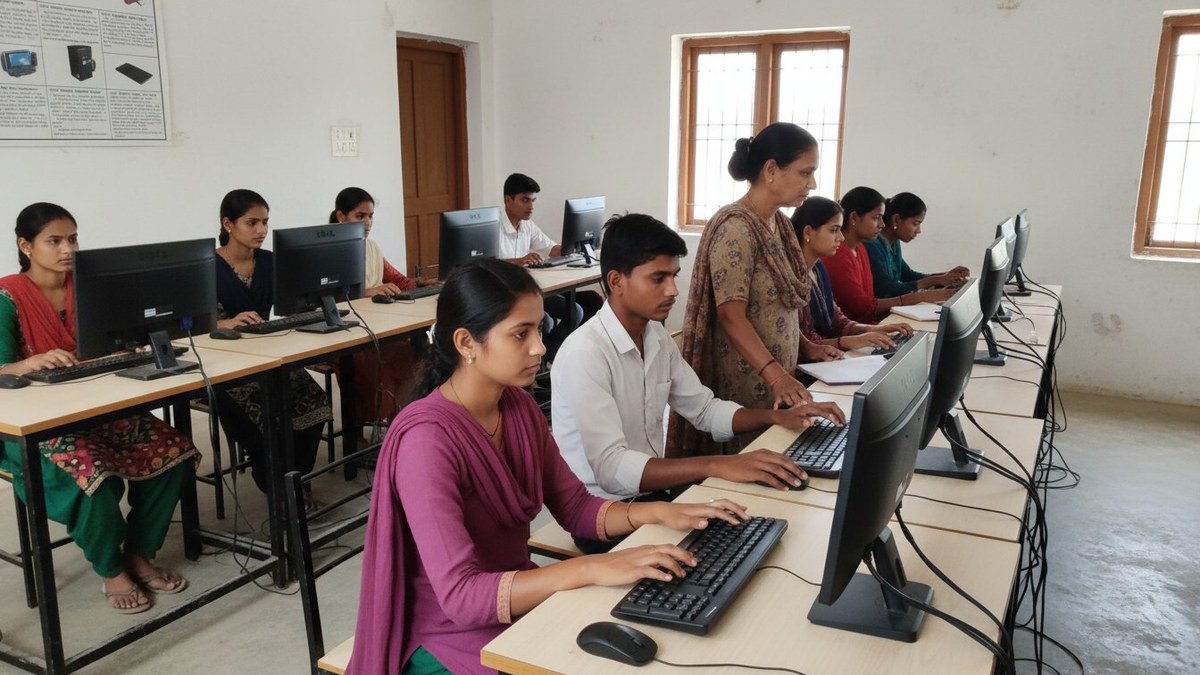
The digital literacy mission is open to anyone aged 14 and above who lacks basic digital skills. But let us talk about who really benefits:
- Homemakers: Learn to manage online shopping, banking, school admissions, and health records. Build confidence in a digital world.
- Senior citizens: Stay connected with family through video calls. Access pension portals and health services. Reduce isolation.
- Rural youth: Open doors to online job applications, freelancing, and skill development platforms.
- School students: Supplement classroom learning with digital tools and coding basics.
- Tuition teachers and edupreneurs: Learn to run online classes, manage student records, and build digital businesses.
None of this depends on your background, education, or current job. The only requirement: you do not already know these basics.
How to Enroll and Get Certified
Here is the truth: enrollment is simple but varies by state. Most states have dedicated portals and training centres. Follow these steps:
- Visit your state government’s digital literacy website or the India Ministry of Education portal
- Check for authorised training centres near your location (called Points of Digital Learning or PODs)
- Register online or visit the centre in person with basic documents (ID proof, address proof)
- Attend classes (usually 20-30 hours over 4-6 weeks)
- Complete a simple assessment to get your digital literacy certificate
The entire process is free. No hidden charges. No pressure to buy anything.
What You Actually Learn (And Why It Matters)
The curriculum is practical, not theoretical. You learn by doing.
Day one: You touch a computer keyboard for the first time. The trainer shows you how to hold the mouse. How to click. How to type your name. It sounds basic. It is. But for a 60-year-old homemaker who has never used a computer, this is revolutionary.
By week three: You are checking your email. Searching Google. Watching YouTube videos. Using WhatsApp on a computer. Opening a government portal to check your Aadhaar details or PAN status.
By the end: You have a certificate. More importantly, you have confidence. You are no longer afraid of technology.
The DIKSHA digital learning platform also supports many state missions with supplementary resources and videos. Many training centres use this alongside hands-on instruction.
The Income Opportunity for Educators and Edupreneurs
Here is what most people do not realise: these programs need trainers. Thousands of them.
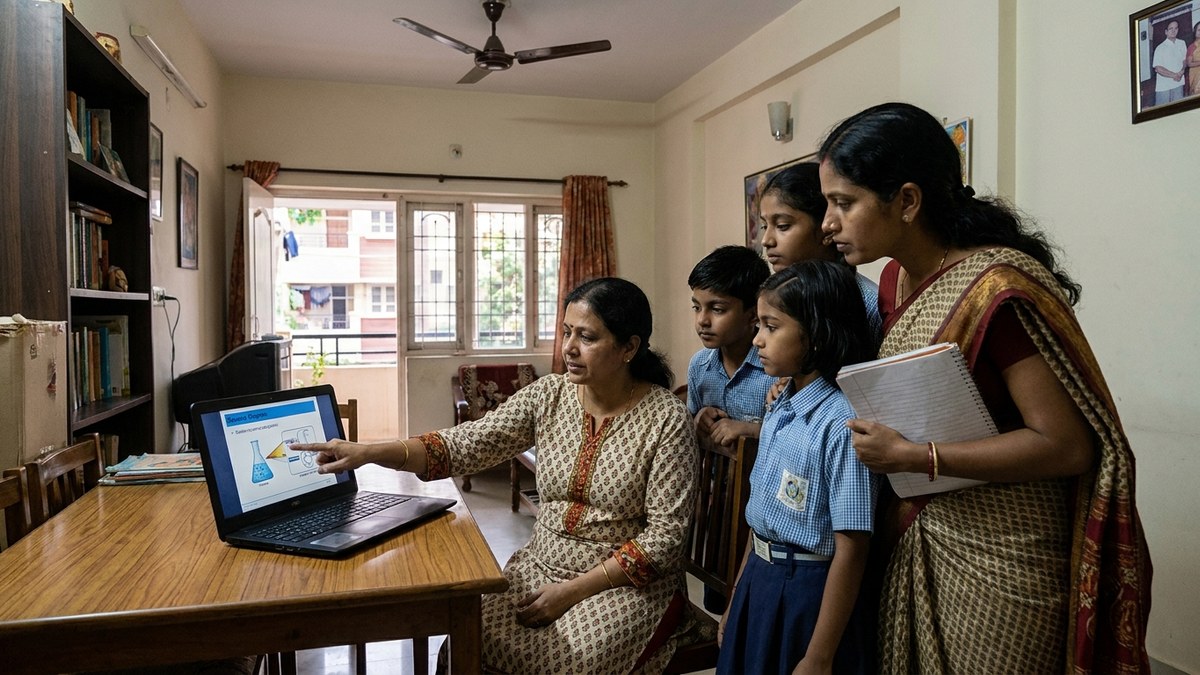
If you are a tuition teacher, school educator, or an edupreneur looking for a second income stream, this scheme offers a real opportunity. You can:
- Get certified as a digital literacy trainer through government programs
- Set up a Point of Digital Learning (POD) in your community or home
- Train batches of 10-20 learners and earn a fee per batch or per learner
- Receive government support or subsidies to run your centre
- Build a sustainable income while serving your community
Check the teaching digital literacy activities guide on TeachToEarn to understand the practical side of running digital literacy batches.
To set up a POD, you need a basic computer setup. Something like APNA PC (a complete bundle with Mini PC i3 7th Gen, 8GB RAM, 128GB SSD, monitor, keyboard, mouse, webcam, and headset, plus 3-year warranty and installation) gives you everything needed to start training from home or a small centre at Rs.30,000. No fancy setup required. Just a functioning computer and internet connection.
Real Barriers and Real Solutions
Let us be honest: the mission faces real challenges. Not all states have equal infrastructure. Not all PODs are equally good. Some trainers rush through the material. Some learners need more time.
But the framework exists. The funding exists. The demand is enormous.
For learners: start now. Do not wait. Your bank, your government, your family’s future is digital. Every day you delay is a day you are behind.
For educators: this is not charity work. This is a business opportunity with social impact. Read more about structuring your digital literacy training on the Apni Pathshala blog for practical insights on running educational programmes.
The Bottom Line
The digital literacy mission is India’s bet that every citizen, regardless of age, location, or background, deserves access to basic digital skills. It is not perfect. No government program is. But it works.
If you are a homemaker, senior citizen, rural youth, or educator reading this: you have a choice. Stay on the sidelines. Or take the first step. Find a training centre. Enroll. Learn. Then, if you are an educator, turn this into income by running your own POD.
The digital divide will not close itself. But this mission is a real tool to close it. Use it.