
Why Students Sleep on Employability Skills Class 10
Here’s the truth: most class 10 students treat employability skills class 10 like a throwaway subject. They focus on maths, science, English. They ignore the one course that actually teaches them how to get a job. That’s a mistake that costs them later.
The CBSE employability skills syllabus isn’t busy work. It’s the bridge between school and real employment. While your peers are cramming formulas, you could be building the exact skills that employers desperately want. Let’s be honest: the job market doesn’t care about your marks in history. It cares whether you can communicate, solve problems, and adapt.
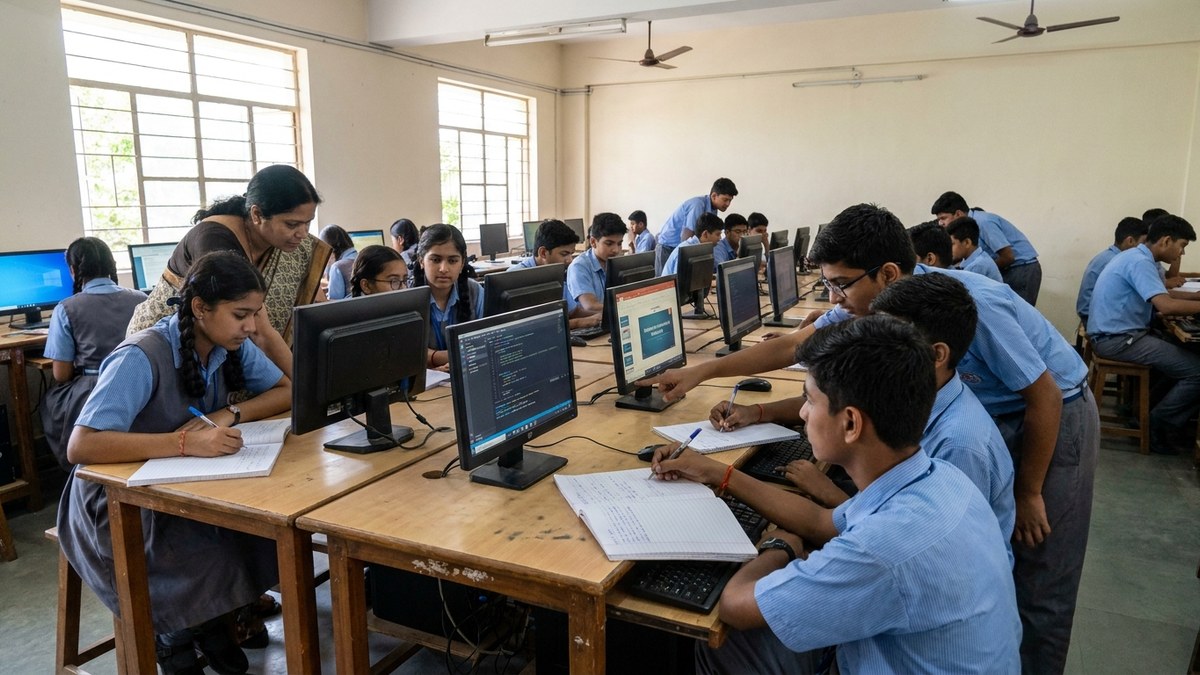
Key Takeaways
- Employability skills class 10 is a CBSE skill subject that teaches communication, ICT, self-management, entrepreneurship and green skills.
- Many students treat it as a throwaway subject, but it builds habits employers look for, like clear speaking and teamwork.
- The units combine theory with practical work, so students benefit from regular practice rather than last-minute cramming.
- ICT skills in the syllabus are easier to learn on a real computer than on a phone, especially typing and documents.
- Starting early gives students a better base for career choices after Class 10 and for later vocational courses.
The Four Pillars of Employability Skills Class 10
The CBSE employability skills syllabus splits into four core modules. Understanding each one shows why this subject matters for your career path.
Self-Management Skills teach you discipline, time management, and emotional intelligence. You learn to set goals, handle stress, and take responsibility. These aren’t soft skills that sound nice in interviews. They’re the foundation for every job you’ll ever have.
Information Management Skills cover digital literacy and data handling. You learn to find, evaluate, and organize information. In 2024, this is non-negotiable. Every sector needs people who can navigate digital tools and understand data.
Communication Skills go beyond speaking clearly. You practice writing emails, presenting ideas, listening actively, and adapting your message for different audiences. Most people don’t realise that poor communication kills careers faster than lack of technical knowledge.
Green Skills prepare you for the sustainability-focused economy. You learn environmental awareness, resource management, and sustainable practices. This isn’t future-focused idealism. Companies are hiring specifically for green skills right now.
The NCERT employability skills book is free on the DIKSHA platform. Download it. Read it. Don’t wait for your teacher to force you.
How This Connects to Your Career Path
Most people don’t realise that employability skills class 10 isn’t just about passing an exam. It’s the entry point to India’s Skill India mission and the National Qualifications Framework (NSQF). These aren’t random acronyms. They’re the official infrastructure for vocational and technical careers in India.
The Skills Development Act, 1998 shaped how governments worldwide treat skill development as career infrastructure, not luxury. India follows this model. When you complete employability skills class 10, you’re not just getting marks. You’re positioning yourself for apprenticeships, vocational diplomas, and specialized training programs that actually lead to jobs.
Here’s what happens next:
- You finish class 10 with employability skills certification
- You can pursue NSQF-aligned vocational courses (Level 3-5)
- You enter the job market with both academic credentials and practical skills
- Employers see you as job-ready, not just school-ready
Compare this to students who ignore employability skills. They finish class 10 with only academic marks. They struggle in interviews because they can’t communicate their ideas. They don’t understand workplace culture. They lack digital confidence. Suddenly, the job search becomes painful.

What Teachers and Parents Need to Know
If you’re a teacher, stop treating this subject as a filler. Your students need practical, hands-on learning. They need to practice real scenarios: writing professional emails, handling difficult conversations, using spreadsheets, understanding workplace ethics. Check the CBSE official website for detailed curriculum guidelines. Your school might have resources you haven’t discovered yet.
If you’re a parent, push your child to take this seriously. Ask them what they learned. Ask them to show you their projects. This subject directly impacts their employability after school. It’s not negotiable.
For students who want to go deeper, explore the employability skills class 9 roadmap to understand how this builds progressively. Also check the Apni Pathshala blog for additional resources on skill development.
The Bigger Picture: Why This Matters Now
Global employment is changing. The UNESCO education programs emphasize that 21st-century jobs require a blend of technical and soft skills. India’s youth are competing globally now. A class 10 student in Delhi competes with students in Bangalore, Mumbai, and beyond. Employability skills class 10 levels the playing field. It gives you the tools to compete.
Most people don’t realise that companies hiring for entry-level positions care more about your ability to learn, adapt, and communicate than your marks. Employability skills teach exactly that. They teach you how to think, not just what to think.
Your career isn’t decided in class 10. But your trajectory is. Students who take employability skills seriously build confidence, competence, and clarity about their future. They enter class 11 and beyond with a realistic understanding of the job market. They make better choices about streams, colleges, and specializations.
The CBSE employability skills syllabus isn’t a nice addition to your education. It’s essential infrastructure for your career. Treat it that way.
Frequently Asked Questions About Employability skills class 10
What is employability skills in Class 10 CBSE?
It is a skill subject offered by CBSE alongside regular subjects. It covers communication, self-management, ICT, entrepreneurial and green skills to prepare students for work and further learning.
Is employability skills compulsory in Class 10?
Students usually take it as a skill subject chosen with their school. Check the current CBSE circular and your school’s subject list to see how it applies to your child.
How can students prepare for employability skills?
Read each unit, practice the activities and write short answers in your own words. Role plays, group tasks and simple typing practice make the practical part easier.
Do employability skills help in getting a job?
They help build communication, teamwork and digital basics that employers expect from freshers. They do not replace subject knowledge, but they make a student more ready for work.
Do students need a computer for employability skills?
A computer helps for the ICT unit, where students practise typing, documents and basic internet use. A shared family computer is enough for regular practice.
CBSE offers skill subjects including Employability Skills as part of its secondary curriculum, aligned with the skill education push in NEP 2020.
Explore start a TeachToEarn learning POD and how to POD economics and break-even.