
The Home Learning Pod Revolution Is Here. Are You Ready?
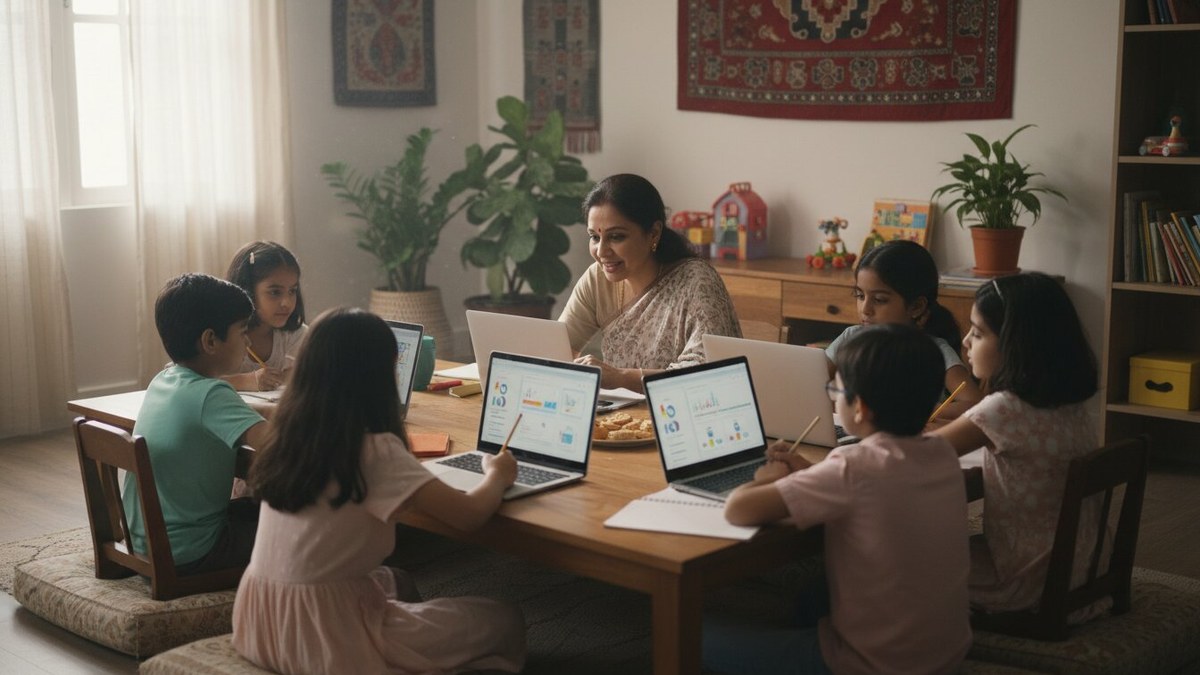
Your spare room. Five neighbourhood kids. One trained educator. That’s a home learning pod. Not a tuition centre. Not a franchise. A real, sustainable income stream that doesn’t require you to rent a commercial space or hire staff.
Here’s the truth: Traditional tuition is dying. Parents are tired of shuttle services. Kids are burned out by coaching centre assembly lines. And teachers? You’re exhausted managing 40 students in a cramped classroom while earning peanuts. There’s a better way, and it starts with understanding what a POD actually is.
A home learning pod is a Point of Digital Learning (POD) where small groups of 4-8 students learn together under one trained educator in a home or community setting. Not online. Not fully offline. Blended. Personalised. Real.
Why Small Group Learning Works Better Than Everything Else
Most people don’t realise that the magic number for learning isn’t 1 (one-on-one tuition) or 40 (classroom). It’s 5-7.
When you run a small pod, something shifts:
- Every child gets seen. Their struggles, their pace, their learning style. You can’t hide in a group of six.
- Peer learning kicks in. Kids explain concepts to each other. Teaching is the best way to learn.
- You actually have time to teach, not just manage chaos.
- Parents see real progress because progress is visible and measurable.
- Your income scales without your stress multiplying.
The student-centred learning approach works because it treats learning as something that happens through active participation, not passive absorption. In a home learning pod, this isn’t theory. It’s your daily reality.
Let’s be honest: You’ve probably thought about starting a tuition centre before. You’ve calculated the rent, the staff, the admin headache. This setup costs a fraction of that. Your living room becomes your classroom. Your kitchen becomes your staff room. Your profit margins actually exist.
Setting Up Your POD: The Practical Roadmap
Step 1: Choose Your Space and Group Size
You don’t need much. A spare bedroom, a living room corner, or even a community hall works. The key is comfort and focus. Aim for 4-8 students per batch. Smaller batches mean premium pricing. Larger batches mean chaos.
Step 2: Get Your Technology Right
This is non-negotiable. Your POD needs a reliable computer setup to deliver blended learning. You can’t run interactive sessions, show videos, conduct assessments, or track progress without proper hardware.
Here’s where most educators make a mistake: They buy a cheap laptop and wonder why everything lags. Invest in APNA PC. Rs.30,000 gets you a complete bundle: education software, 3-year warranty, professional installation, Mini PC with i3 7th Gen processor, 8GB RAM, 128GB SSD, monitor, keyboard, mouse, webcam, and headset. Everything you need to run a professional POD.
Why APNA PC? Because it’s built for Indian educators. It handles multiple students on video calls. It runs educational software without crashing. It comes with warranty support. You’re not gambling with your income.
Step 3: Design Your Curriculum and Teaching Model
Follow a blended learning guide for teachers to mix online and offline content. Some sessions happen in-person at your pod. Some happen digitally. Some are hybrid. This flexibility is your competitive advantage.
Use AI-powered interactive quizzes to track progress and personalise learning paths. Your students aren’t just attending classes. They’re getting data-driven feedback on what they need to work on.
Step 4: Set Your Pricing and Enrolment Strategy
Small group learning commands premium pricing. Don’t undercut. Parents pay more because results are better. Charge Rs.3,000-5,000 per student per month depending on your location and subject. With 6 students, that’s Rs.18,000-30,000 monthly from one batch. Run two batches, and you’re looking at serious income.
Step 5: Register and Comply
Check with your Ministry of Education India guidelines for home-based learning centres. Some states require basic registration. Some don’t. Know your local rules before you start.

The Real Numbers: What a Home Learning Pod Actually Earns
Let’s do the maths. Assume you run one batch of 6 students at Rs.4,000 per student per month. That’s Rs.24,000 monthly. Annually, Rs.2,88,000 from one batch.
Your costs: APNA PC (Rs.30,000 one-time), electricity, internet, basic materials. Maybe Rs.2,000-3,000 monthly. Your profit margin is 80-90%. Compare that to a tuition teacher earning Rs.15,000-20,000 monthly while managing 30+ students.
Most people don’t realise that scaling a pod doesn’t mean hiring more staff. It means running more batches. Morning batch. Afternoon batch. Evening batch. Different grade levels. Different subjects. Your space works harder. Your income multiplies.
Ready to Start Your Learning Pod?
The infrastructure is simple. The model is proven. The demand is real. Parents are looking for alternatives to overcrowded tuition centres. Teachers are looking for better income with less stress. Community learning centres are the future.
Your first step: head to TeachToEarn and explore the learning pod program. Get trained. Get equipped. Get started.
The home learning pod revolution isn’t coming. It’s here. The question is whether you’ll be part of it or watch someone else in your neighbourhood build one first.