
Special Education in India: What Teachers Need to Know
Most teachers in India still teach as if all students learn the same way. They don’t. Special education in India isn’t about segregating students with disabilities into separate rooms. It’s about recognizing that every classroom has learners with different needs, and your job as a tuition teacher or edupreneur is to meet them where they are.
Let’s be honest: special education India teachers face real barriers. Limited training. Outdated resources. Overcrowded classrooms. But here’s the truth: you don’t need a fancy degree to start making inclusive classrooms work. You need awareness, the right tools, and a willingness to adapt.
Whether you run a POD (Point of Digital Learning) from your home or manage a community learning centre, understanding special needs students transforms your business and impact. This isn’t charity. This is smart teaching.
Why Special Education Matters for Your Teaching Practice
India has over 40 million children with disabilities. Most never finish school. Why? Not because they can’t learn. Because teachers weren’t trained to teach them differently.
The National Education Policy 2020 mandates inclusive education. That means you, as a tuition teacher, will increasingly work with special needs students whether you planned to or not. Schools are referring them to private tutors. Parents are seeking specialized help. The demand is there.
Here’s what you need to understand about inclusive classrooms:
- Disability isn’t a deficit. A student with dyslexia doesn’t have a broken brain. They process written information differently.
- Most special needs students can succeed in regular classrooms with proper support.
- Technology levels the playing field faster than any traditional method.
- Your attitude matters more than your qualifications.
When you teach special needs students effectively, you actually teach all students better. The strategies you develop for one learner with attention challenges help your entire class focus. The visual aids you create for a student with hearing impairment benefit visual learners everywhere.
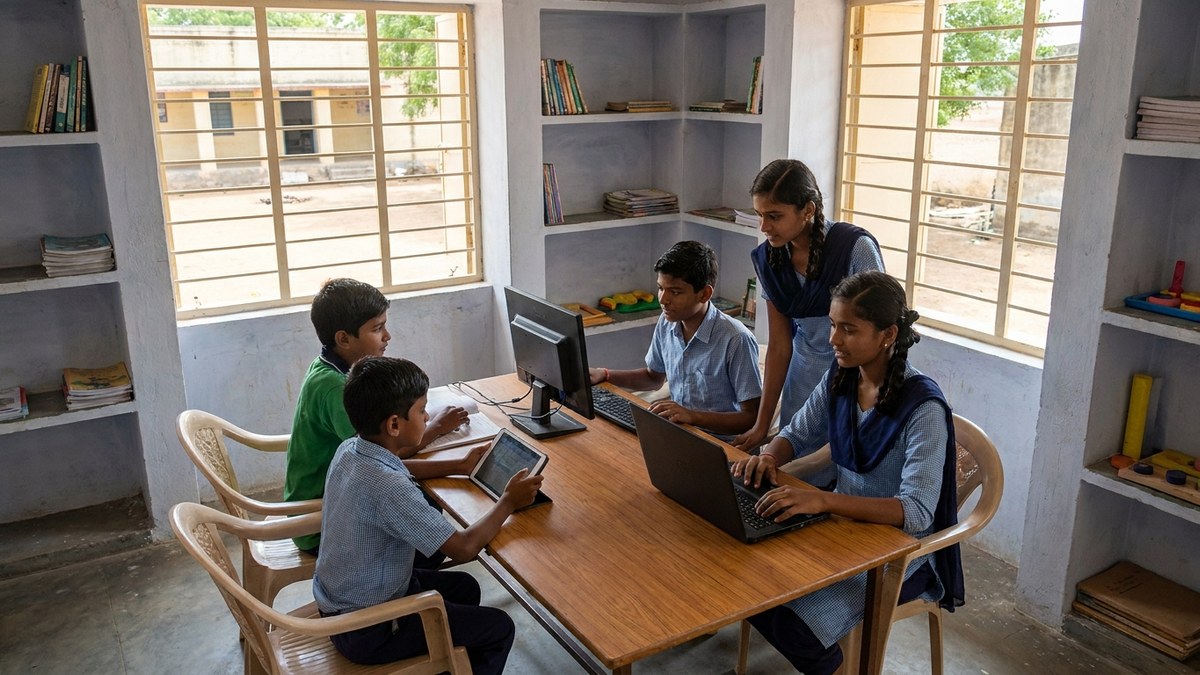
Common Types of Special Needs and How to Respond
You don’t need to be a psychologist. You need to recognize patterns and respond appropriately. Here are the special needs students you’ll encounter:
- Dyslexia and learning disabilities: These students struggle with reading, writing, or math despite normal intelligence. They need multisensory learning approaches. Audio, visual, kinesthetic methods together work better than text alone.
- Attention Deficit Hyperactivity Disorder (ADHD): Sitting still for 60 minutes? Impossible for these students. Break lessons into 15-minute chunks. Use movement. Use technology that responds immediately to their actions.
- Autism Spectrum Disorder (ASD): Sensory sensitivities are real. Loud noises, bright lights, unexpected changes cause genuine distress. Create predictable routines. Communicate clearly. Many autistic students are visual learners and hyperfocus on their interests.
- Hearing and visual impairments: Don’t assume. Ask. A student with partial hearing might manage fine with seated positioning. A student with low vision needs larger fonts and high contrast materials.
- Physical disabilities: Accessibility matters. Can they reach the desk? Can they hold a pen? Technology can substitute for physical limitations.
The common thread? Adapt delivery, not expectations. A student with cerebral palsy can solve complex math problems. They just need a different input method.
Building Inclusive Classrooms That Actually Work
Most people don’t realise that inclusive classrooms aren’t harder to manage. They’re different to manage. Here’s how to start:
Assessment First: Before you teach, understand each student’s actual needs. Not labels. Actual capabilities and challenges. Spend time observing. Ask parents. Use simple checklists to identify specific difficulties.
Differentiate Everything: This doesn’t mean creating five different lesson plans. It means presenting the same concept through multiple pathways. If you’re teaching fractions, use physical objects, draw diagrams, use digital simulations, tell stories. Different students will click with different approaches.
Use Technology Strategically: Text-to-speech software helps dyslexic students. Video with captions helps hearing-impaired learners. Interactive apps keep ADHD students engaged. You don’t need expensive tools. Free options like DIKSHA teacher training platforms provide structured resources.
But here’s what matters most: you need reliable hardware to deliver these solutions. APNA PC gives you exactly that. A complete bundle with education software, Mini PC (i3 7th Gen, 8GB RAM, 128GB SSD), monitor, keyboard, mouse, webcam, and headset. Everything you need to run a professional POD. Rs.30,000 with 3-year warranty and installation included. No hidden costs. No compatibility headaches.

Create Safe Spaces: Special needs students often have anxiety about making mistakes. They’ve been told they’re “slow” or “broken” their whole lives. Your classroom should feel safe for risk-taking. Celebrate effort over perfection. Normalize asking for help.
Collaborate with Parents: Parents know their child better than anyone. Ask what works at home. Share what you observe. This partnership multiplies your impact.
The Business Case for Special Education
Let’s be direct: this isn’t just about helping students. It’s about growing your business. Parents of special needs children are desperate for good tutors. They’ll pay premium rates. They’re loyal. They refer other parents. One student with special needs can become three referrals.
Check out how others are scaling with Digital Literacy Mission India initiatives and AI education in Indian schools to see how technology-enabled teaching opens doors.
When you understand understanding learning science, you realize that inclusive methods benefit all students. That means your regular batches also improve. Better results. Better reputation. Better income.
Getting Started Today
You don’t need perfect training to start. You need willingness to learn and proper tools. Start small. Take one student with special needs. Observe carefully. Adapt gradually. Document what works.
Most importantly, invest in infrastructure that won’t let you down. APNA PC is designed for educators exactly like you. Reliable. Affordable. Complete. When your technology works, you can focus entirely on teaching.
Special education in India is growing. Schools are mandated to include it. Parents are demanding it. The question isn’t whether you should prepare for it. The question is whether you’ll be ready when the opportunity arrives.
Explore APNA PC and build your inclusive learning centre today.