Meera is a class 10 student in Pune. Her parents can’t afford private tuition, and she struggles with mathematics. Her friend Aditya is strong in the subject. One day, they decide to study together with three other classmates in the neighborhood park. Within weeks, Meera’s confidence grows. She’s not just learning math, she’s learning how to explain concepts to others. This is the power of peer tutoring and student-led learning pods, a movement quietly transforming how Indian students learn together.
Why Peer Tutoring Matters for Indian Students
Peer tutoring isn’t new. Peer teaching has been recognized as an effective learning method for decades. But in India, where quality education remains expensive and unequally distributed, it’s becoming a lifeline for millions of students.
The traditional tuition model in India is broken for many families. A private tutor costs ₹300-500 per hour in metros, and even in smaller towns, it’s unaffordable for middle and lower-income families. Meanwhile, India’s education system still relies heavily on rote learning and classroom sizes that don’t allow for personalized attention.
Peer tutoring solves this differently. When a student teaches another student, something magical happens:
- The tutor learns deeper. Teaching forces you to organize your thoughts clearly. You can’t fake understanding when someone asks you to explain.
- The learner feels less intimidated. A peer feels more approachable than a stern tutor. There’s no fear of judgment, just genuine help.
- Both develop leadership and communication skills. These are skills no textbook teaches, but every employer wants.
- It costs almost nothing. No tuition fees. Just students gathering together, in a home, park, or community center, to learn from each other.
For Indian students, especially in Tier 2 and Tier 3 cities where quality tutors are scarce, peer learning pods are filling a real gap. They’re affordable, accessible, and they work.
How to Set Up a Student-Led Learning Pod
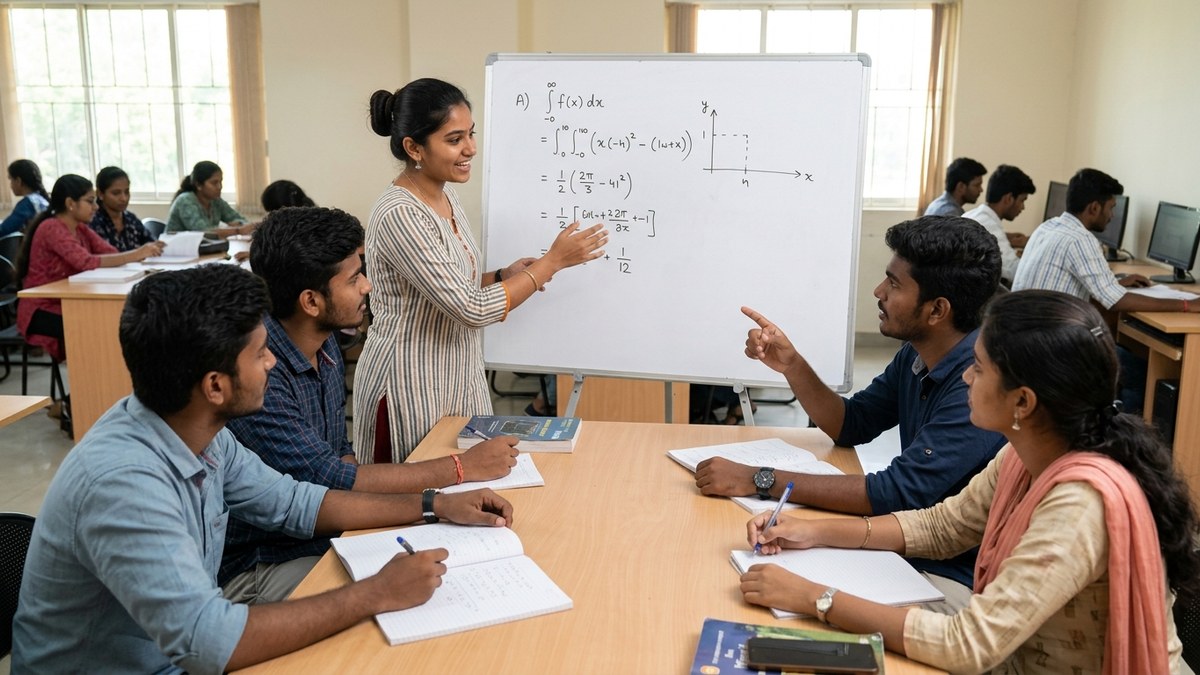
Starting a learning pod doesn’t require fancy infrastructure or formal training. Here’s a practical roadmap:
Step 1: Find Your Group
Gather 4-6 students from your class, school, or neighborhood who want to study together. The sweet spot is small enough for everyone to participate, but large enough to have diverse perspectives. Include students with different strengths, one strong in math, another in languages, another in science. This diversity makes the group richer.
Step 2: Choose a Subject or Topic
Start with one subject where at least one member is confident. Math, English, Science, pick what your group needs most. As the pod matures, you can expand to multiple subjects.
Step 3: Pick a Time and Place
Consistency matters. Meet twice a week at the same time in a quiet space, someone’s home, a library corner, or a community center. A fixed schedule builds accountability and habit.
Step 4: Create a Simple Structure
Each session could look like this:
- First 10 minutes: Review what you learned last time
- Next 30 minutes: One student teaches a concept or topic to the group
- Next 15 minutes: Group solves problems together
- Last 5 minutes: Agree on what to cover next time
Keep it informal but purposeful. The goal is learning, not entertainment.
Step 5: Rotate the Teacher Role
This is crucial. Every student should teach, not just one ‘smart’ student. Rotation ensures everyone develops confidence and everyone learns from different perspectives. A struggling student often explains concepts in a way that makes sense to peers because they remember what confusion felt like.
Step 6: Track Progress
Keep a simple notebook where the group jots down topics covered, doubts raised, and progress made. This isn’t bureaucracy, it’s accountability and motivation. When you see what you’ve accomplished in three months, it’s powerful.
For more guidance on setting up structured learning communities, explore how learning pods are transforming education delivery.
Making It Work with Digital Tools
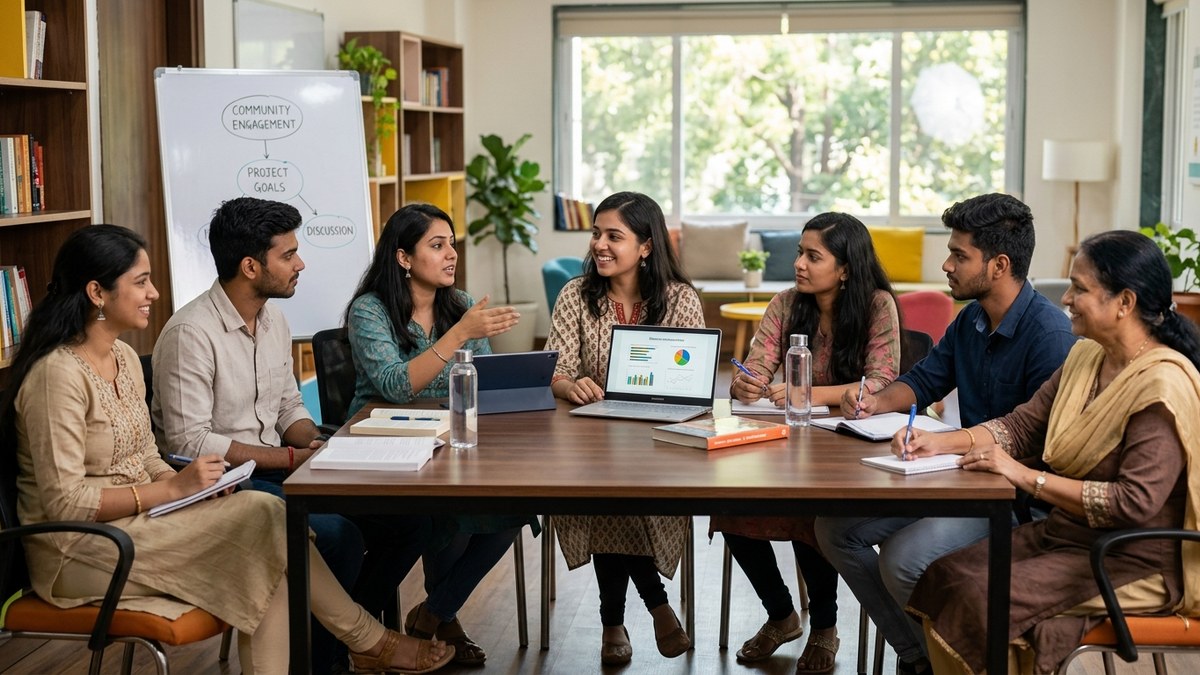
While peer pods thrive on face-to-face interaction, digital tools can amplify their power without replacing human connection.
Why Digital Tools Matter
Not every student in your pod will be equally prepared for every session. Digital tools help bridge gaps. A student can watch a YouTube video or an AI-powered lesson before the session, so group time is spent on deeper discussion rather than basic explanation. This is called ‘flipped learning,’ and it’s incredibly effective.
Practical Tools for Your Pod
- Google Docs or Notion: Create shared study notes. Everyone contributes, everyone benefits. It’s collaborative and organized.
- YouTube: Before your pod meets, students can watch relevant videos to get baseline understanding. Your session becomes about clarifying doubts, not delivering content.
- WhatsApp or Telegram: Quick questions between sessions get answered fast. One student solves a problem and shares a photo, instant help.
- Quizzes (Google Forms, Kahoot): Make assessment fun. Quick quizzes keep everyone engaged and show where gaps exist.
- Tablets or laptops: If your pod has access to devices, affordable computers can transform learning pods into digital-enabled spaces.
The key: use technology to support peer learning, not replace it. A video is a tool; your friend explaining the concept is irreplaceable.
Real Example: The Math Pod That Worked
In a Bangalore neighborhood, five class 9 students started a geometry pod. They met every Thursday evening. Before each session, they watched a Khan Academy video on the topic. In the pod, they solved problems together, made models with paper and cardboard, and explained theorems to each other. By the end of three months, all five had improved their math scores by 15-20%. More importantly, they’d stopped fearing math. They’d learned that understanding comes from explaining, questioning, and practicing together.
Challenges and How to Overcome Them
Challenge 1: Inconsistent Attendance
Solution: Make it a commitment. Agree at the start that consistency matters. If someone can’t make it, they notify the group. Treat it like a class, not a casual hangout.
Challenge 2: One Student Dominates
Solution: Enforce the rotation rule. Every session, a different student leads. If someone is dominating discussions, gently redirect: ‘Let’s hear from Priya on this one.’
Challenge 3: Lack of Structure
Solution: Assign a rotating ‘facilitator’ each week. Their job: keep time, ensure everyone participates, and set the agenda for next week. This prevents chaos.
Challenge 4: Running Out of Topics
Solution: Align with your school syllabus. Cover what your class is learning. Invite a parent or older student occasionally to introduce new topics.
Why This Matters Now More Than Ever
India’s education landscape is changing. Homeschooling is growing, microschools are emerging, and digital learning is becoming mainstream. But the one thing that hasn’t changed, and never will, is the power of learning together. Peer tutoring pods are the bridge between traditional education and the future.
They’re affordable. They’re accessible. They work for every student, whether you’re in Mumbai or a small town in Madhya Pradesh. And they teach lessons no curriculum covers: collaboration, empathy, and the joy of learning together.
If you’re a student struggling with a subject, start a pod. If you’re a parent wanting affordable quality learning for your child, encourage a pod. If you’re a teacher wanting to see your students grow as leaders, support your students in starting one.
Ready to explore more about affordable, community-driven learning? Visit Teach To Earn to discover how digital skills and peer learning are transforming education across India. Start your learning pod today, because the best education often comes from the person sitting next to you.