
Smart Study Habits That Actually Work for Indian Students
Your child studies for three hours every night but still scores 65% on the board exam. Your tuition students memorise everything yet forget it within weeks. You have tried every hack on YouTube and nothing sticks. Here is the truth: most Indian students are studying hard, not smart.
Smart study habits for Indian students are not about studying longer. They are about studying differently. The exam preparation tips that actually move the needle are the ones nobody talks about because they require you to break old patterns. Let us be honest: the traditional rote learning system has failed millions of Indian learners, yet we keep pushing the same methods.
This post breaks down effective study methods that work specifically for Indian classroom contexts, whether you are a homemaker helping your child, a senior citizen mentoring grandchildren, a tuition teacher running a POD (Point of Digital Learning), or an edupreneur building your learning centre.

The Real Problem With How Indian Students Study
Most people do not realise that studying the same material the same way three times creates an illusion of learning, not actual learning. Your brain stops processing new information after the second repetition of identical study sessions. Yet this is exactly what happens in most Indian households and tuition centres.
The Central Board of Secondary Education and state boards design question papers that test application and critical thinking. But we teach memorisation. This gap between what is taught and what is tested is why so many bright students underperform.
- Passive reading (highlighting textbooks, copying notes) feels productive but creates zero retention
- Studying in isolation without discussing concepts leads to surface level understanding
- No practice with actual exam format questions until the last month
- Irregular study schedules destroy consistency and momentum
- No feedback loop to identify weak topics early
Here is what needs to change: your study habits need to match how your brain actually learns, not how textbooks are organised.
Study Habits That Produce Real Results
Effective study methods for Indian students work because they align with how memory and understanding actually function. These are not fancy techniques. They are backed by examination preparation research and proven in thousands of Indian classrooms.
Active Recall Over Passive Reading
Stop highlighting. Stop copying notes. Start testing yourself. Active recall means retrieving information from memory without looking at your notes. This is the single most powerful study habit.
How to apply it: After reading a chapter, close the book. Write down everything you remember. Check what you missed. Repeat this the next day. This one habit alone improves retention by 300% compared to passive reading.
For tuition teachers running a POD, make this your core teaching method. Have students write answers without notes. Discuss gaps. Repeat the next class. Your students will remember concepts for years, not weeks.
Spaced Repetition With Variation
Studying the same topic in the same way on consecutive days is inefficient. Your brain needs spacing and variety. Study a topic on Monday. Study it again on Wednesday but in a different format (diagram, question, explanation). Study it again on Saturday using practice problems.
This spacing creates neural pathways that hold information long term. Variation prevents your brain from going on autopilot. Combined, they are unstoppable.
Practice With Real Exam Papers
Most Indian students see actual board exam question papers only in January before the March exams. This is backwards. You should be solving previous years papers from month one of your course.
Why? Because exam papers show you exactly what the examiners test, how they phrase questions, what marks are allocated to different topics, and where the tricky parts are. This information is gold. Use it from day one.
Homemakers: get your child previous years papers from their school or online. Make them solve one paper every week in exam conditions (time limit, no notes, no help). This habit alone moves marks from 65% to 80%.
The Feynman Technique for Conceptual Clarity
Pick a concept. Explain it to someone who knows nothing about it (or imagine you are explaining to a 10 year old). If you cannot explain it simply, you do not understand it. Go back to your notes and fix the gap.
This technique forces genuine understanding instead of surface memorisation. Use it for every difficult concept in every subject.

Smart Study Habits Require the Right Setup
Here is what most people miss: your study environment and tools directly impact your learning outcomes. A student studying on a phone or at a cramped desk will never learn as effectively as one with a proper desk, good lighting, and a computer for research and practice tests.
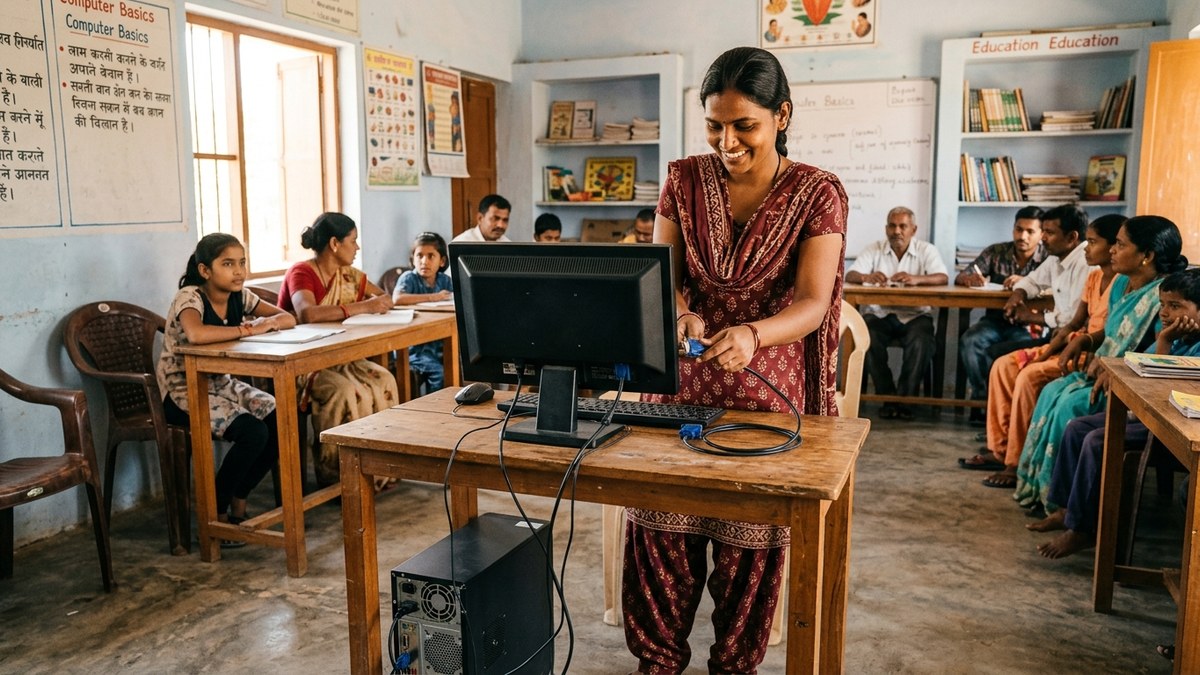
If you are running a POD or tutoring centre, this matters even more. Your learning space needs to support active recall, group discussions, and practice testing. A basic computer setup becomes essential for accessing digital resources, practice papers, and online assessments.
This is exactly why APNA PC exists. A complete bundle at Rs.30,000 includes education software, a Mini PC with i3 7th Gen processor, 8GB RAM, 128GB SSD, monitor, keyboard, mouse, webcam, headset, 3 year warranty, and installation. For a tuition centre or POD, this is not an expense. It is the foundation of modern, effective learning.
Get APNA PC and transform your learning setup.
Building Sustainable Study Habits
Smart study habits only work if they are sustainable. Do not try to change everything overnight. Pick one habit from above. Master it for two weeks. Add the next one.
For homemakers: Start with active recall. Have your child test themselves daily for two weeks. Then add spaced repetition.
For tuition teachers: Introduce active recall in your next class. Make it your teaching method. Your students results will speak for themselves.
For edupreneurs: These methods are your competitive advantage. Centres that teach smart study habits attract serious students and parents. Market this explicitly.
Check out more on study habits that help students score and explore how AI tools for Indian teachers can support these methods.
The truth is simple: Indian students do not need more study time. They need smarter study methods. Start today. Your results will change within a month.