
You Don’t Need a School Building to Teach
Here’s the truth: thousands of Indian homemakers and tuition teachers are already running profitable coaching centres from their living rooms. They’re not waiting for the perfect setup. They’re not saving for years. They’re starting now with digital tools that fit their budget and their space. If you’ve thought about starting a coaching centre at home but assumed you needed classrooms and infrastructure, think again.
The barrier to entry for a home coaching centre in India has collapsed. What once required rent, staff, and significant capital now requires a good internet connection, the right software, and commitment. That’s it. Let’s explore how to build this properly.
Key Takeaways
- To start a coaching centre at home you need only three things: a reliable computer, education software, and a stable internet connection of around 10 Mbps.
- Running from home removes rent, protects your margin from day one, and lets parents meet a real person in a real space, which builds trust faster.
- The practical steps are choosing a quiet corner, setting up hardware, fixing internet, picking one subject and one or two grade levels, and getting a recognised teaching certification.
- In most Indian cities group classes run about Rs.500 to Rs.1500 per student per month, so a batch of 15 to 30 students becomes a real income after small costs for internet, electricity and software.
- A phone or an ageing laptop that lags during video classes damages your reputation, so a dedicated machine is worth the upfront cost.
Why Your Home is the Perfect Location to Start a Coaching Centre
Most people don’t realise that a Point of Digital Learning (POD) operates on principles that favour home-based setups. A POD is a home or community learning centre run by a trained educator. It’s intimate. It’s flexible. It’s scalable without the overhead that kills traditional tuition centres.
Your home has advantages:
- Zero rent costs. Your profit margin stays intact from day one.
- Flexible timings. You set when classes run. Morning batches. Evening batches. Weekend intensives.
- Personal touch. Parents see a real person in a real space. Trust builds faster.
- Low startup investment. You’re not buying furniture for ten classrooms.
- Hybrid potential. Some students learn online. Some learn in-person. You manage both.
The Digital India initiative has pushed technology into every corner of the country. Your home coaching centre isn’t behind the times. It’s aligned with where education is moving.
The Digital Tools You Actually Need
Don’t get overwhelmed by tool overload. You need three things: a reliable computer, education software, and internet. That’s your foundation.
For the computer, you need something that won’t crash mid-class and won’t drain your savings. The APNA PC bundle solves this. It’s Rs.30,000 for everything: a Mini PC with i3 7th Gen processor, 8GB RAM, 128GB SSD, plus monitor, keyboard, mouse, webcam, and headset. Add the education software license and a three-year warranty. Installation included. You’re operational within days, not weeks.
Why APNA PC specifically? Because it’s built for educators in India. The specs handle video conferencing, student management software, and digital content delivery without lag. The warranty means you’re not stressed about hardware failure. The bundle removes decision paralysis. You order. It arrives. You teach.
For software, check out best online teaching tools that integrate attendance tracking, assignment submission, and progress reports. Your students see grades instantly. Parents get notifications. You save hours on admin.
Setting Up Your Home Coaching Centre Step by Step
Step 1: Choose Your Space
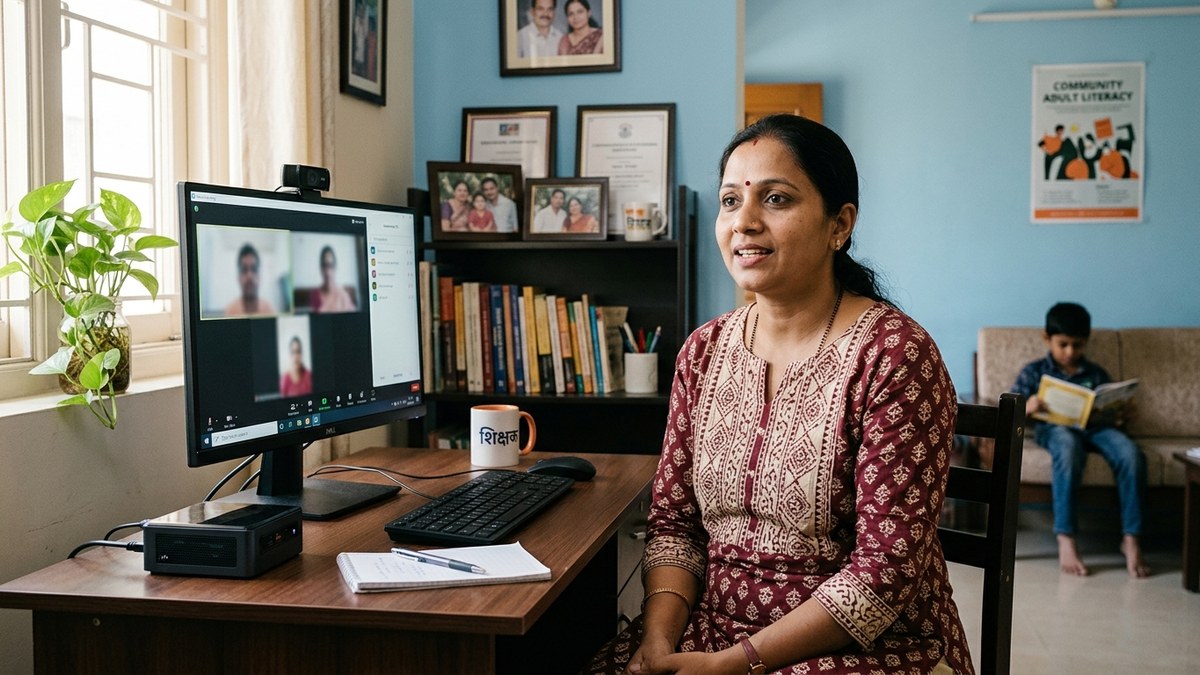
You don’t need a dedicated room. A corner of your living room works. A spare bedroom is ideal. Ensure good natural light and a quiet backdrop for video classes. Invest in a simple backdrop or keep your wall clean. That’s all.
Step 2: Get Your Hardware Right
Order APNA PC. Don’t cheap out on the computer. A slow machine frustrates students and damages your reputation. The bundle includes everything. No hidden purchases later.
Step 3: Set Up Internet
Minimum 10 Mbps for smooth video classes. Check with local providers. Many offer affordable plans now. If you’re in a tier-2 or tier-3 city, options have expanded dramatically in the last two years.
Step 4: Choose Your Subject and Level
Don’t try to teach everything to everyone. Pick one subject. Pick one or two grade levels. Master that. Build reputation. Expand later. If you’re teaching mathematics to class 8-9, own that space first.
Step 5: Get Trained and Certified
Credentials matter. Parents check. Take an online teaching certification. Learn how to manage a virtual classroom. Understand pedagogy. This isn’t optional. It’s your competitive advantage.
Pricing and Revenue Model for Your Coaching Centre
Let’s be honest: pricing determines whether this is a side income or a real business.
In most Indian cities, home coaching centres charge Rs.500-1500 per student per month for group classes. Individual sessions run Rs.1000-3000 per hour. Start at the lower end. Build to premium pricing as your reputation grows.
With 15 students in a group class at Rs.800 per month, you earn Rs.12,000 monthly. Your costs? Internet (Rs.500), electricity (Rs.300), software (Rs.200). Your margin is clean. Scale to 30 students. Now you’re at Rs.24,000 monthly income.
From Home Coaching Centre to Scaled Operation
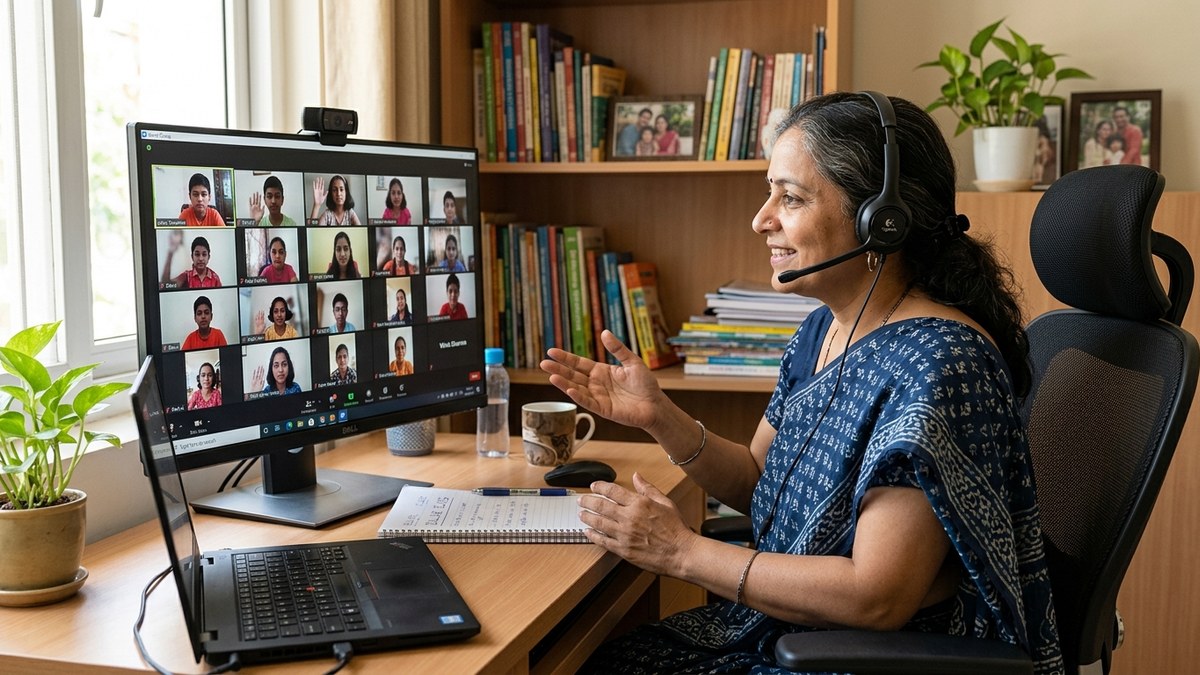
Starting small doesn’t mean staying small. Once your home centre is profitable, you have options. You can start a microschool from home with multiple educators. You can expand to a community space. You can hire other teachers and run a proper learning network.
But you start at home. You prove the model. Then you scale with confidence and capital.
The Ministry of Electronics and IT has made it clear: digital education infrastructure is a priority. Government support exists for edupreneurs. Grants. Subsidies. Tax benefits. You’re not fighting the system. You’re riding it.
Your Next Move
Stop waiting for the perfect moment. The setup exists now. The tools exist now. The demand exists now. Parents are actively searching for quality home coaching centres because they trust them more than large institutions.
You have the knowledge to teach. You have space at home. You need the right equipment and a plan. APNA PC gives you the equipment. A structured approach gives you the plan.
Ready to start? Learn how to build this properly by setting up your own learning POD with TeachToEarn. We’ll guide you through certification, software setup, and student acquisition. Your home coaching centre is three decisions away: equipment, subject, and start date.
Make those decisions this week.
Frequently Asked Questions About Start a coaching centre at home
Is it legal to run a coaching centre from home in India?
Small home tuition and coaching groups operate widely without a formal school licence, much like established coaching classes. If you plan to grow large or replace formal schooling, take local legal advice on registration, fire safety and local rules. For a small neighbourhood batch, this is usually not an issue.
How much money do I need to start a home coaching centre?
Beyond a room you already have, the main costs are a computer, basic furniture and an internet connection. A complete education computer bundle costs around Rs.30,000, and many educators start for well under Rs.50,000 total, then reinvest fees from there.
What internet speed do I need for online coaching classes?
About 10 Mbps is enough for smooth video with screen sharing for a small group. Wired broadband is more stable than mobile data for long sessions. Keeping a mobile hotspot as backup helps you avoid cancelled classes during outages.
How many students do I need to make a home coaching centre profitable?
Most home centres become financially stable at around 15 students in group batches. At roughly Rs.800 per student per month that is about Rs.12,000, against small costs for internet, electricity and software. Scaling to 30 students roughly doubles the income without new equipment.
Can I run both online and in-person classes from home?
Yes, and many educators do. You can teach neighbourhood students in person during peak hours and take online students in off-peak slots. This hybrid model, often called a Point of Digital Learning, lets you reach students beyond your locality while keeping the personal touch.
India’s National Education Policy 2020 explicitly supports flexible, community-based learning models alongside formal schooling, which is the basis on which a home coaching centre operates.