
Your Child’s Future Job Doesn’t Exist Yet. Here’s Why STEM and Coding Matter Now.
Let’s be honest: if your child isn’t learning STEM and coding by 2026, they’re already behind. Not because of hype. Because of math. India’s tech sector alone will need 5 million skilled workers in the next five years. The jobs are real. The demand is real. The competition is real.
Most people don’t realise that STEM coding isn’t just for “tech kids” or children who love computers. It’s the new literacy. Like reading and writing were essential in 1950, coding and STEM education are essential now. Whether your child becomes an engineer, doctor, teacher, or farmer, understanding how technology works will define their career options.
Here’s the truth: waiting for schools to teach this properly is a gamble you can’t afford to take. Government schools are trying. Private schools are charging premium fees. Meanwhile, your child loses time.
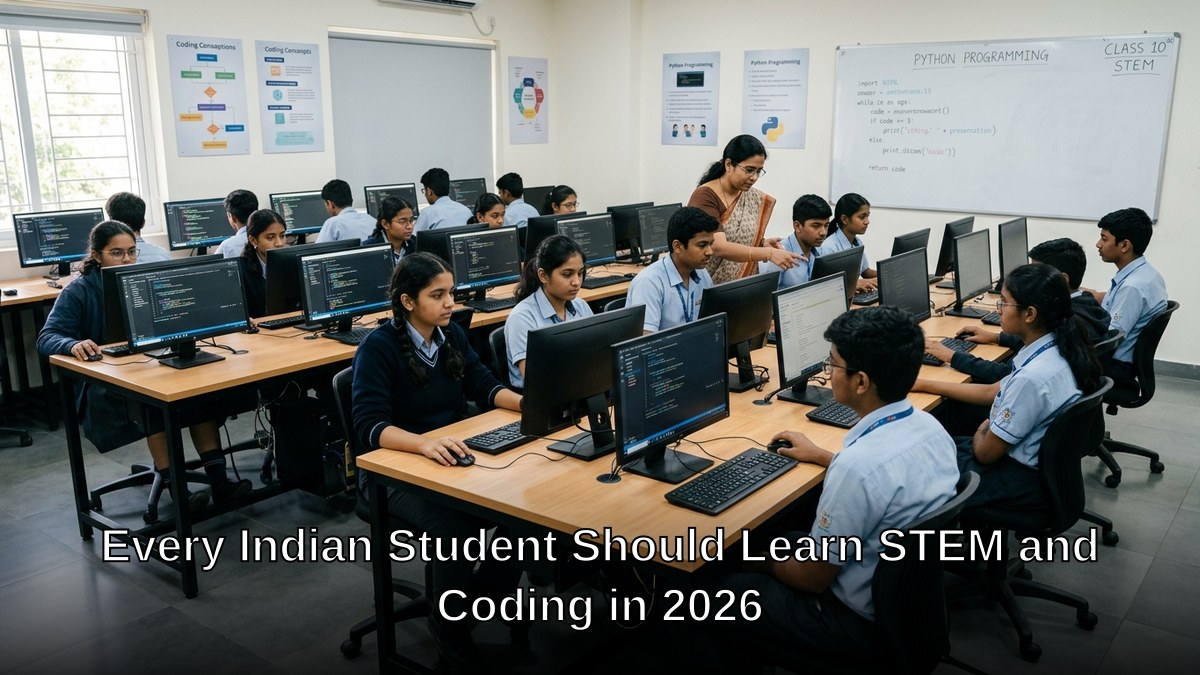
Key Takeaways
- STEM and coding for Indian students is becoming a basic literacy rather than a niche interest, shaping career options whatever field a child eventually enters.
- Entrance exams increasingly reward logical and problem-solving thinking, so coding and STEM practice support exam preparation, not just future tech jobs.
- Tech and data roles tend to pay more than non-technical alternatives, and the salary gap has been widening rather than closing.
- Freelancing and building small apps or content are real income paths that teenagers can start from home with practice and a computer.
- The barrier for most families is access to equipment and guidance, which a shared home computer and a trained educator in a POD can solve.
Why 2026 is the Turning Point for Indian Students
The Ministry of Education India has made STEM a priority. National Entrance Exams now test coding logic. Engineering colleges expect basic programming knowledge. Medical entrance exams include data interpretation. Even competitive exams for government jobs are shifting toward tech-heavy questions.
Your child won’t just compete with classmates anymore. They’ll compete globally. A teenager in Bangalore learning coding today can freelance for clients in Silicon Valley. A student in a small town who understands STEM can crack entrance exams that open doors to top colleges.
The barrier? Access. Not intelligence. Not interest. Access.
That’s where learn coding India initiatives become critical. Not as a luxury. As a necessity. A student who learns coding at home has an unfair advantage. They practice daily. They move at their own pace. They build projects that look impressive in college applications.
The Three Reasons Indian Families Are Investing in STEM Education
1. Entrance Exams Are Changing
JEE Main, NEET, UPSC, bank exams, SSC CGL. Every major entrance exam now has sections that reward STEM thinking. Coding teaches logic. STEM teaches problem-solving. These aren’t separate skills. They’re the same skill applied differently.
2. Jobs Are Paying More
A software engineer earns 2-3x more than a graduate without tech skills. A data analyst earns more than a traditional accountant. A robotics specialist earns more than a general mechanic. The salary gap isn’t closing. It’s widening.
3. Freelancing and Entrepreneurship Are Real Paths
Your child doesn’t need to wait for a job. A teenager who knows coding can earn Rs.500-2000 per project on freelance platforms. A student who understands STEM can build apps, websites, or educational content. These aren’t theoretical possibilities. Hundreds of Indian teenagers are doing this right now.
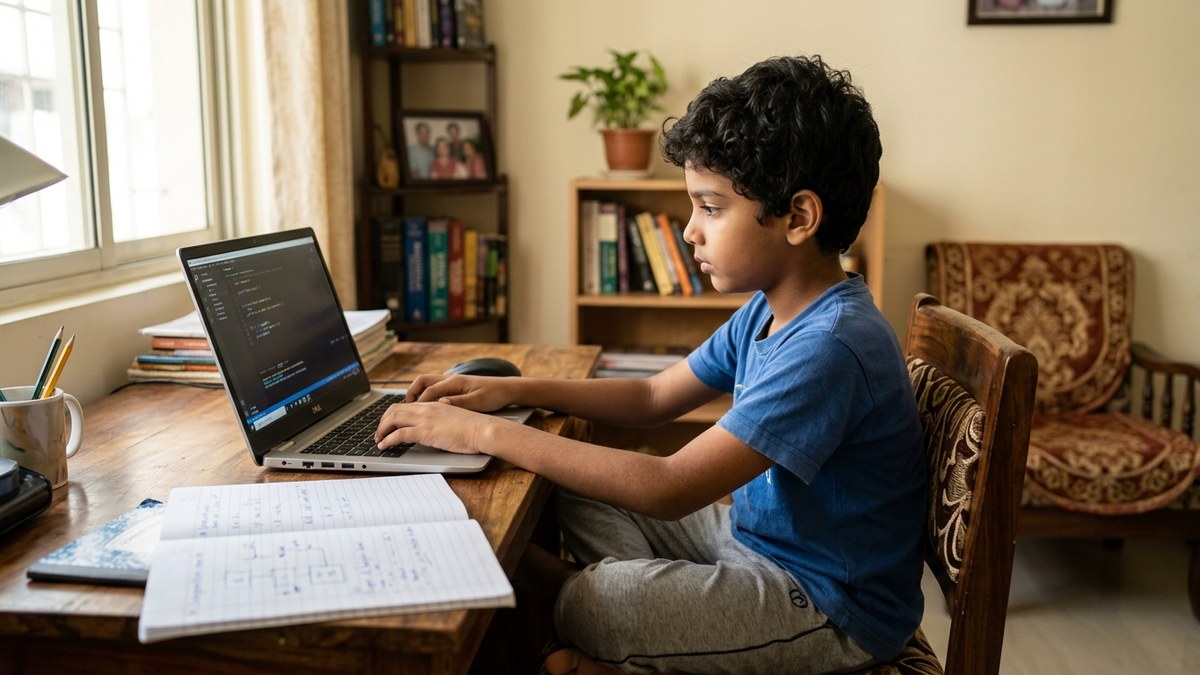
The Real Barrier: Access to Equipment and Quality Teaching
Most Indian families want their children to learn STEM and coding. They hit a wall immediately.
A decent laptop costs Rs.40,000-60,000. Quality coaching costs Rs.5000-15,000 per month. Online courses require stable internet. Schools are overcrowded. Teachers are stretched thin.
Here’s what happens: families either pay premium fees to private institutes or give up entirely. The middle path doesn’t exist for most people.
Except it does now. The APNA PC bundle changes this equation completely. For Rs.30,000, you get a complete system: a Mini PC with i3 7th Gen processor, 8GB RAM, 128GB SSD, monitor, keyboard, mouse, webcam, and headset. Plus education software. Plus 3-year warranty. Plus installation support.
That’s not a computer. That’s access to your child’s future.
How to Start: The Point of Digital Learning Model
You don’t need to be a tech expert to help your child learn STEM and coding. You need the right setup and the right guidance.
A Point of Digital Learning (POD) is exactly this: a home or community learning centre run by a trained educator. It’s not a coaching centre. It’s not a school. It’s a space where students learn at their own pace with proper equipment and mentorship.
If you’re a homemaker, senior citizen, tuition teacher, or edupreneur, you can run a POD. You can teach coding to kids at home and earn while doing it. You can help your community’s children access STEM education without them needing to travel to expensive institutes.
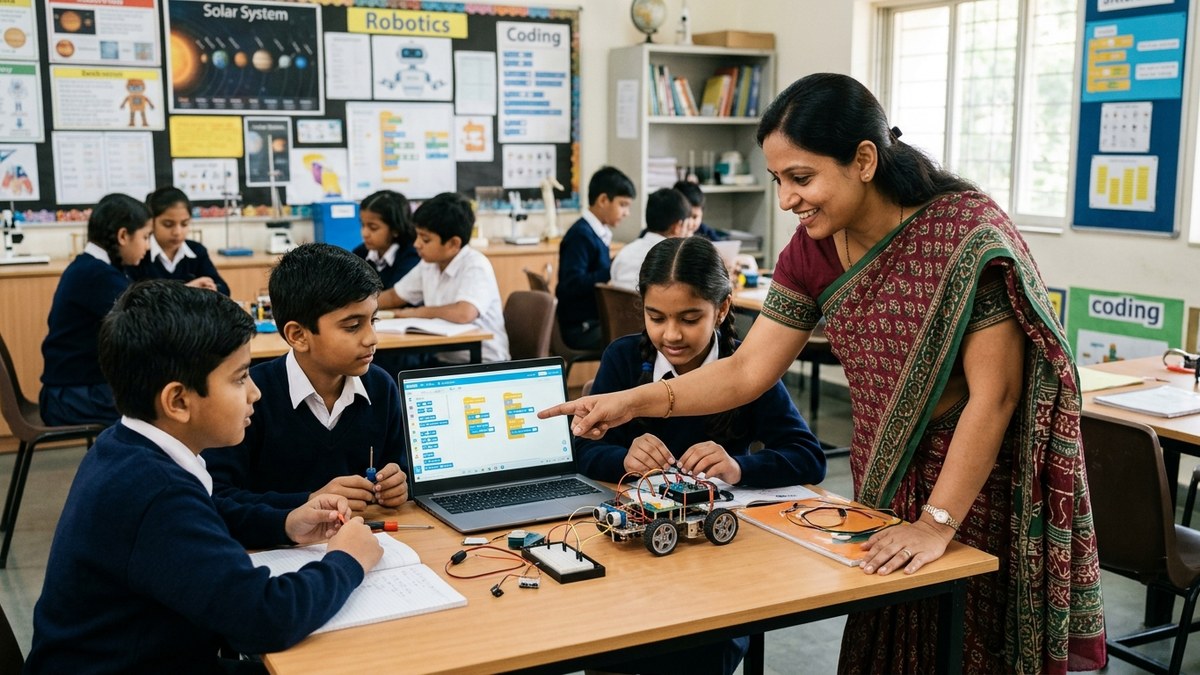
The Competitive Exam Connection
Here’s something most parents miss: competitive exam preparation at home becomes 10x more effective when your child understands STEM fundamentals. Why? Because STEM thinking teaches you how to approach problems systematically.
A student who understands coding can solve logic puzzles faster. A student who understands data interpretation can handle complex questions. A student who understands robotics and mechanics can visualize physics problems.
It’s not about learning exam tricks. It’s about building a brain that thinks in systems.
What the Data Says
According to Education in India overview, only 15% of Indian students have access to quality STEM education. That’s a massive gap. That gap is where opportunity lives.
Your child can be in that 15%. Not because they’re smarter. Because they have access.
The Action Step
Stop waiting for the perfect time. Stop hoping schools will catch up. Stop assuming your child will figure it out.
In 2026, STEM coding will be as essential as English. Your child will either be ahead or behind. There’s no middle ground.
Get the APNA PC bundle. Set up a learning space. Start today. Your child doesn’t need to be a genius. They need equipment, guidance, and time. You can provide all three.
The future isn’t coming. It’s here. Your move.
Frequently Asked Questions About STEM and coding for Indian students
At what age should a child start STEM and coding?
Visual block coding like Scratch works from around age seven or eight, and text languages such as Python usually fit from age eleven or twelve once reading and typing are comfortable. Hands-on science and building activities can start earlier. Consistency and curiosity matter more than starting very young.
Do you need an expensive laptop to learn coding at home?
No. A modest computer with a basic processor and enough memory runs Scratch, Python and web tools well for beginners and beyond. What matters is a keyboard, a full screen and reliable internet. Coding is very hard to learn properly on a phone because writing and running real programs needs a proper setup.
Does learning to code help with competitive exams?
It can. Coding and STEM work train you to break problems into steps, test solutions and think in systems, which helps with logic, data interpretation and physics-style questions. It is not about exam tricks, it is about building a brain that approaches problems methodically.
Can parents teach coding at home without knowing how to code?
Yes. Free structured courses and apps guide a child step by step, and a parent can learn alongside in the early stages. The parent’s job is to set a routine and keep the child consistent, not to be the expert. Staying one lesson ahead is enough.
What is a POD and how does it help with STEM learning?
A Point of Digital Learning is a home or community centre run by a trained educator where students learn at their own pace with proper equipment and mentorship. It is not a coaching class or a school. Homemakers, retired professionals and tuition teachers can run one and earn while helping local children access STEM education.
India’s National Education Policy 2020 recommends coding and computational thinking from the middle-school years and pushes for stronger science and mathematics foundations for all students.